Section 01
Rainforest, Desert, And An Inland Sea
Washington contains the wettest place in the contiguous United States and some of the driest. The Olympic Mountains catch Pacific storms and dump up to 170 inches of rain a year on the Hoh valley, producing temperate rainforest with moss-draped Sitka spruce. Fifty miles east, in the rain shadow, Sequim gets under 20 inches. The Cascades repeat the effect on a larger scale, leaving eastern Washington as shrub-steppe and scabland.
The state's defining water body is Puget Sound, a deep glacial inland sea connected to the Pacific through the Strait of Juan de Fuca. It supports salmon runs, seals, porpoises, and the southern resident killer whales, a population of fewer than 80 animals that eats Chinook salmon almost exclusively and is among the most closely watched marine mammals in the world.
Washington is also where the largest dam removal in history took place before the Klamath. Two dams on the Elwha River inside Olympic National Park came out between 2011 and 2014, opening more than 70 miles of habitat that had been blocked for a century. Salmon returned to the upper river within months, and the ecosystem response has been documented in unusual detail.
Eastern Washington's channelled scablands, carved by catastrophic ice-age floods, hold shrub-steppe that supports sage-grouse, pygmy rabbits, and a fauna closer to Nevada's than to Seattle's, in a state most people picture as uniformly green.
Section 02
Washington's Official State Animals
| Designation | Animal | Adopted |
|---|---|---|
| State mammal | Roosevelt elk Cervus canadensis roosevelti | 1983 |
| State marine mammal | Orca Orcinus orca | 2005 |
| State bird | American goldfinch Spinus tristis | 1951 |
| State fish | Steelhead trout Oncorhynchus mykiss | 1969 |
| State insect | Green darner dragonfly Anax junius | 1997 |
| State amphibian | Pacific chorus frog Pseudacris regilla | 2007 |
| State endemic mammal | Olympic marmot Marmota olympus | 2009 |
| State fossil | Columbian mammoth | 1998 |
The Olympic marmot is the only mammal found exclusively in Washington. It lives in alpine meadows on the Olympic Peninsula and nowhere else on Earth, isolated there since the glaciers retreated. It is highly social, greeting neighbours nose to nose, and hibernates for around seven to eight months a year. Washington designated it the state endemic mammal in 2009, a category almost no other state uses. Its numbers dropped in parts of the range, with coyote predation on a species that evolved without them appearing to be a factor.

The Roosevelt elk designation reflects the largest elk subspecies, and Olympic National Park was originally created in part to protect it. Related: orca versus Roosevelt elk.
Section 03
The Southern Resident Orcas
Washington's state marine mammal is one of the most endangered marine mammal populations in the United States, and its situation illustrates how tightly wildlife can be bound to a single food source.
Two ecologically distinct orca types use these waters. Transient or Bigg's killer whales hunt seals and porpoises and are doing well as seal numbers have grown. The southern residents eat fish, and overwhelmingly Chinook salmon specifically, and they number fewer than 80 animals across three pods.

Their decline has three linked causes. Chinook runs have collapsed across the region because of dams, habitat loss, and altered river flows, so the whales are simply short of food. When they go hungry, they metabolise their fat, releasing stored PCBs and other contaminants into their bloodstream, which impairs reproduction and immune function. And vessel noise interferes with the echolocation they use to find fish, meaning the boats watching them make hunting harder.
Between 1965 and 1976 dozens of these whales were captured live for marine parks, removing an entire generation of young animals from a population that had no margin. That history is why Washington's orca protections are unusually strict and why recovery has been so slow.
The Elwha comparison: after two dams came out of the Elwha River, salmon recolonised the upper watershed within months, and sediment released downstream rebuilt the estuary and beaches. It demonstrated that removing barriers produces fast results, which is central to the argument over the lower Snake River dams and their effect on the Chinook runs the orcas depend on. Related: rivers where salmon returned.
Section 04
Habitats By Region, And Who Lives In Each
Olympic Peninsula and coastal rainforest

Temperate rainforest with Sitka spruce, western hemlock, and Roosevelt elk in the valleys. The peninsula's isolation produced endemics including the Olympic marmot, Olympic torrent salamander, and Olympic snow mole. See Olympic National Park.
Pacific coast and offshore

Rocky headlands, sea stacks, and offshore islands protected as wilderness. Nesting common murres, tufted puffins, and rhinoceros auklets, plus sea otters reintroduced in 1969 and 1970 after being hunted out entirely, now numbering over 2,000. Related: the sea otter's role and kelp forest.
Puget Sound

A deep glacial inland sea with rocky reefs, eelgrass, and estuaries. Orcas, harbor seals, harbor porpoise, Steller sea lions, and California sea lions. See Puget Sound.
Cascade Range

Volcanic peaks including Mount Rainier, with mixed conifer, subalpine meadow, and glaciers. Black bear, Canada lynx in the north, wolverine recolonizing, mountain goat (introduced to the Olympics and native in the Cascades), and grizzly bear, which the North Cascades recovery plan aims to restore after the population fell to functionally zero. See where grizzly bears live.
Columbia Plateau and shrub-steppe

Sagebrush, bunchgrass, and the channelled scablands carved by ice-age floods. Greater sage-grouse, sharp-tailed grouse, pygmy rabbit, burrowing owl, and pronghorn reintroduced. The Columbia Basin pygmy rabbit population was reduced to a handful of animals and rescued only through captive breeding and crossbreeding with Idaho stock.
Columbia and Snake rivers

The Columbia system, heavily dammed, holding salmon and steelhead runs at a fraction of historic levels plus white sturgeon that can exceed a thousand pounds in landlocked reservoir populations.
Section 05
Mammals Of Washington
Roosevelt and Rocky Mountain elk: Roosevelt elk west of the Cascades, the largest subspecies, and Rocky Mountain elk east. Related: where to watch the elk rut.

Gray wolf: extirpated by the 1930s and returned on their own from Idaho and British Columbia, with the first confirmed pack in 2008. The population now exceeds 200 animals in more than 40 packs, concentrated in the northeast, and wolf management is politically contested.

Grizzly bear: essentially absent, with the North Cascades population reduced to functionally zero. A federal restoration plan to reintroduce grizzlies to the North Cascades has been repeatedly proposed, paused, and revived.

Black bear: roughly 20,000 statewide.

Canada lynx and wolverine: both present in small numbers in the north Cascades and northeast, both federally threatened. See wolverine facts.

Fisher: extirpated and reintroduced beginning in 2008 to Olympic National Park and the Cascades, now breeding.

Mountain lion, bobcat, coyote, marten, river otter, beaver, badger: all present.

Olympic marmot: found only in Washington. Also hoary marmot in the Cascades and Vancouver Island marmot nearby in Canada.

Columbia Basin pygmy rabbit: reduced to a handful of animals and now maintained through captive breeding and release.

Marine mammals: southern resident and Bigg's orcas, gray whales including a small group that feeds in Puget Sound each spring, humpbacks recovering strongly, harbour seal, Steller and California sea lion, and sea otter.

Section 06
Birds Of Washington
More than 520 species have been recorded, reflecting rainforest, shrub-steppe, alpine, and marine habitats in one state.
- Northern spotted owl: the species at the centre of the old-growth logging conflict, still declining despite habitat protection because of barred owl competition.
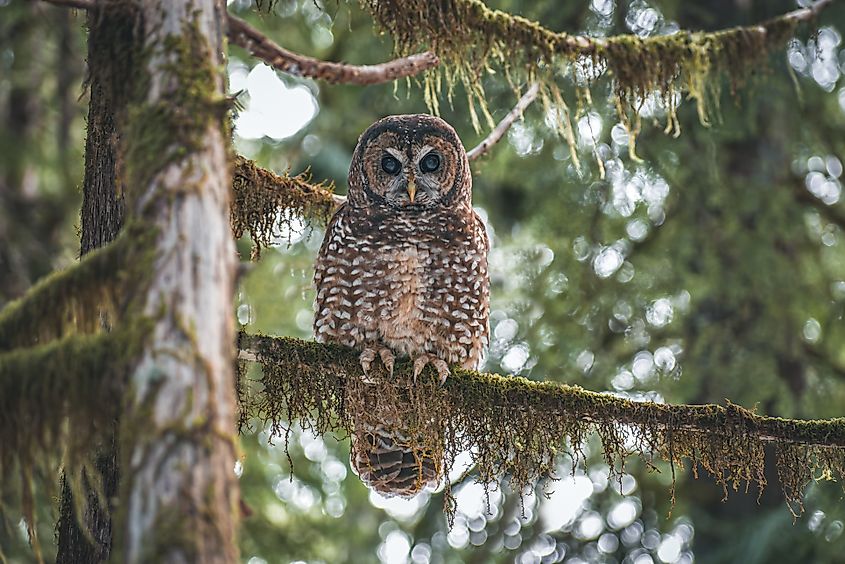
A northern spotted owl (Strix occidentalis caurina) - Marbled murrelet: nests on mossy old-growth limbs and commutes to sea, federally threatened.
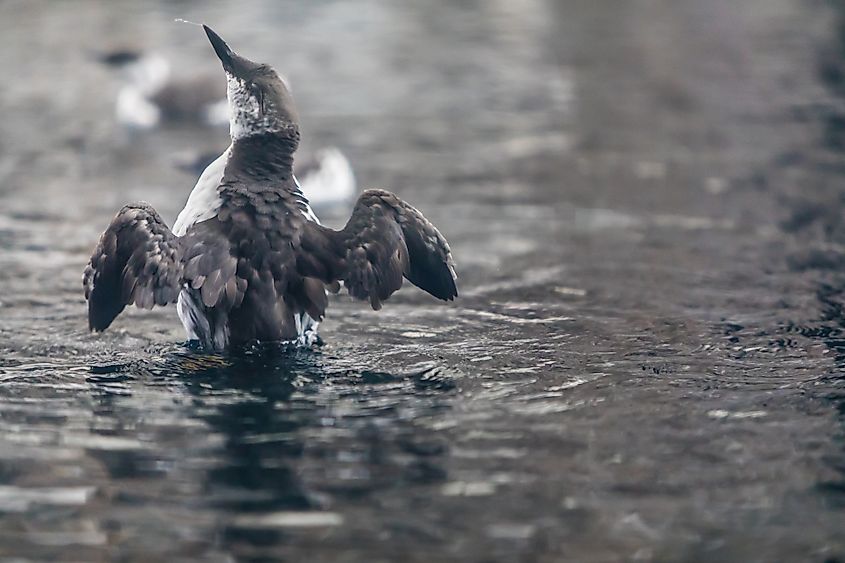
A marbled murrelet (Brachyramphus marmoratus) - Seabirds: Washington's offshore rocks hold large murre, auklet, and puffin colonies, nearly all protected as national wildlife refuge wilderness.
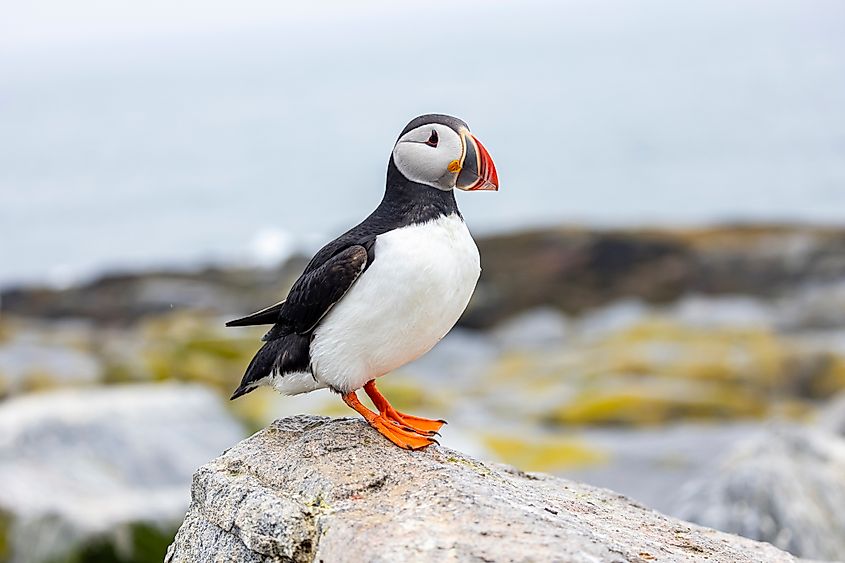
An Atlantic puffin (Fratercula arctica) - Shrub-steppe birds: greater sage-grouse, sharp-tailed grouse, sage thrasher, and Brewer's sparrow, all reduced as sagebrush was converted to agriculture and burned.
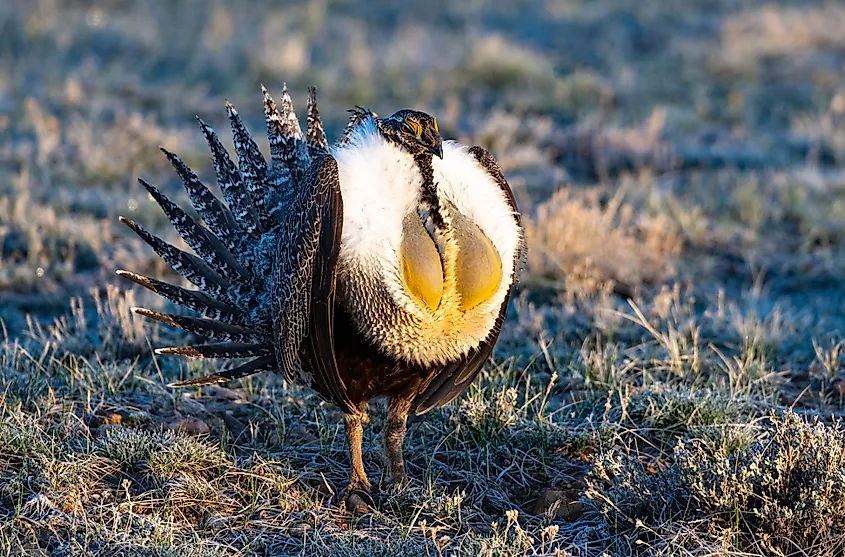
A greater sage-grouse (Centrocercus urophasianus) - Bald eagle: the Skagit River hosts one of the larger winter eagle concentrations in the lower 48, drawn to spawned-out salmon.
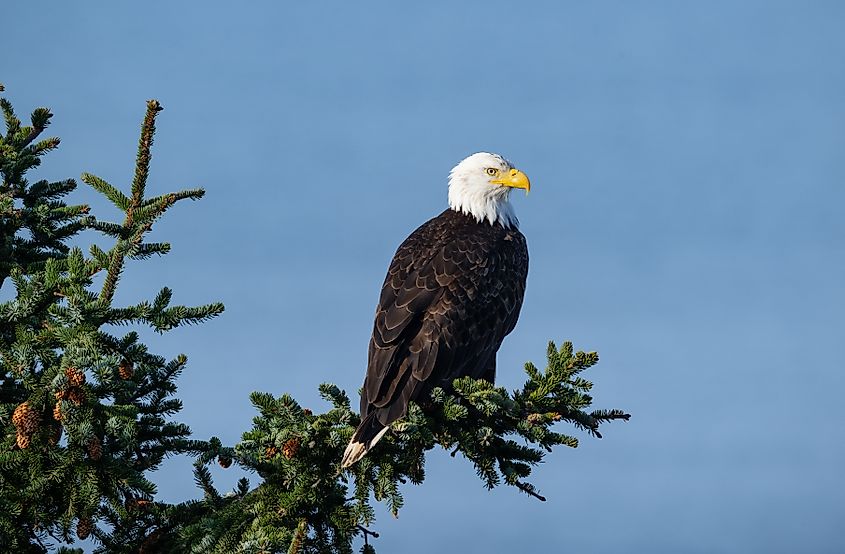
A bald eagle (Haliaeetus leucocephalus) - Snow geese and swans: the Skagit and Stillaguamish deltas winter tens of thousands of snow geese and trumpeter swans.
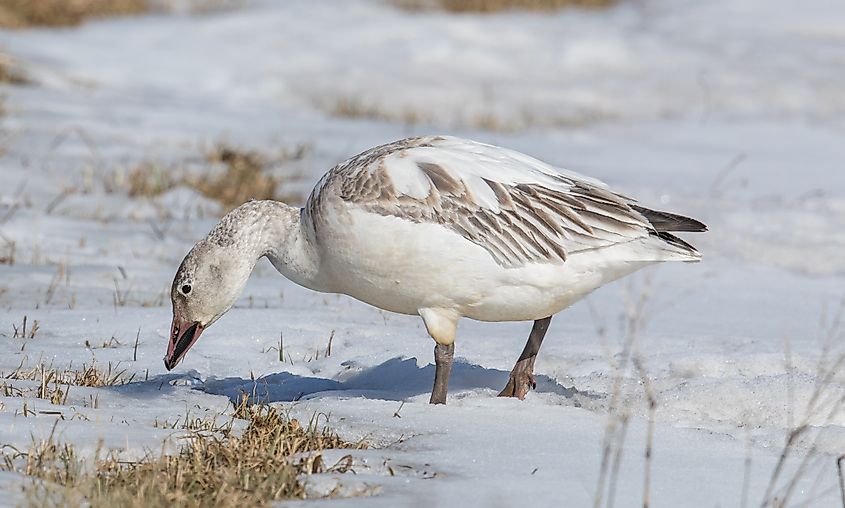
A snow goose (Anser caerulescens)


Section 07
Reptiles, Amphibians, And Fish
Washington has around 21 reptile and 26 amphibian species. One snake is venomous.
Snakes

The western rattlesnake is the only venomous species and occurs almost entirely east of the Cascades. Western Washington has none.
Amphibians

The wet west side is exceptionally rich in salamanders, including the Olympic torrent salamander and Cope's giant salamander, both with small ranges, plus Pacific giant salamander, ensatina, and the rough-skinned newt, whose skin toxin is among the most potent in North America. The Pacific chorus frog is the state amphibian, and the Oregon spotted frog is federally threatened.
Fish

The steelhead is the state fish. Five Pacific salmon species plus steelhead and bull trout occur, with many runs federally listed. The Elwha restoration is the clearest demonstration of what dam removal does. White sturgeon in the Columbia can exceed a thousand pounds, and landlocked populations between dams no longer complete natural migrations.
Marine invertebrates

The giant Pacific octopus reaches its largest size in Puget Sound waters, and the geoduck, a clam that can live over 150 years with a siphon extending well beyond its shell, supports a valuable fishery.
Section 08
Dangerous Animals In Washington
- Deer and elk: vehicle collisions are the leading wildlife hazard.
- Mountain lion: Washington has recorded fatal attacks, though they remain extremely rare relative to the population.
- Western rattlesnake: the only venomous snake, east of the Cascades. Bites are uncommon.
- Black bear: food conditioning at campgrounds is the practical issue rather than aggression.
- Mountain goats: introduced goats in Olympic National Park became habituated to hikers seeking salt, and one fatally gored a hiker in 2010. The park subsequently relocated and removed goats from the peninsula.
- Sea lions and seals: they bite, and injuries occur when people approach hauled-out animals.
- Cold water and rip currents: Washington's coast and Sound are cold year-round and cause far more deaths than any animal.
Section 09
Endangered And Protected Species
| Species | Where | Status |
|---|---|---|
| Southern resident orca | Puget Sound and Salish Sea | ENDANGERED |
| Columbia Basin pygmy rabbit | Central shrub-steppe | ENDANGERED |
| Northern spotted owl | Old-growth forest | THREATENED |
| Marbled murrelet | Coastal old growth | THREATENED |
| Chinook salmon, several runs | Columbia, Snake, Puget Sound | THREATENED |
| Bull trout | Cold headwaters | THREATENED |
| Canada lynx | North Cascades, northeast | THREATENED |
| Wolverine | Cascade high country | THREATENED |
| Oregon spotted frog | Cascade wetlands | THREATENED |
| Streaked horned lark | South Puget prairie | THREATENED |
| Grizzly bear | North Cascades, functionally absent | ENDANGERED |
Washington's pressures split at the Cascade crest. West of it: loss of old-growth structure, urban growth around Puget Sound, culverts and dams blocking salmon, and stormwater runoff containing a tyre-derived chemical identified in 2020 as the cause of mass coho salmon deaths in urban streams. East of it: shrub-steppe conversion to agriculture, cheatgrass-driven fire, and water withdrawal. Statewide, salmon decline connects almost everything, since orcas, eagles, bears, and forests all depend on the runs.
Section 10
Where To See Wildlife In Washington
- San Juan Islands: orcas from Lime Kiln Point State Park on San Juan Island, sometimes from shore, plus seals and eagles.
- Olympic National Park, Hoh and Quinault valleys: Roosevelt elk in rainforest, and marmots in the alpine at Hurricane Ridge.
- Skagit River and delta: wintering bald eagles on salmon carcasses, plus snow geese and trumpeter swans in the fields.
- Mount Rainier National Park: marmots, mountain goats, and subalpine meadows in July and August.
- Elwha River: the largest completed dam removal in the US before the Klamath, with salmon back in the upper watershed.
- Columbia National Wildlife Refuge and the scablands: shrub-steppe birds and ice-age flood geology.
- Dungeness Spit and the Strait: seabirds, seals, and one of the longest natural sand spits in the world.
- Ridgefield and Nisqually National Wildlife Refuges: estuary restoration with waterfowl and shorebirds.
Timing: May through September for orcas in the San Juans, with peak Chinook-following months in summer. December and January for Skagit eagles and wintering swans and geese. July and August for alpine meadows, marmots, and mountain goats. September through November for salmon runs, which is when the whole food web is visible at once. Rainforest is best in any month, since it rains regardless.
Section 11
Common Questions
- What is the state animal of Washington?
- The Roosevelt elk is the state mammal, adopted in 1983, and the orca is the state marine mammal, adopted in 2005. Washington also names the Olympic marmot as state endemic mammal, a category almost no other state uses.
- Why are the southern resident orcas endangered?
- They eat Chinook salmon almost exclusively, and Chinook runs have collapsed. Hunger forces them to metabolise fat that releases stored contaminants, vessel noise interferes with the echolocation they hunt with, and live captures between 1965 and 1976 removed a generation of young whales. Fewer than 80 remain.
- What is the Olympic marmot?
- The only mammal found exclusively in Washington, living in alpine meadows on the Olympic Peninsula and nowhere else on Earth. It is highly social, greets neighbours nose to nose, and hibernates for seven to eight months a year.
- Are there grizzly bears in Washington?
- Functionally no. The North Cascades population fell to effectively zero, and a federal plan to reintroduce grizzlies there has been repeatedly proposed, paused, and revived. Black bears, roughly 20,000 of them, are the state's only bears in practice.
- Are there wolves in Washington?
- Yes. Wolves were extirpated by the 1930s and returned on their own from Idaho and British Columbia, with the first confirmed pack in 2008. The population now exceeds 200 animals in more than 40 packs, concentrated in the northeast.
- What happened when the Elwha dams came out?
- Two dams inside Olympic National Park were removed between 2011 and 2014, opening more than 70 miles of habitat blocked for a century. Salmon recolonised the upper river within months, and released sediment rebuilt the estuary and beaches downstream.
- How many venomous snakes live in Washington?
- One, the western rattlesnake, and almost entirely east of the Cascades. Western Washington has essentially none.
This page was last updated on October 6, 2026