Section 01
A Drying Lake That Feeds Ten Million Birds
Utah sits where three major regions meet: the Great Basin in the west, the Colorado Plateau in the southeast, and the Rocky Mountains running down the middle in the Wasatch and Uinta ranges. It is the second driest state after Nevada, and almost everything about its wildlife follows from where the limited water goes.
The single most important wildlife feature is the Great Salt Lake, the largest saltwater lake in the western hemisphere. It is too saline for fish, which sounds like a problem and is instead the point: without fish, brine shrimp and brine flies reproduce in astronomical numbers, and those insects feed migratory birds. Something on the order of ten million birds use the lake and its surrounding wetlands each year, including a majority of the world's Wilson's phalaropes and enormous numbers of eared grebes, American avocets, and black-necked stilts.
That system is now in serious trouble. Water diverted from the rivers feeding the lake for agriculture and cities has dropped it to record lows, and in 2022 it reached the lowest level ever recorded. As the lake shrinks, salinity rises past the tolerance of brine shrimp, the food web that supports the birds begins to fail, and exposed lakebed generates dust laden with arsenic and other metals that blows across the Salt Lake City metropolitan area.
Elsewhere, Utah's canyon country holds desert bighorn, and its mountains hold elk, moose at the southern edge of their range, and one of the more successful Rocky Mountain bighorn restoration programmes in the West.
Section 02
Utah's Official State Animals
| Designation | Animal | Adopted |
|---|---|---|
| State animal | Rocky Mountain elk Cervus canadensis | 1971 |
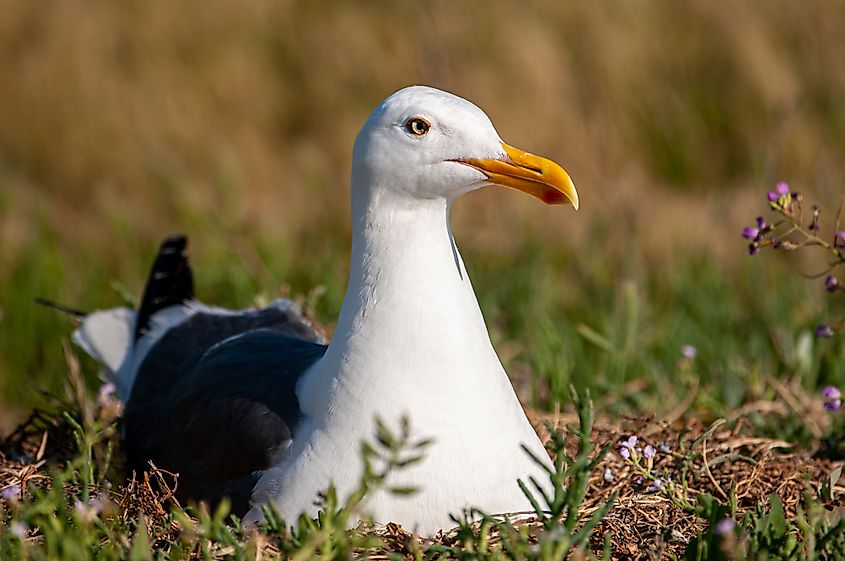
| State bird | California gull Larus californicus | 1955 |
| State fish | Bonneville cutthroat trout Oncorhynchus clarkii utah | 1997 |
| State insect | Honeybee Apis mellifera | 1983 |
| State fossil | Allosaurus | 1988 |
Utah's state bird commemorates an event known as the miracle of the gulls. In 1848, Mormon settlers in the Salt Lake Valley faced crickets, actually Mormon crickets, which are katydids rather than true crickets, devouring their first crops. Flocks of California gulls arrived from the Great Salt Lake and ate the insects in enormous quantity, and the settlers regarded it as divine intervention. A monument stands in Temple Square. Gulls eating an insect outbreak near a saline lake is entirely ordinary behaviour, but the designation in 1955 makes Utah one of the few states whose official bird honours a specific historical episode.

The Bonneville cutthroat trout is a relic of Lake Bonneville, the enormous ice-age lake of which the Great Salt Lake is the shrunken remnant. It was believed extinct at one point and was rediscovered in isolated headwater streams, and it now survives largely where barriers keep introduced trout out.
Section 03
The Great Salt Lake Food Web
The lake works on a very short chain, which is what makes it so productive and so fragile.
Algae grow in the salty water. Brine shrimp, the small crustaceans sold as sea monkeys, eat the algae, and brine flies breed along the shore in vast numbers, their larvae grazing algae on the lakebed. Those two invertebrates, with almost nothing else in between, feed the birds. The absence of fish means nothing intercepts the energy before it reaches them.
- Eared grebes: hundreds of thousands to millions stage on the lake in autumn, feeding on brine shrimp until they roughly double their weight, then flying on. For a period they become effectively flightless while their digestive organs enlarge and their flight muscles shrink.
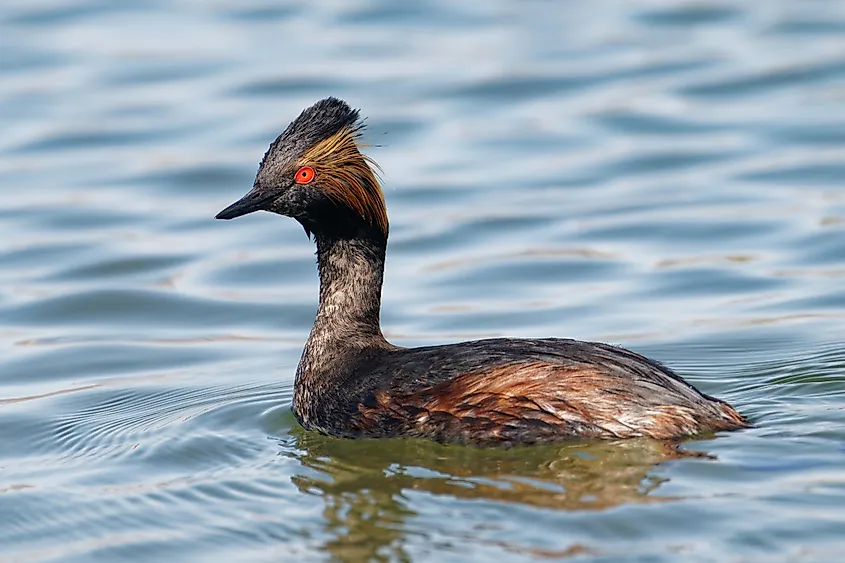
An eared grebe (Podiceps nigricollis) - Wilson's phalarope: a large share of the world population stops here, spinning on the water to stir up invertebrates before flying to South America.
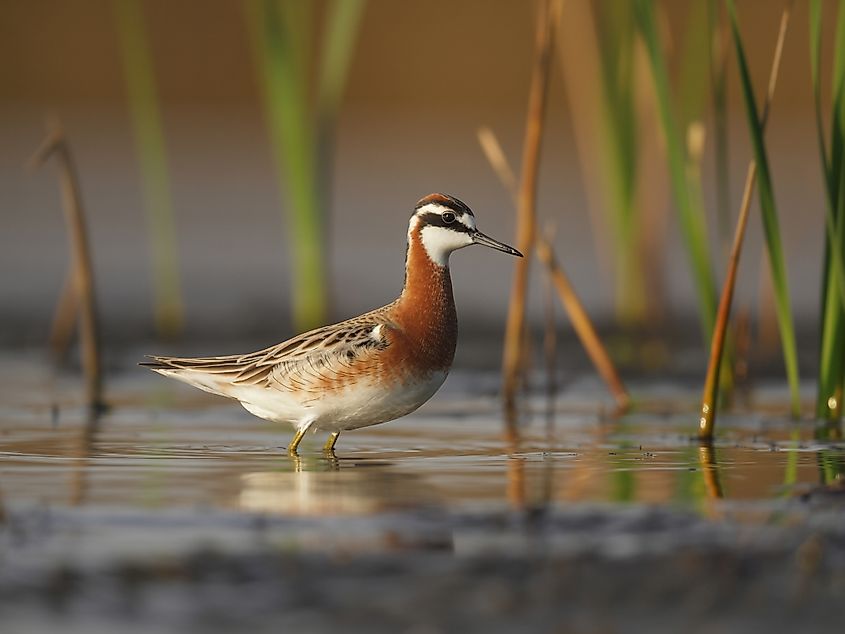
A Wilson's phalarope (Phalaropus tricolor) - American avocet, black-necked stilt, snowy plover, long-billed dowitcher, red-necked phalarope: all in nationally significant numbers.
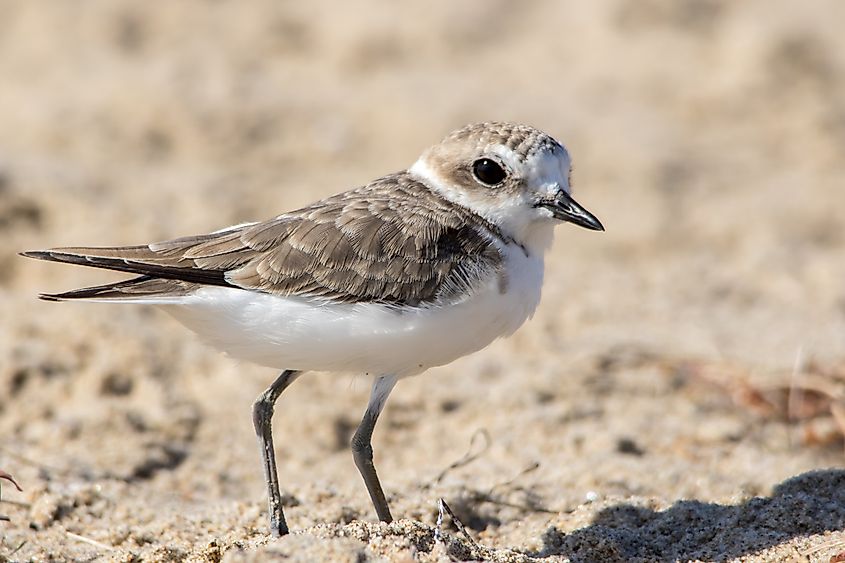
A snowy plover (Anarhynchus nivosus) - American white pelican: Gunnison Island in the lake holds one of the largest breeding colonies in North America. The birds fly considerable distances to freshwater to feed, since the lake itself has no fish.
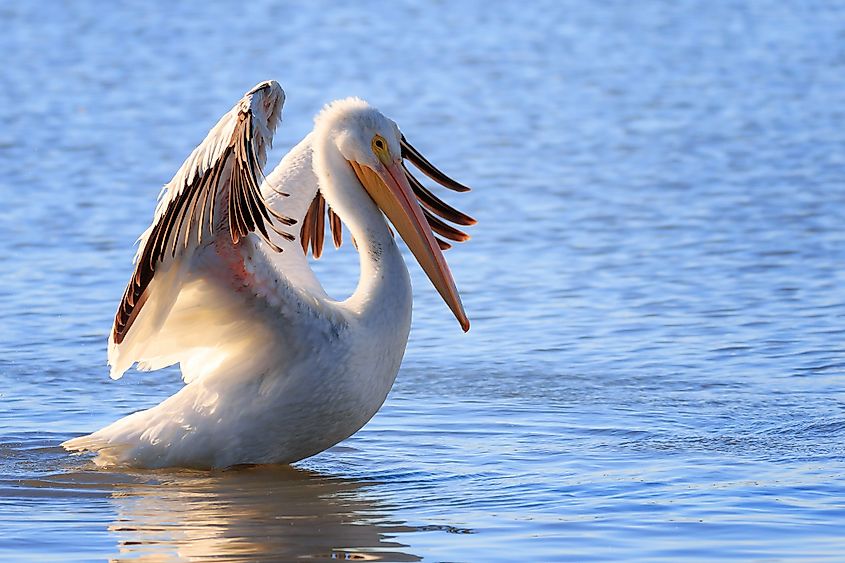
An American white pelican (Pelecanus erythrorhynchos) - Brine shrimp harvest: a commercial industry harvests brine shrimp cysts from the lake for aquaculture feed, and it is managed with the bird food supply explicitly in mind.
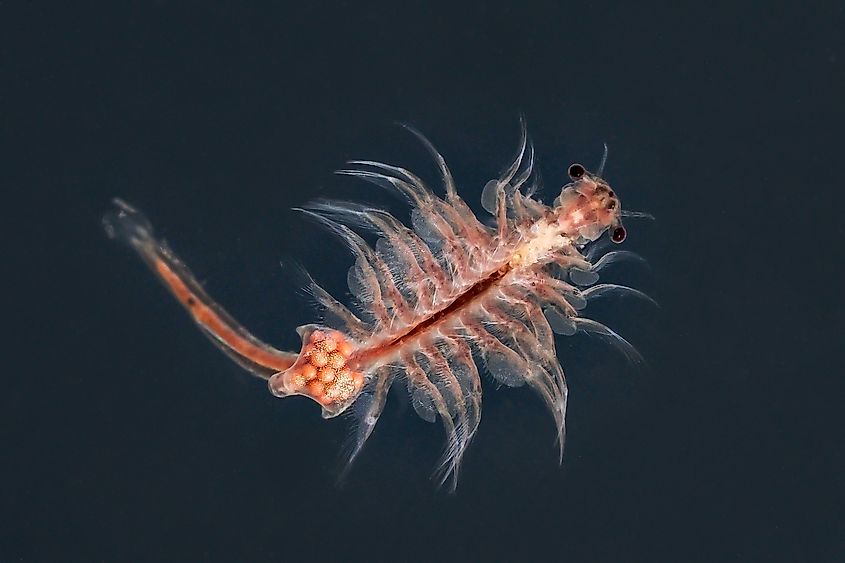
A brine shrimp (Artemia salina)


Why the level matters so precisely: brine shrimp tolerate a range of salinity, and as the lake shrinks the salt concentrates. Past a threshold, shrimp reproduction fails, and the food supply for millions of birds fails with it. The lake also has a rail causeway dividing it into arms of different salinity, so parts of the system cross that threshold before others. Related: why the Great Salt Lake keeps shrinking, why it is drying up, and how long refilling would take.
Section 04
Habitats By Region, And Who Lives In Each
Great Salt Lake and wetlands

The lake plus Bear River Migratory Bird Refuge and the surrounding marshes, which together form one of the most important bird sites in the interior West. Also the Bonneville Salt Flats, essentially lifeless salt pan.
Great Basin, west desert

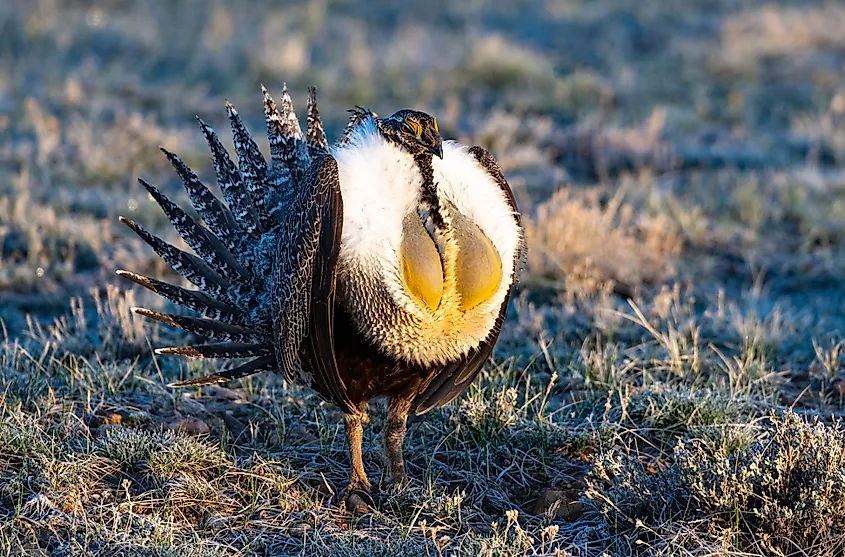
Sagebrush steppe, playas, and isolated ranges. Greater sage-grouse, pronghorn, pygmy rabbit, kit fox, and desert-adapted reptiles. Utah's west desert holds free-roaming wild horses in significant numbers.
Wasatch Range and Wasatch Front

The mountain wall above Salt Lake City, rising to over 11,000 feet, with aspen, conifer, and alpine. Elk, mule deer, moose, black bear, mountain lion, and Rocky Mountain bighorn sheep. Moose are unusual this far south and are commonly seen in canyons right above the city.
Uinta Mountains

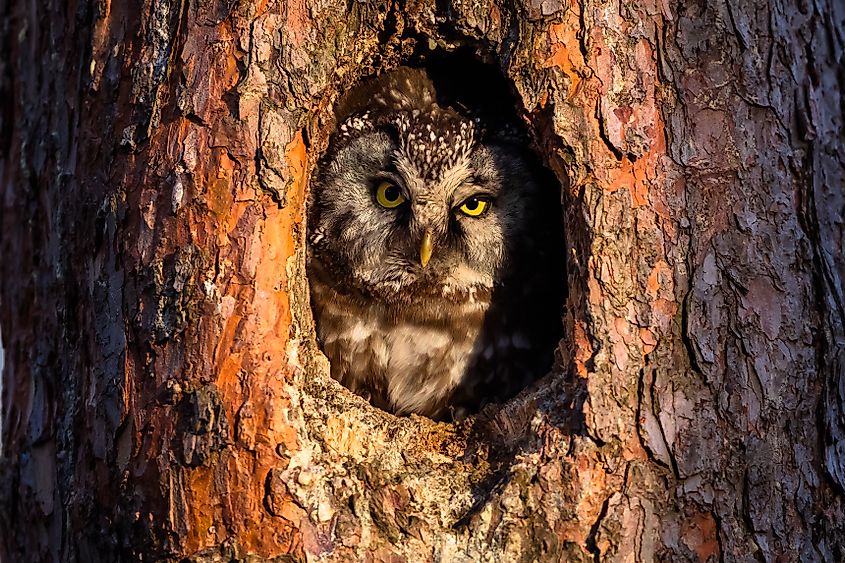
The highest range in Utah and one of the few major ranges running east to west, with over a thousand lakes and extensive alpine tundra. Boreal species reach their southern limit here, including snowshoe hare, pine marten, and boreal owl.
Colorado Plateau canyon country

Slickrock, mesas, and deep canyons in the southeast. Desert bighorn sheep, ringtail, peregrine falcon on cliffs, canyon treefrog, midget faded rattlesnake, and California condors from the Arizona and Utah flock, which nest at Zion and range widely. See Arches and Zion National Park.
Colorado River system

The Green and Colorado rivers and their tributaries hold four endangered big-river fish: Colorado pikeminnow, razorback sucker, humpback chub, and bonytail. All evolved for warm, silty, seasonally flooding water that dams have largely eliminated.
Section 05
Mammals Of Utah
Rocky Mountain elk: the state animal, with roughly 80,000 animals, restored after the native population was nearly eliminated by 1900.

Mule deer: the most numerous big game animal, with populations that fluctuate substantially with winter severity and drought.

Moose: colonised Utah in the 20th century and now number in the low thousands, at the southern edge of the species' continental range. They are frequently seen in Wasatch canyons and even in suburban yards.

Bighorn sheep: both desert bighorn in the canyon country and Rocky Mountain bighorn in the north, restored extensively by translocation. Utah has been a source of animals for restoration in other states.

Pronghorn: on the west desert and northern valleys.

Bison: two free-ranging herds, on Antelope Island in the Great Salt Lake and in the Henry Mountains of southern Utah. The Henry Mountains herd is one of very few free-roaming, huntable, genetically cattle-free bison populations in the country.

Black bear, mountain lion, bobcat, coyote, kit fox, red fox, badger, ringtail, beaver, river otter (reintroduced): all present. Related: what happens when beavers leave.

Utah prairie dog: found only in southwestern Utah and nowhere else on Earth, federally threatened, and the subject of long-running conflict between conservation requirements and private landowners and developers.

Bats: 18 species, using caves, mines, and rock crevices, with several species of concern. See where bats live.

Gone: grizzly bear and gray wolf, both eliminated by the 1920s and 1930s. Wolves occasionally disperse into Utah from Wyoming and Idaho, and their legal status differs between the northern and southern parts of the state.
Section 06
Birds Of Utah
More than 460 species have been recorded, dominated by the Great Salt Lake system and by the state's elevation range.
- Great Salt Lake waterbirds: the phalaropes, grebes, avocets, stilts, and pelicans described above, in numbers that make the lake hemispherically significant.
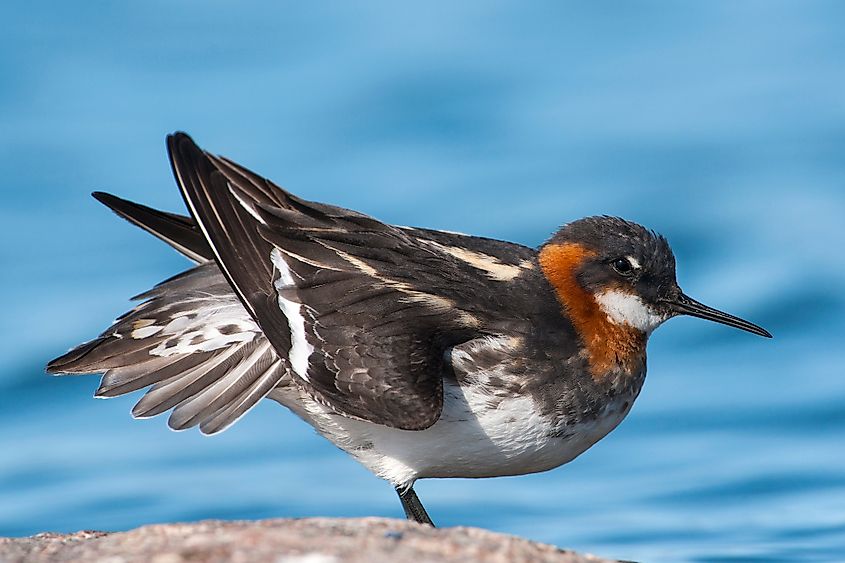
A red-necked phalarope (Phalaropus lobatus) - California gull: the state bird, nesting on lake islands and foraging widely.
A California gull (Larus californicus) - Sagebrush birds: greater sage-grouse, plus Gunnison sage-grouse in a small area of southeastern Utah, sage thrasher, and Brewer's sparrow.
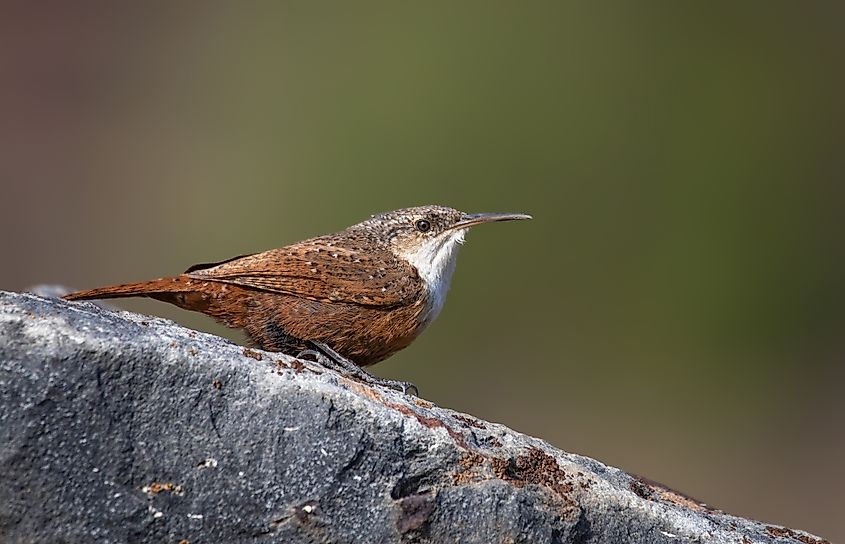
A greater sage-grouse (Centrocercus urophasianus) - Canyon and cliff birds: peregrine falcon, golden eagle, white-throated swift, canyon wren, and California condor, with the Arizona and Utah flock nesting in Zion and ranging across the region.
A canyon wren (Catherpes mexicanus) - Mountain birds: black rosy-finch on the highest peaks, Clark's nutcracker, three-toed woodpecker, and boreal owl in the Uintas.
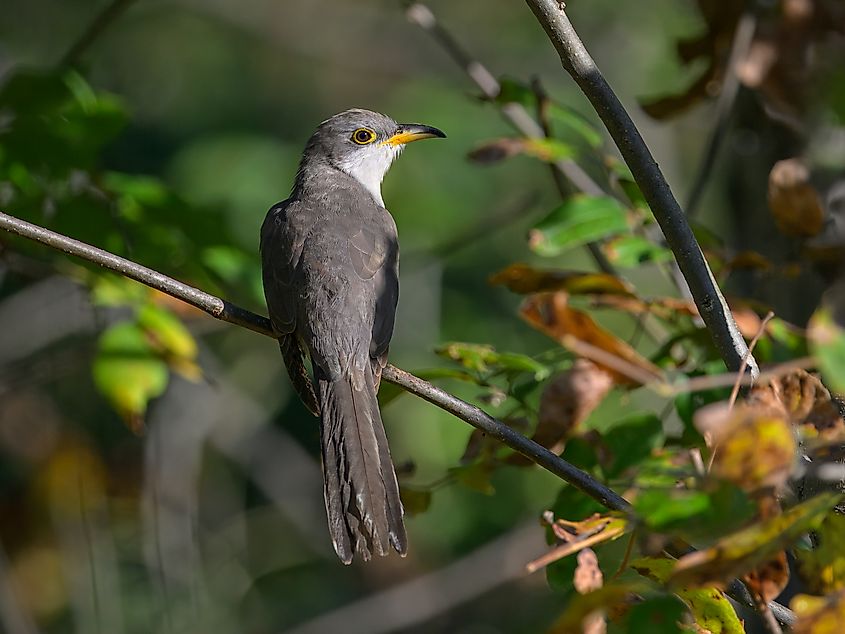
A boreal owl (Aegolius funereus) - Southwestern willow flycatcher and yellow-billed cuckoo: both federally listed and both dependent on riparian cottonwood and willow along the state's few permanent rivers.
A yellow-billed cuckoo (Coccyzus americanus)


Section 07
Reptiles, Amphibians, And Fish
Utah has around 55 reptile and 15 amphibian species. Seven rattlesnake forms occur.
Reptiles

Great Basin, midget faded, Mojave, speckled, sidewinder, and Hopi rattlesnakes among others, plus Gila monster in the extreme southwest corner, desert tortoise in the Mojave portion of Washington County, collared lizard, chuckwalla, and several whiptails.
Amphibians

Few and tied to water. Columbia spotted frog, northern leopard frog, boreal toad, Arizona toad, Great Basin spadefoot, and the relict leopard frog nearby. Canyon treefrogs call from slickrock potholes after rain.
Fish

Bonneville cutthroat trout is the state fish, a Lake Bonneville relic persisting in headwater refuges. The Colorado River basin's four endangered big-river fish all occur in Utah, and the June sucker is endemic to Utah Lake and the Provo River, having fallen to fewer than a thousand wild adults before intensive recovery work improved its status. Least chub is a small fish endemic to Bonneville basin springs.
Brine shrimp

Worth naming as the invertebrate that underpins the state's most significant wildlife system, supporting millions of birds and a commercial cyst harvest.
Section 08
Dangerous Animals In Utah
- Deer and elk: vehicle collisions, particularly on canyon roads and highways crossing migration corridors.
- Moose: aggressive when cornered and around calves, and unusually likely to be encountered because Utah moose use canyons close to Salt Lake City suburbs.
- Rattlesnakes: seven forms statewide. Bites are uncommon and rarely fatal.
- Mountain lion: present statewide, with attacks very rare.
- Africanized honeybees: established in southern Utah, and stinging insects cause the most animal-related deaths.
- Gila monster and scorpions: both in the far southwest, both rarely dangerous.
- Heat, flash floods, and altitude: worth stating plainly. Slot canyon flash floods and desert heat kill visitors most years, far more than any Utah animal.
Section 09
Endangered And Protected Species
| Species | Where | Status |
|---|---|---|
| Colorado pikeminnow | Green and Colorado rivers | ENDANGERED |
| Razorback sucker | Colorado basin | ENDANGERED |
| Bonytail | Colorado basin | ENDANGERED |
| Humpback chub | Colorado basin canyons | THREATENED |
| Utah prairie dog | Southwest Utah only | THREATENED |
| June sucker | Utah Lake, Provo River | THREATENED |
| Desert tortoise | Washington County | THREATENED |
| California condor | Zion and southern canyons | ENDANGERED |
| Southwestern willow flycatcher | Riparian corridors | ENDANGERED |
| Greater sage-grouse | Sagebrush steppe | STATE CONCERN |
| Bonneville cutthroat trout | Headwater refuges | STATE CONCERN |
Water is the single dominant pressure in Utah, and the Great Salt Lake is the clearest case. Diversions for agriculture and rapid population growth along the Wasatch Front have pushed the lake to record lows, threatening a bird food web of hemispheric importance and creating a public health problem from toxic dust off exposed lakebed. Beyond that: dams on the Colorado system that eliminated the conditions native fish evolved with, sagebrush loss to cheatgrass-driven fire, groundwater depletion drying springs, and development pressure on the Utah prairie dog's tiny range.
Section 10
Where To See Wildlife In Utah
- Bear River Migratory Bird Refuge: a wildlife drive through Great Salt Lake wetlands with avocets, stilts, ibis, and enormous shorebird numbers.
- Antelope Island State Park: free-ranging bison, pronghorn, bighorn, and coyotes, plus brine fly swarms and phalaropes on the lake shore.
- Zion National Park: California condors on the cliffs, desert bighorn, and canyon species.
- Uinta Mountains: alpine lakes, moose, and boreal species at the southern range edge.
- Henry Mountains: one of the few free-roaming genetically pure bison herds in the country, in remote country.
- Wasatch canyons above Salt Lake City: moose, mule deer, and mountain birds within minutes of the city.
- Canyonlands and Arches: desert bighorn, ringtail, and nocturnal desert wildlife.
- Cedar City area: Utah prairie dog colonies, the only place on Earth they occur.
Timing: April and May for shorebird migration at Bear River and sage-grouse leks at dawn. August through October for the eared grebe staging on the Great Salt Lake, which is the single most impressive wildlife event in the state. September and October for the elk rut. Spring and autumn for desert reptile activity, avoiding midsummer heat. Winter for wintering raptors and bighorn on low-elevation ranges.
Section 11
Common Questions
- What is the state animal of Utah?
- The Rocky Mountain elk, adopted in 1971. The state bird is the California gull, honouring the 1848 miracle of the gulls when flocks ate the crickets destroying settlers' crops.
- Why is the Great Salt Lake important for wildlife?
- It is too salty for fish, so brine shrimp and brine flies reproduce in astronomical numbers with nothing to intercept them. Roughly ten million birds a year use the lake and surrounding wetlands, including a large share of the world's Wilson's phalaropes and vast numbers of eared grebes.
- What happens if the Great Salt Lake keeps shrinking?
- As the lake concentrates, salinity passes the threshold brine shrimp can tolerate, and the food supply for millions of birds fails. Exposed lakebed also generates dust containing arsenic and other metals that blows across the Salt Lake City metropolitan area.
- Are there moose in Utah?
- Yes, in the low thousands, at the southern edge of the species' continental range. They colonised the state in the 20th century and are commonly seen in Wasatch canyons and occasionally in suburban yards.
- Where do Utah prairie dogs live?
- Only in southwestern Utah and nowhere else on Earth. The species is federally threatened, and its restricted range overlaps private land and development, which has made it the subject of long-running legal conflict.
- How many rattlesnakes live in Utah?
- Seven forms, including the Great Basin, midget faded, Mojave, speckled, sidewinder, and Hopi rattlesnakes. Bites are uncommon and rarely fatal.
- What is the most dangerous animal in Utah?
- Deer and elk through vehicle collisions, and moose through defensive charges in canyons near populated areas. Heat, flash floods, and altitude harm far more visitors than any Utah animal.
This page was last updated on October 5, 2026