Section 01
The Prairie State With Almost No Prairie Left
Illinois calls itself the Prairie State, and the name is close to an epitaph. Before European settlement roughly 22 million acres of tallgrass prairie covered about 60 percent of the state, grass that grew over head height with root systems reaching fifteen feet down. Today high-quality original prairie amounts to something on the order of 2,500 acres, roughly one hundredth of one percent of what was there.
The reason is soil. Thousands of years of prairie growth built some of the deepest, most fertile topsoil on Earth, and the steel plough turned it into the most productive farmland in the country. Illinois is now roughly 75 percent agricultural. No other state converted so completely.
What that did to wildlife was drastic and specific. Bison, elk, wolves, cougars, and black bears were gone by the mid-1800s. Prairie chickens fell from millions to a few dozen. But animals that tolerate edges, farmland, and second-growth woods thrived: white-tailed deer, coyote, raccoon, and Canada goose are all far more numerous now than in 1800.
Illinois's remaining wild strength is water. It has Lake Michigan at its northeast corner, the Mississippi along its entire western border, the Ohio at its southern tip, and the Illinois River cutting diagonally through the middle. The Illinois River valley is a critical Mississippi Flyway corridor, and the state's southern tip in the Shawnee Hills and Cache River bottoms holds cypress swamp and southern species that reach no further north.
Section 02
Illinois's Official State Animals
| Designation | Animal | Adopted |
|---|---|---|
| State animal | White-tailed deer Odocoileus virginianus | 1982 |
| State bird | Northern cardinal Cardinalis cardinalis | 1929 |
| State fish | Bluegill Lepomis macrochirus | 1986 |
| State insect | Monarch butterfly Danaus plexippus | 1975 |
| State amphibian | Eastern tiger salamander Ambystoma tigrinum | 2005 |
| State reptile | Painted turtle Chrysemys picta | 2005 |
| State fossil | Tully monster Tullimonstrum gregarium | 1989 |
Almost every Illinois animal symbol was chosen by schoolchildren, and the deer is a nice historical irony. White-tailed deer were completely extirpated from Illinois by about 1910. The state had no wild deer at all. Restocking began in the 1930s, and the population now exceeds 600,000, dense enough to be a significant management and vehicle-collision problem. The state animal is a species Illinois once eliminated entirely.

The Tully monster is the odder pick: a soft-bodied marine animal from roughly 300 million years ago, found only in the Mazon Creek fossil beds of northern Illinois. Its anatomy is so strange that palaeontologists still argue about whether it was a vertebrate, and it is known from nowhere else on Earth.
Section 03
Habitats By Region, And Who Lives In Each
Lake Michigan shore and Chicago region

Beach, dune, and remnant black oak savanna at the southern tip of Lake Michigan, plus one of the largest urban areas in the country. Piping plovers returned to nest at Montrose Beach in Chicago after decades of absence, one of the more unlikely urban wildlife stories in America. The lake itself is deep, cold, and heavily altered by invasive species. Related: how electric barriers keep Asian carp out of Lake Michigan.
Northern moraine country and prairie remnants

Glacial hills, kettle lakes, fens, and the state's best surviving prairie and wetland complexes, including Nachusa Grasslands where bison were reintroduced in 2014. Species: thirteen-lined ground squirrel, badger, Blanding's turtle, ornate box turtle, eastern massasauga rattlesnake, Henslow's sparrow, bobolink, and upland sandpiper.
Grand Prairie and central farmland

The heart of the former tallgrass prairie, now almost entirely row crop. Wildlife survives in fencerows, waterways, wetland restorations, and conservation reserve fields. Ring-necked pheasant (introduced), white-tailed deer, coyote, red fox, and the state's remaining greater prairie-chickens at two small sites in Jasper and Marion counties, sustained by translocations from Kansas.
Illinois River valley and Mississippi corridor

Backwater lakes, sloughs, and bottomland forest forming a major Mississippi Flyway corridor. Enormous numbers of waterfowl stage here, along with American white pelicans, which arrived in force only in recent decades and now stop in the tens of thousands. Bald eagles winter along the rivers below the locks and dams in nationally significant concentrations.
Shawnee Hills and southern Illinois

Unglaciated country with sandstone bluffs, oak-hickory forest, and canyons. This is the state's most rugged and most biodiverse region, holding timber rattlesnake, copperhead, cottonmouth, green treefrog, and the famous Snake Road, a lane closed twice yearly so that thousands of snakes and amphibians can migrate between bluff dens and swamp.
Cache River and cypress swamp

At the southern tip, bald cypress and tupelo swamp with trees over a thousand years old, a Wetland of International Importance and the northernmost cypress swamp of its kind. Species reaching their northern limit here include cottonmouth, bird-voiced treefrog, and swamp rabbit.
Section 04
Mammals Of Illinois
Illinois has around 60 mammal species. The large ones are almost all gone or recently returned.
- White-tailed deer: the state animal, over 600,000 animals, restored from total extirpation by 1910.
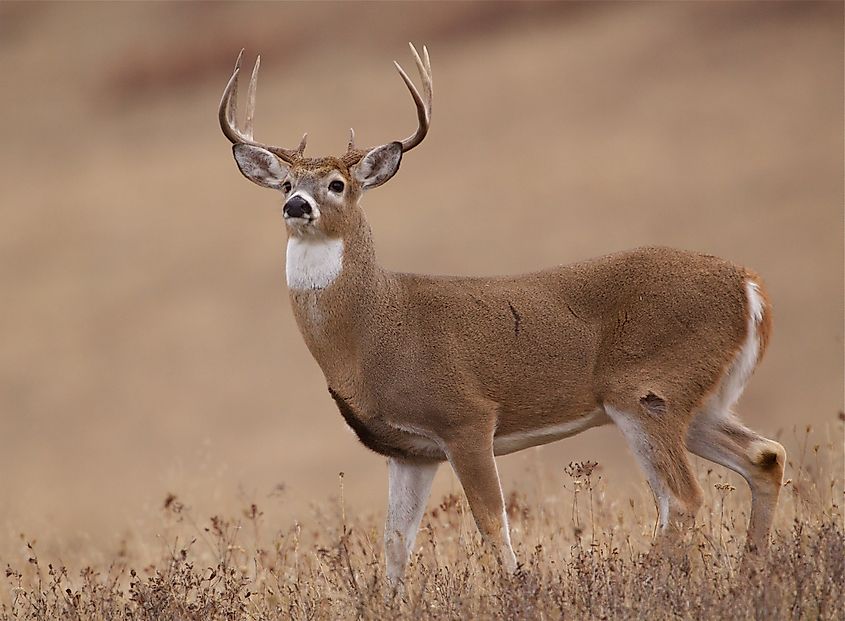
A white-tailed deer (Odocoileus virginianus) buck - Coyote: statewide and thriving, including a well-studied urban population in Chicago that lives at high density largely unnoticed.
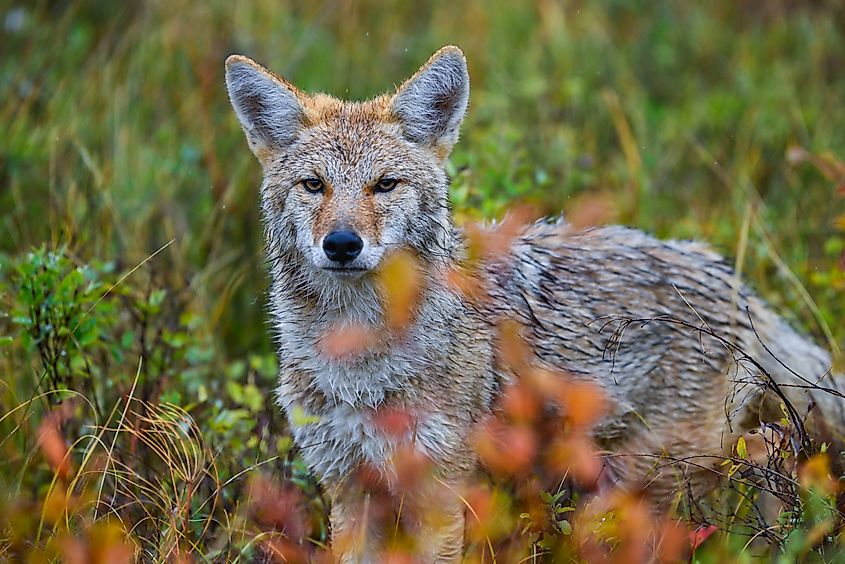
A coyote (Canis latrans) - Bobcat: reduced to near-absence by the 1970s and listed as threatened in the state, then recovered strongly enough to be delisted in 1999 and to support a regulated harvest.
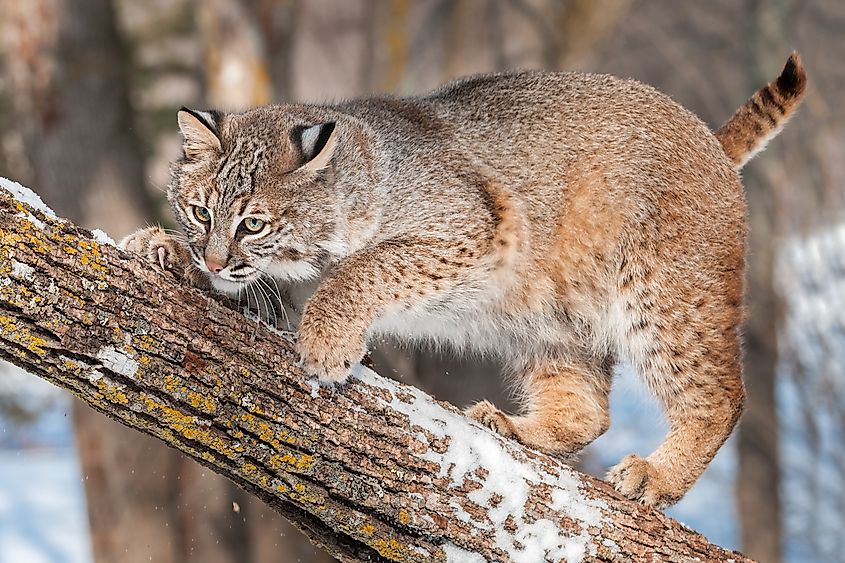
A bobcat (Lynx rufus) - River otter: down to fewer than 100 animals in the late 1980s. Reintroductions in the 1990s using Louisiana stock rebuilt the population to many thousands, and it was removed from the state list in 2004. This is one of the clearest recovery successes in the Midwest.
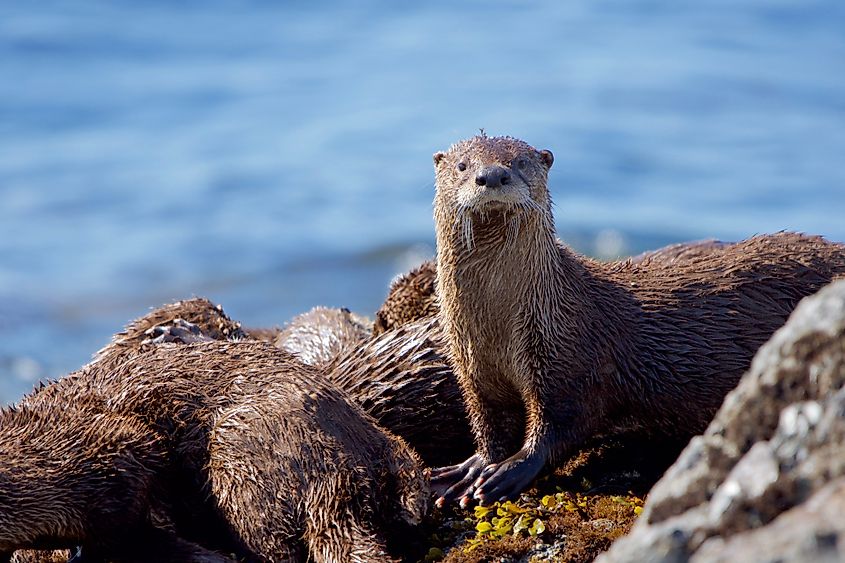
A river otter (Lontra canadensis) - Beaver: extirpated by 1900, now abundant statewide.
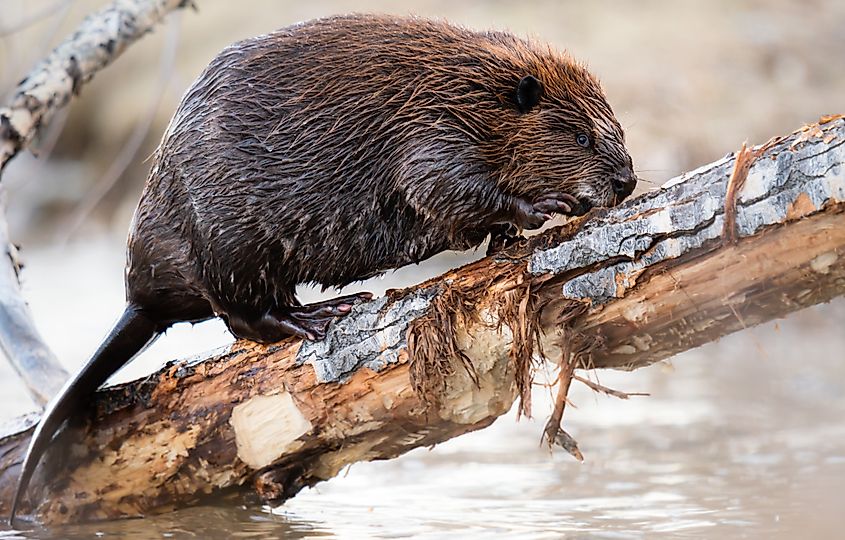
A North American beaver (Castor canadensis) - American badger, mink, long-tailed weasel, striped skunk, raccoon, opossum, woodchuck, fox and gray squirrel, southern flying squirrel, muskrat, eastern cottontail, swamp rabbit: all present, with swamp rabbits confined to the southern bottomlands.
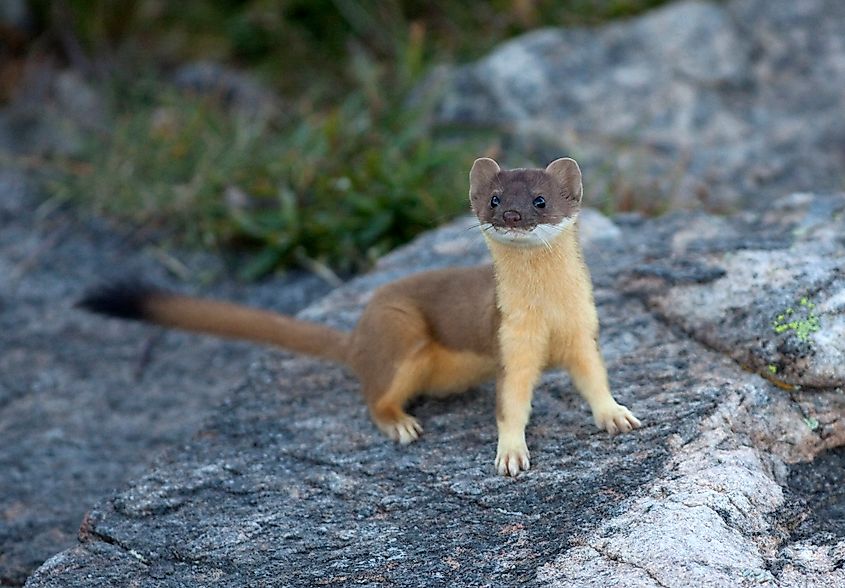
A long-tailed weasel (Neogale frenata) - Bats: 13 species. Indiana bat and northern long-eared bat are federally listed, and white-nose syndrome has caused severe declines. See where bats live.
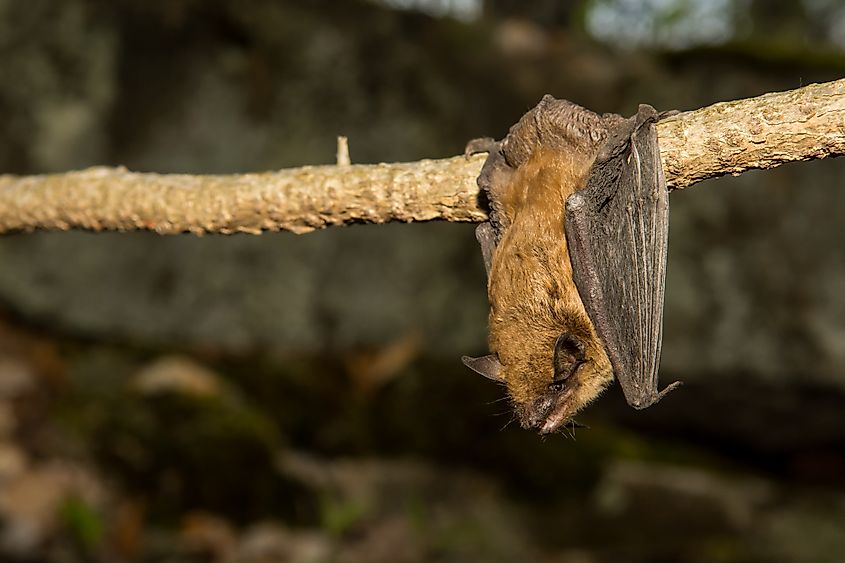
A big brown bat (Eptesicus fuscus) - Bison: reintroduced to Nachusa Grasslands in 2014 as a conservation herd, the first bison on Illinois prairie in nearly two centuries. Their grazing and wallowing is being used deliberately to restore prairie structure.
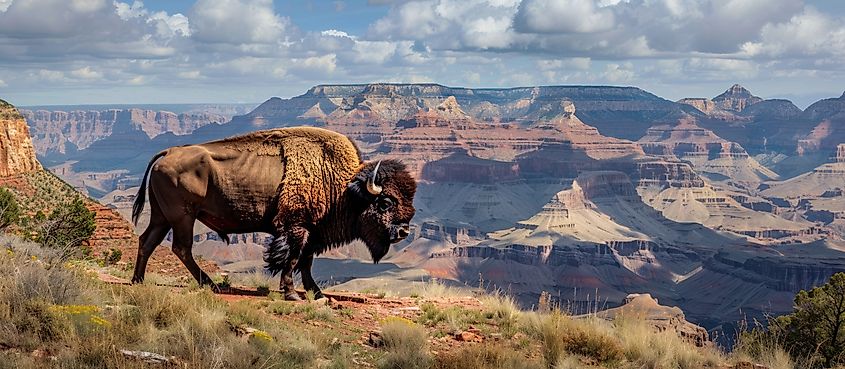
An American bison (Bison bison)


Gone: elk, bison in the wild, gray wolf, cougar, and black bear, all extirpated by the mid-1800s. All four of the large carnivores and ungulates now occasionally appear as dispersing individuals from western or northern populations, and Illinois has confirmed several cougars and wolves and a few bears in recent years without any breeding population establishing.
Section 05
Birds Of Illinois
More than 450 species have been recorded, driven by the Mississippi Flyway and by Lake Michigan concentrating migrants along its shore.
- Waterfowl and waterbirds: the Illinois and Mississippi valleys stage very large numbers of mallards, wood ducks, lesser scaup, canvasback, and snow geese. American white pelicans now stop in the tens of thousands, a change within living memory. Great egret and great blue heron rookeries occupy river islands.
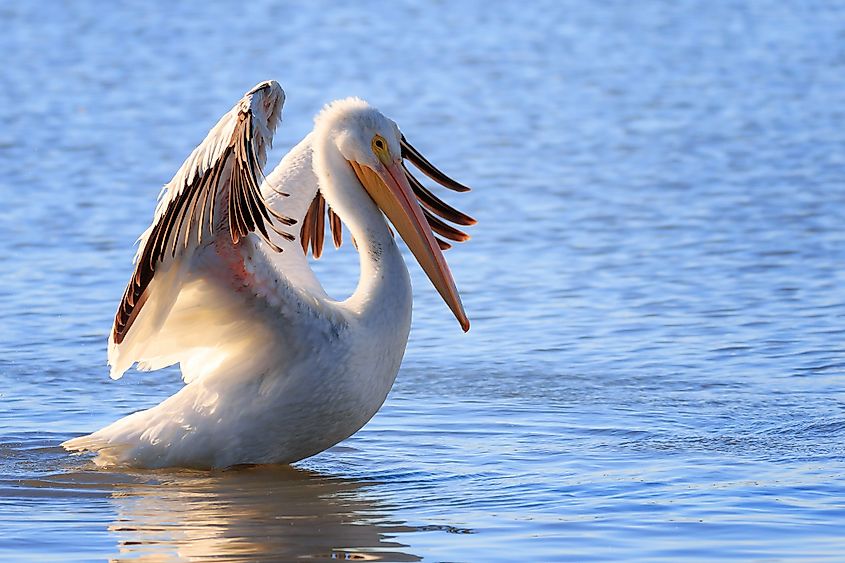
An American white pelican (Pelecanus erythrorhynchos) - Raptors: bald eagles winter below the river dams in numbers that draw organised viewing events, plus red-tailed hawk, Cooper's hawk in cities, peregrine falcon nesting on Chicago buildings, and short-eared owl on grassland in winter.
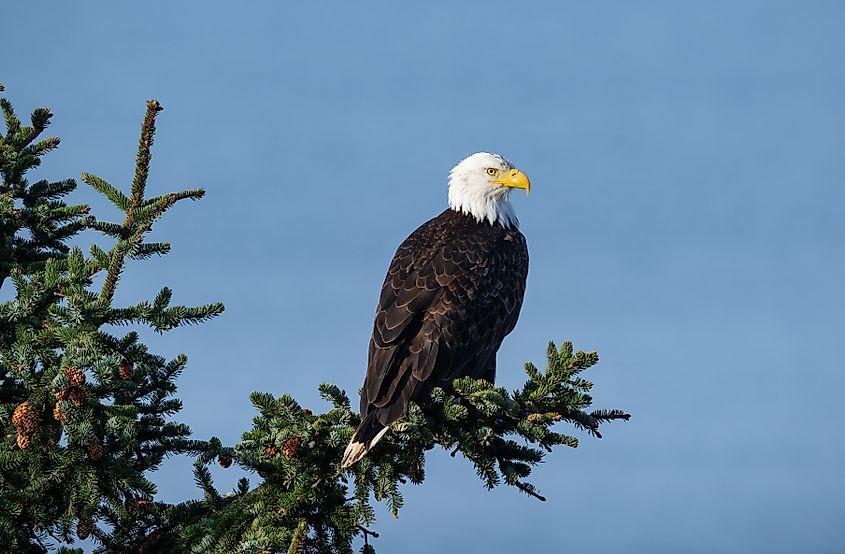
A bald eagle (Haliaeetus leucocephalus) - Grassland birds: the group hit hardest. Greater prairie-chicken survives at two tiny sites only through translocation. Henslow's sparrow, bobolink, eastern meadowlark, upland sandpiper, and dickcissel all depend on the small amount of grassland that remains.
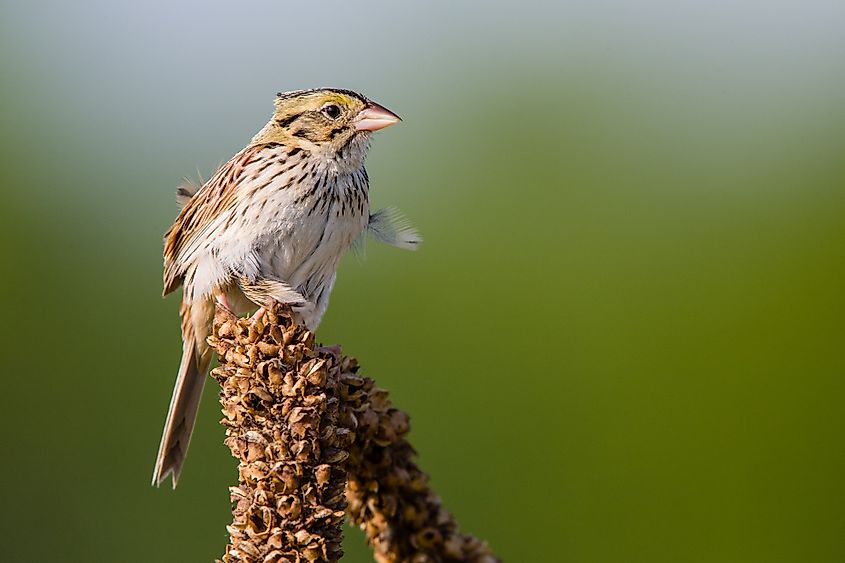
A Henslow's sparrow (Centronyx henslowii) - Forest and southern species: the Shawnee and Cache regions hold prothonotary warbler, Swainson's warbler, yellow-crowned night-heron, and Mississippi kite, all reaching their northern limits.
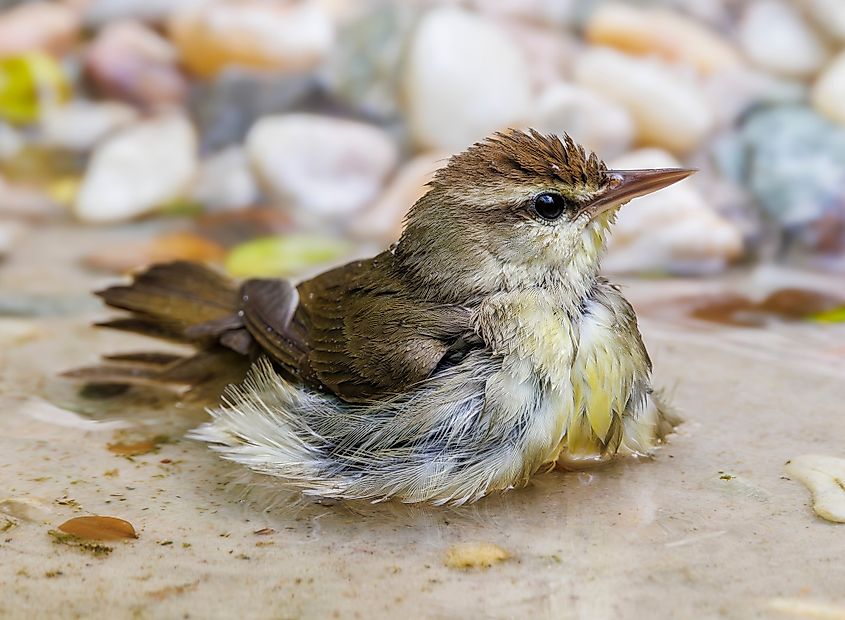
A Swainson's warbler (Limnothlypis swainsonii) - Urban migration: Chicago's lakefront is one of the best migration watchpoints in the interior US, and also one of the deadliest places in the country for window collisions, which is why the city runs a lights-out programme during migration.


Section 06
Reptiles, Amphibians, And Fish
Illinois has around 60 reptile and 40 amphibian species, concentrated in the south.
Snakes

About 39 species, four venomous: timber rattlesnake, eastern massasauga, copperhead, and cottonmouth. The massasauga is federally threatened and reduced to a handful of Illinois sites. Copperhead and cottonmouth occur only in the southern part of the state.
Snake Road

Worth its own mention. A gravel road in the Shawnee National Forest between LaRue Swamp and limestone bluffs is closed to vehicles each spring and autumn so that thousands of snakes, salamanders, and frogs can cross safely between winter dens and summer wetland. It is one of the few places in the country where a public road is closed specifically for reptile migration.
Turtles

Painted turtle (the state reptile), Blanding's turtle, ornate box turtle, spotted turtle, alligator snapping turtle in the south, plus common snapper, map turtles, and softshells.
Amphibians

Eastern tiger salamander (the state amphibian), spotted and marbled salamanders, four-toed salamander, mudpuppy, hellbender in a few southern streams, plus green treefrog, bird-voiced treefrog, crawfish frog, and Illinois chorus frog, which burrows in sandy soils and is a state threatened species.
Fish

Around 180 native species. Bluegill is the state fish. The big issues are invasive: silver and bighead carp dominate stretches of the Illinois River, and preventing their entry into Lake Michigan via the Chicago Area Waterway System is one of the largest ongoing aquatic invasive species efforts in the world.
Section 07
Dangerous Animals In Illinois
- White-tailed deer: by far the most dangerous animal in the state, causing tens of thousands of vehicle collisions annually with regular fatalities.
- Venomous snakes: four species, all uncommon and mostly southern. The massasauga is rare enough that encountering one is notable. Bites in Illinois are very unusual.
- Ticks and mosquitoes: Lyme disease is expanding in the north, and West Nile virus is established statewide.
- Black widow and brown recluse spiders: brown recluse is present mainly in the south and centre.
- Coyote: attacks on people are extremely rare even in Chicago's dense urban population. Pets are the realistic concern.
- Silver carp: an unusual entry, but jumping carp genuinely injure boaters on the Illinois River when startled by motors.
- Rabies: bats and skunks are the main vectors in Illinois.
Section 08
Endangered And Protected Species
| Species | Where | Status |
|---|---|---|
| Greater prairie-chicken | Two sites, Jasper & Marion | STATE ENDANGERED |
| Eastern massasauga | A few northern wetlands | THREATENED |
| Indiana bat | Southern caves, statewide forest | ENDANGERED |
| Northern long-eared bat | Statewide | ENDANGERED |
| Piping plover | Lake Michigan beaches | ENDANGERED |
| Least tern, interior | Mississippi sandbars | DELISTED 2021 |
| Hine's emerald dragonfly | Fens near Chicago and Joliet | ENDANGERED |
| Illinois chorus frog | Sand prairie | STATE THREATENED |
| Blanding's turtle | Northern marsh | STATE ENDANGERED |
| Sheepnose & other mussels | Larger rivers | MULTIPLE LISTED |
Illinois is an unusually clear case study: the dominant pressure is not pollution or hunting but near-total habitat conversion. Roughly 90 percent of the state's original wetlands and effectively all of its prairie are gone. Restoration rather than protection is therefore the main conservation strategy, and projects like Nachusa Grasslands, Midewin National Tallgrass Prairie on a former arsenal, and the Emiquon and Merwin preserves along the Illinois River are attempts to rebuild habitat from farmland rather than preserve what survived.
Section 09
Where To See Wildlife In Illinois
- Nachusa Grasslands: bison on restored tallgrass prairie, plus grassland birds and Blanding's turtles.
- Midewin National Tallgrass Prairie: a former munitions plant being converted to the largest prairie restoration in the region.
- Emiquon and Chautauqua National Wildlife Refuges: Illinois River waterfowl and pelican staging in spectacular numbers.
- Snake Road, Shawnee National Forest: spring and autumn reptile and amphibian migration, on foot only.
- Cache River State Natural Area: thousand-year-old cypress, swamp species, canoe access.
- Montrose Point, Chicago: one of the best urban migration watchpoints in the country, plus nesting piping plovers.
- Starved Rock and Illinois River locks: wintering bald eagle concentrations.
- Prairie Ridge State Natural Area: the last greater prairie-chicken leks in the state, viewed from blinds.
Timing: late March and April for prairie-chicken booming at dawn from a reserved blind, and for the spring Snake Road migration. May for warbler migration on the Chicago lakefront. September and October for the autumn snake migration and southbound shorebirds. November through February for eagles below the river dams and enormous waterfowl staging. Summer is best for prairie insects and grassland birds.
Section 10
Common Questions
- What is the state animal of Illinois?
- The white-tailed deer, adopted in 1982 after a schoolchildren's vote. Illinois also names a state bird (northern cardinal), fish (bluegill), insect (monarch butterfly), amphibian (eastern tiger salamander), and reptile (painted turtle).
- How much prairie is left in Illinois?
- Very little. Roughly 22 million acres of tallgrass prairie once covered about 60 percent of the state. High-quality original prairie now amounts to only a few thousand acres, on the order of one hundredth of one percent.
- Are there bears, wolves, or cougars in Illinois?
- No breeding populations. All were extirpated by the mid-1800s. Individual dispersing cougars, wolves, and black bears have been confirmed in recent years, arriving from western or northern populations, but none have established.
- Are there bison in Illinois?
- Yes, as a conservation herd. Bison were returned to Nachusa Grasslands in 2014, the first on Illinois prairie in nearly two centuries, and their grazing is used deliberately to restore prairie structure.
- How many venomous snakes live in Illinois?
- Four: timber rattlesnake, eastern massasauga, copperhead, and cottonmouth. All are uncommon, and the last two occur only in the south.
- What is Snake Road?
- A gravel road in the Shawnee National Forest closed to vehicles each spring and autumn so thousands of snakes and amphibians can migrate safely between limestone bluff dens and LaRue Swamp. Visitors may walk it.
- What is the most dangerous animal in Illinois?
- White-tailed deer, through tens of thousands of vehicle collisions each year. Venomous snakebites are rare, and there are no large predators.
This page was last updated on October 14, 2026