Section 01
Why Alabama Holds So Many Animals
While many states are characterized by a single prominent ecological region, Alabama encompasses four distinct ecological zones. The northeast corner represents the terminus of the Appalachian Mountains, featuring sandstone caps and shaded ravines. Progressing southward, long parallel ridges of limestone and shale transition into the worn granite hills of the Piedmont. South of a line approximately through Montgomery, the landscape flattens into the Coastal Plain, which is characterized by sandy soils, pine forests, and slow-moving blackwater rivers. At its southernmost extent, Alabama opens onto Mobile Bay and the Gulf of Mexico through one of the largest river deltas in North America.
Two main factors make this region especially rich in animal life. The first is its rivers. Alabama’s rivers flow south and, unlike those farther north, they were not scraped clean by glaciers during the Pleistocene ice ages. This allowed aquatic species to survive and evolve there for millions of years, while northern rivers lost much of their wildlife. The second factor is Alabama’s unique climate. Northern species reach their southern edge in the mountains, while southern and subtropical species reach their northern edge near the coast. In just one day, a hiker in Alabama can travel from cool hemlock ravines that feel like West Virginia to warm longleaf pine savannas that feel like Florida.
The result is a state that leads the nation in aquatic biodiversity and ranks near the top overall. Alabama is home to more species of freshwater turtles than any other state, more freshwater snails, more crayfish, and more freshwater fish. It is also, less happily, one of the national leaders in aquatic extinctions, a consequence of a century of damming, dredging, and sedimentation on the same rivers that made it so rich.
Section 02
Alabama's Official State Animals
Alabama has designated an unusually long list of official animal symbols, covering everything from a salamander found nowhere else on Earth to a sea shell. Several were adopted at the urging of schoolchildren.
| Designation | Animal | Adopted |
|---|---|---|
| State bird | Yellowhammer (northern flicker) Colaptes auratus | 1927 |
| State game bird | Wild turkey Meleagris gallopavo | 1980 |
| State mammal | American black bear Ursus americanus | 2006 |
| State reptile | Alabama red-bellied turtle Pseudemys alabamensis | 1990 |
| State amphibian | Red Hills salamander Phaeognathus hubrichti | 2000 |
| State freshwater fish | Largemouth bass Micropterus salmoides | 1975 |
| State saltwater fish | Fighting tarpon Megalops atlanticus | 1955 |
| State insect | Monarch butterfly Danaus plexippus | 1989 |
| State butterfly & mascot | Eastern tiger swallowtail Papilio glaucus | 1989 |
| State horse | Racking horse | 1975 |
| State shell | Johnstone's junonia Scaphella junonia johnstoneae | 1990 |
The one that matters most: the Red Hills salamander is Alabama's only endemic vertebrate state symbol. It lives in a narrow band of steep, damp hardwood slopes in a few south-central counties and nowhere else in the world. It is a lungless salamander that spends most of its life in a burrow, waiting at the entrance for passing insects. Protecting it means protecting a specific kind of hillside, which is why timber companies in the region operate under conservation agreements.

The yellowhammer is worth a note too. The name is a regional nickname for the northern flicker, a woodpecker with golden shafts in its wing feathers, and it dates to the Civil War, when Alabama troops reportedly wore yellow-trimmed uniforms. "Yellowhammer State" came before the official bird designation, not after.
Section 03
Habitats By Region, And Who Lives In Each
Cumberland Plateau & Appalachian foothills (northeast)

Sandstone-capped tablelands, intersected by deep gorges, are characterized by hemlock, beech, and rhododendron in the shaded valleys. This region, known as Alabama's cave country, contains thousands of documented caves. Cave-adapted fauna include blind cavefish, cave crayfish, and cave salamanders. Gray bats and the endangered Indiana bats hibernate in these cave systems in populations numbering in the tens of thousands. Aboveground, black bears inhabit the Little River and Bankhead areas, ruffed grouse occur at the southernmost extent of their range, timber rattlesnakes and green salamanders occupy shaded rock faces, and wood thrushes are commonly heard singing in the ravines.
Ridge & Valley (north-central)

The landscape consists of alternating limestone valleys and hard sandstone ridges. The valleys are primarily used for agriculture and settlement, while the ridges support oak-hickory-pine forests. The presence of limestone results in numerous springs, which contribute to a disproportionately high diversity of snails and darters within the state. Notable wildlife includes bald eagles along the Coosa River impoundments, wild turkeys, bobcats, gray and red foxes, and eastern box turtles, which are often observed crossing roads following summer rainfall.
Piedmont (east-central)

The narrow, hilly southern tip of the Piedmont includes Cheaha Mountain, which, at 2,413 feet, represents the highest elevation in the state. This region is characterized by dry ridgetop pine and oak forests, mountain longleaf pine stands, and small, clear streams. Notable species include the eastern towhee, scarlet tanager, timber rattlesnake, coal skink, and mountain longleaf pine communities that support red-cockaded woodpeckers in areas where prescribed fire is maintained.
Coastal Plain & Black Belt (south and central)

The largest region encompasses sandy uplands, longleaf pine savanna, bottomland hardwood swamps, and the dark, fertile prairie soils of the Black Belt. When subjected to regular burning, longleaf pine savanna represents one of the most species-rich ground-level habitats in North America. Fauna in this region include the gopher tortoise, eastern indigo snake, coyote, high-density populations of white-tailed deer, nine-banded armadillo, bobwhite quail, and unique pitcher-plant bog insects.
Gulf Coast & Mobile-Tensaw Delta (far south)

Although Alabama possesses only approximately 60 miles of Gulf shoreline, it is bordered by the Mobile-Tensaw Delta, an area encompassing roughly 250,000 acres of cypress-tupelo swamp, marsh, and braided river channels, often referred to as "America's Amazon." The delta supports diverse species, including American alligators, Alabama red-bellied turtles, wood storks, roseate spoonbills, river otters, and swallow-tailed kites. On the barrier islands and beaches near Gulf Shores, nesting sea turtles, Alabama beach mice, and hundreds of thousands of migrating songbirds arrive after crossing the Gulf.
Section 04
Mammals Of Alabama
Alabama is home to approximately 60 native mammal species, with smaller mammals such as bats, rodents, and shrews comprising the majority. The state's two largest native predators, the eastern cougar and the red wolf, have both been extirpated from the wild.
Large mammals
- American black bear: the state mammal, and a genuine conservation success in progress. A small remnant population persisted in the southwest near Mobile and Washington counties, closely related to the Louisiana black bear, while bears recolonizing from Georgia have re-established a growing population in the northeast. Statewide numbers are still low, likely in the low hundreds.
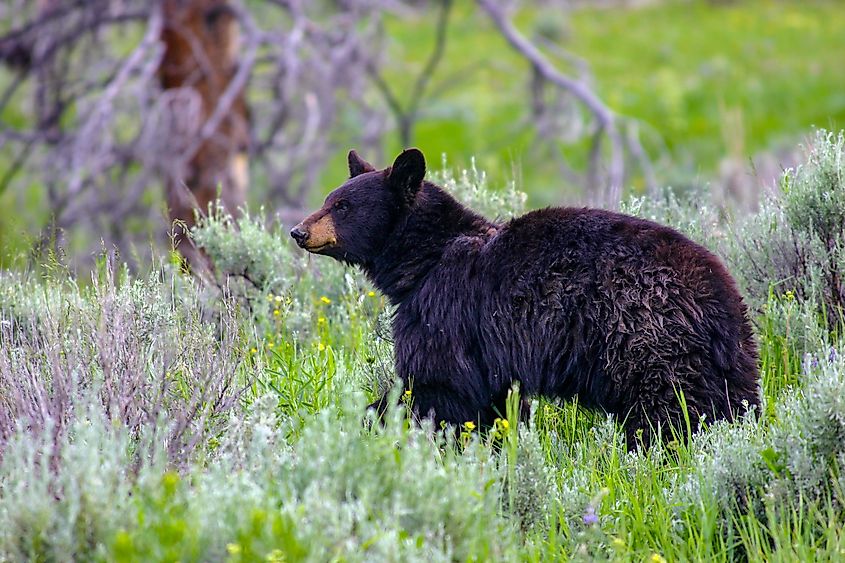
An American black bear (Ursus americanus) - White-tailed deer: abundant statewide, with a population estimated in the high hundreds of thousands. Alabama's deer are a restocking story: hunted to near-collapse by the early 1900s, then rebuilt through decades of translocation.
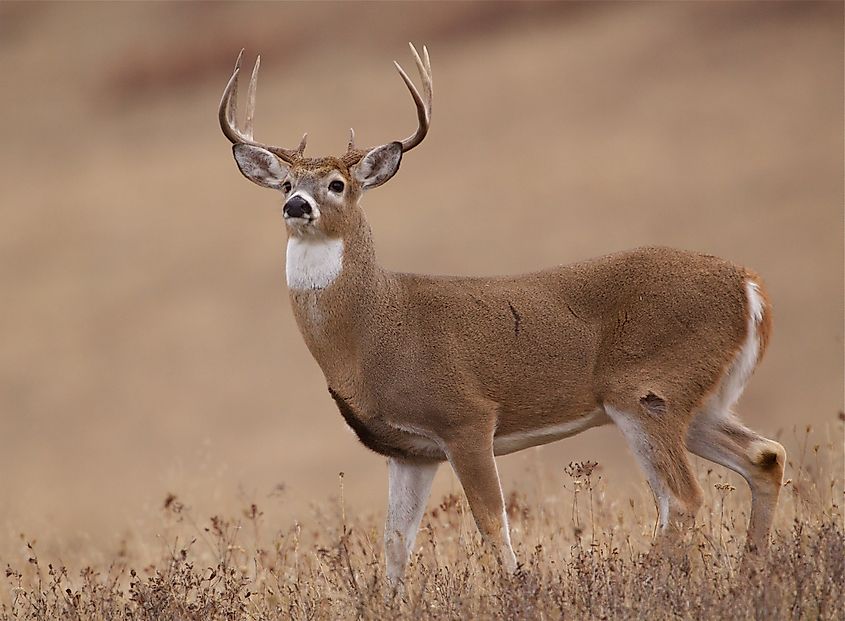
A white-tailed deer (Odocoileus virginianus) buck - Feral hog: not native, present in most counties, and covered under invasive species below.
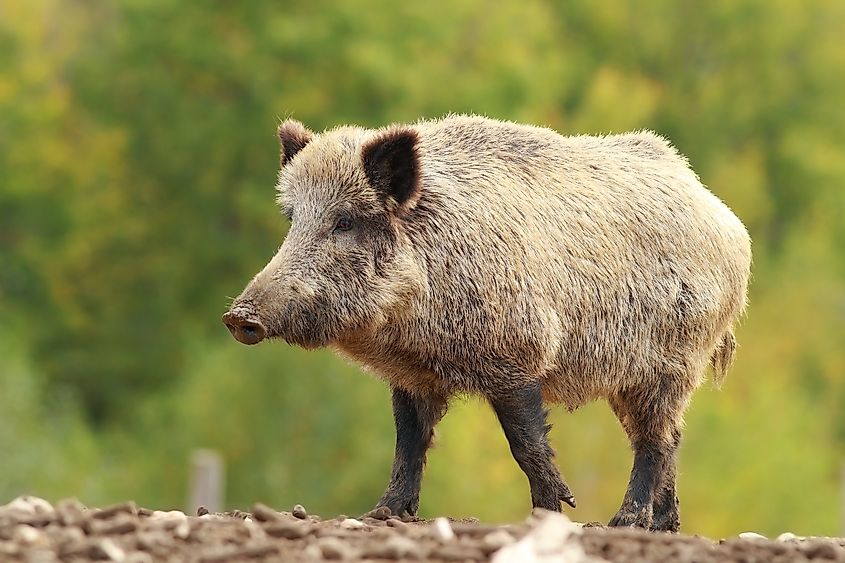
A wild boar (Sus scrofa)


Predators and mid-sized mammals
- Bobcat: the state's only established wild cat, common but rarely seen, hunting rabbits and rodents at dawn and dusk.
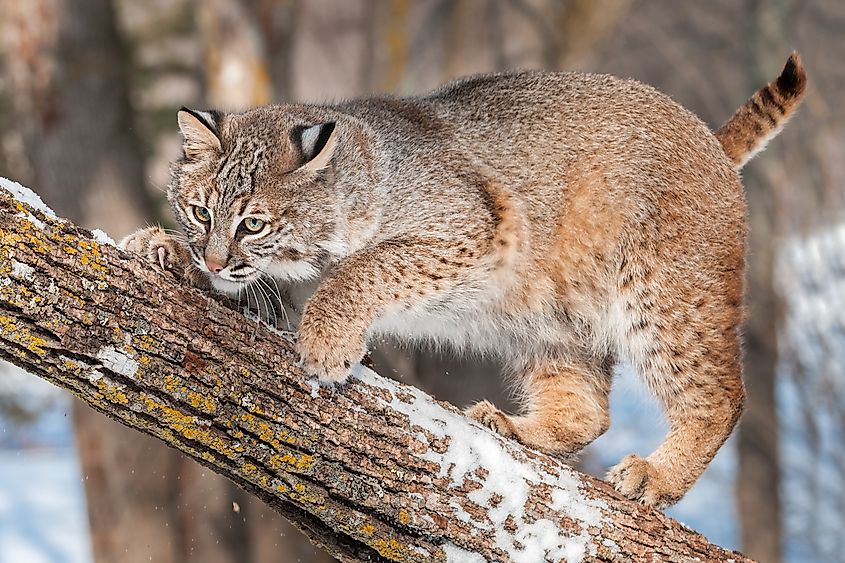
A bobcat (Lynx rufus) - Coyote: absent from Alabama before the 20th century, now in every county, and the region's functional replacement for the missing red wolf.
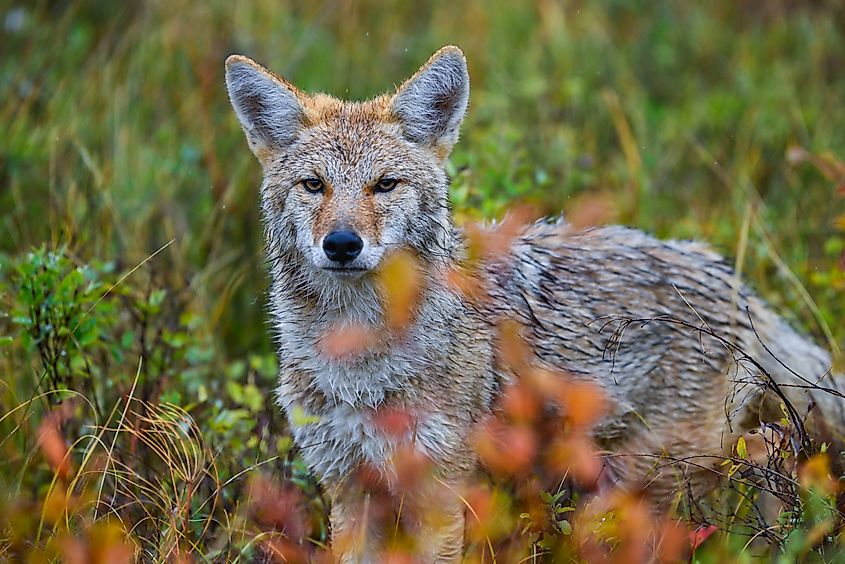
A coyote (Canis latrans) - Gray fox and red fox: gray foxes climb trees, which surprises people; red foxes favor open farmland edges.
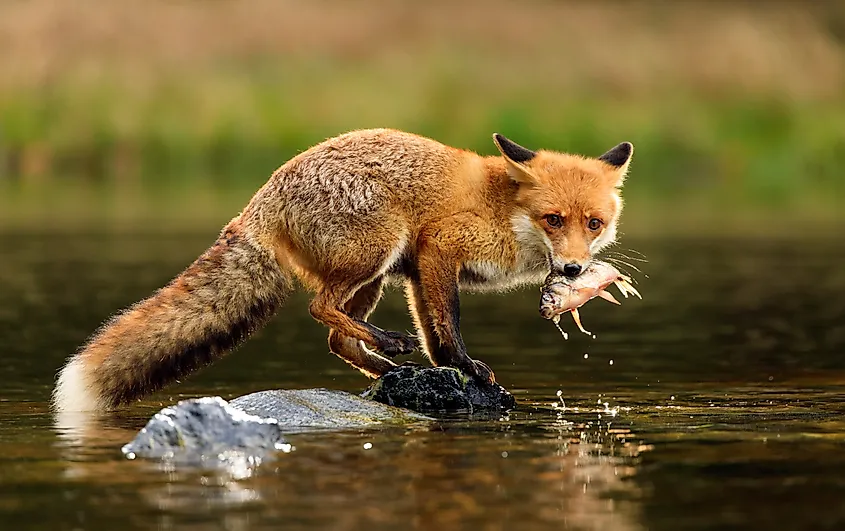
A red fox (Vulpes vulpes) - River otter: recovering strongly in the delta and larger rivers.
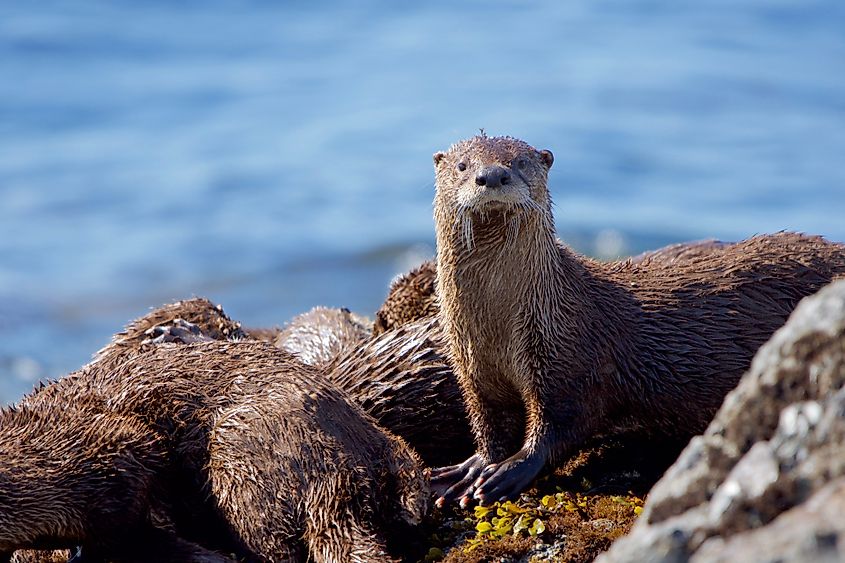
A river otter (Lontra canadensis) - American mink, long-tailed weasel, striped skunk, raccoon, Virginia opossum: all widespread.
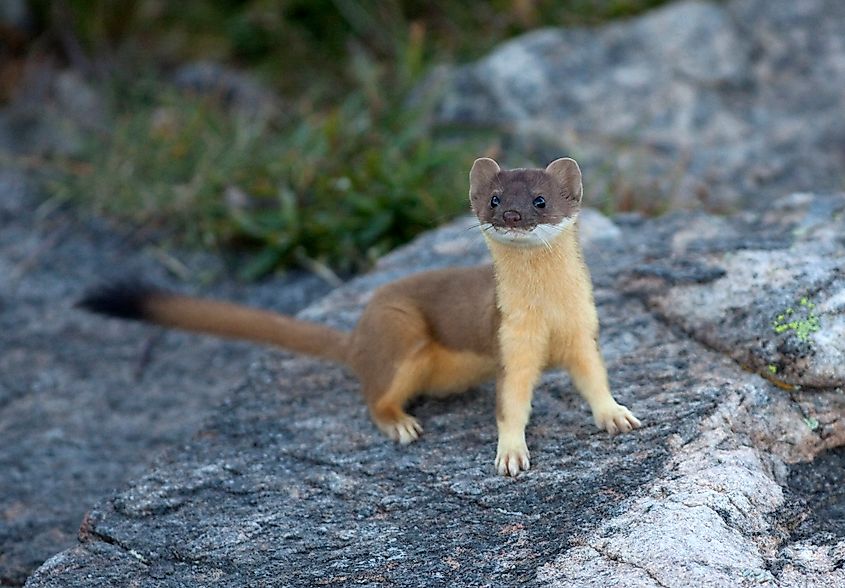
A long-tailed weasel (Neogale frenata) - Nine-banded armadillo: a northward-expanding arrival from Texas and Mexico, now common as far as the Tennessee Valley.
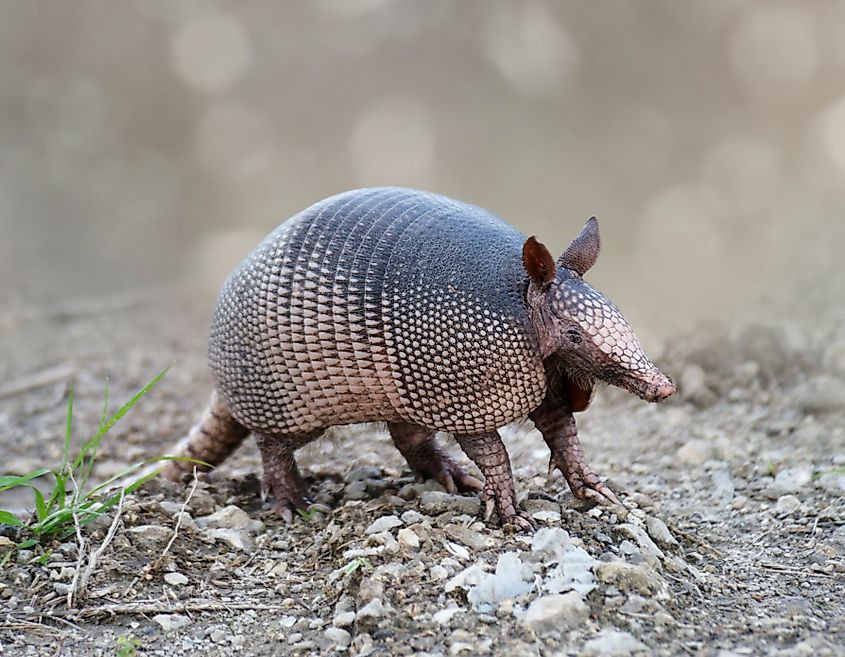
A nine-banded armadillo (Dasypus novemcinctus)


Bats

Alabama has around 16 bat species, and its caves are regionally significant hibernacula. Gray bats, tricolored bats, and northern long-eared bats have all been hit hard by white-nose syndrome, a fungal disease that kills hibernating bats. If you want the background on bat roosting and winter behavior, see where bats live and whether bats hibernate.
Section 05
Birds Of Alabama
More than 420 bird species have been recorded in Alabama. This diversity is attributed primarily to the state's geographic position beneath the overlap of the Mississippi and Atlantic flyways, as well as its coastal location, which serves as the initial or final landfall for millions of trans-Gulf migrants.
Year-round residents

- Northern cardinal, Carolina chickadee, tufted titmouse, Carolina wren, mourning dove
- Northern flicker, the yellowhammer, which is the state bird
- Pileated, red-bellied, downy, and hairy woodpeckers; red-headed woodpecker in open pine
- Wild turkey, the state game bird, and one of Alabama's strongest game populations
- Barred owl, great horned owl, eastern screech-owl
- Red-tailed hawk, red-shouldered hawk, black and turkey vultures
Waterbirds and raptors

Bald eagles now nest throughout Alabama following their reintroduction in the 1980s after the species had disappeared from the state by the mid-twentieth century. Ospreys are commonly observed fishing in reservoirs, while Mississippi kites prey on insects over river bottoms during summer months. In the delta and along the coast, species such as great blue heron, great egret, little blue heron, tricolored heron, white ibis, roseate spoonbill, wood stork, brown pelican, black skimmer, and least tern nest on open sand. Wheeler National Wildlife Refuge, located on the Tennessee River, supports a significant winter concentration of sandhill cranes, and a small number of whooping cranes now winter there as part of the eastern reintroduction initiative.
Migration and the fallout phenomenon

In spring, warblers, tanagers, thrushes, buntings, and orioles cross the Gulf in a single non-stop flight of 500 to 600 miles. When they hit a headwind or storm front near the coast, they drop en masse into the first available cover, a "fallout." Fort Morgan and Dauphin Island are among the best-known places in the country to witness it, and a good April morning can produce 25 warbler species in a few acres of scrub.
Section 06
Reptiles And Amphibians
This is where Alabama's numbers start to look extraordinary. Around 93 reptile and 73 amphibian species live in the state, including the highest turtle diversity of any US state.
Turtles

Alabama has roughly 30 turtle species. Highlights include the Alabama red-bellied turtle (the state reptile, largely confined to the Mobile Bay drainage), the Alabama map turtle, the flattened musk turtle of the Black Warrior River system, the alligator snapping turtle, a bottom-dwelling ambush predator that can exceed 150 pounds, and the gopher tortoise, a keystone species whose burrows shelter more than 300 other animals, from indigo snakes to burrowing owls to frogs escaping fire.
Snakes

Approximately 50 snake species inhabit Alabama, with only six classified as venomous. Most species are harmless and ecologically beneficial, including the eastern rat snake, gray rat snake, eastern kingsnake, scarlet kingsnake, black racer, eastern hognose, rough green snake, and the eastern indigo snake. The eastern indigo snake, recognized as North America's longest native snake, is currently the focus of a reintroduction program in the Conecuh National Forest.
Lizards, salamanders, and frogs

- Lizards: green anole, eastern fence lizard, six-lined racerunner, five-lined and broadhead skinks, slender glass lizard
- Salamanders: Red Hills salamander (state amphibian and endemic), spotted salamander, marbled salamander, green salamander, Red Hills and seepage-dwelling dusky salamanders, two-toed amphiuma, greater siren, and the fully aquatic hellbender in a few northern rivers
- Frogs and toads: around 30 species, including bullfrog, green treefrog, barking treefrog, pine woods treefrog, spring peeper, gopher frog, and the Alabama-associated populations of dusky gopher frog at the extreme edge of survival
Section 07
Freshwater Life: Alabama's Real Claim To Fame
Alabama is particularly significant to biologists for its exceptional freshwater resources. The state contains more than 130,000 miles of rivers and streams, supporting one of the most diverse aquatic faunas in the United States by several measures.
- Fish: over 450 freshwater species, more than any other state. Darters alone account for dozens, many restricted to a single river system. Sport species include largemouth bass (the state freshwater fish), spotted and Alabama bass, crappie, bluegill, channel and blue catfish, and paddlefish in the larger rivers.
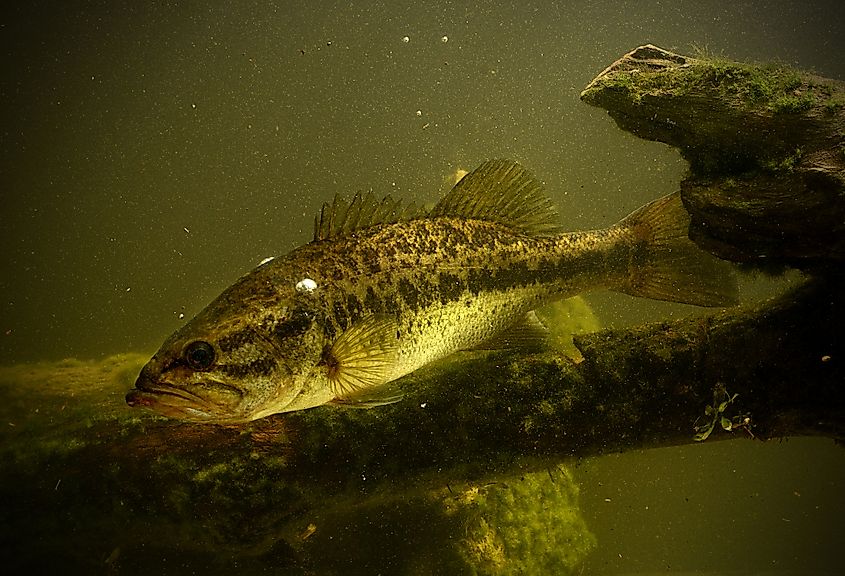
A largemouth bass (Micropterus nigricans) - Mussels: more than 180 species historically recorded. Freshwater mussels filter water, stabilize riverbeds, and can live for decades; they reproduce by tricking fish into carrying their larvae. They are also the most imperiled animal group in North America.
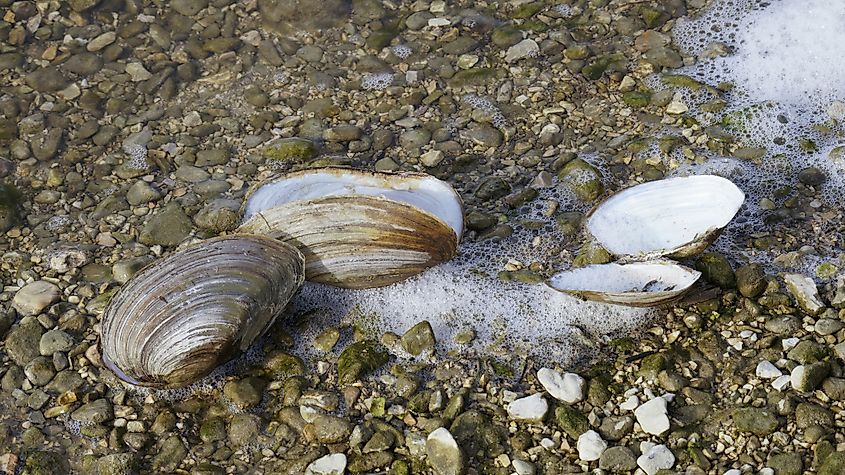
Freshwater mussels - Snails: the highest freshwater snail diversity in the US, concentrated in the Coosa and Cahaba systems, and the site of the country's worst documented aquatic extinction event, after the Coosa was dammed in the mid-20th century.
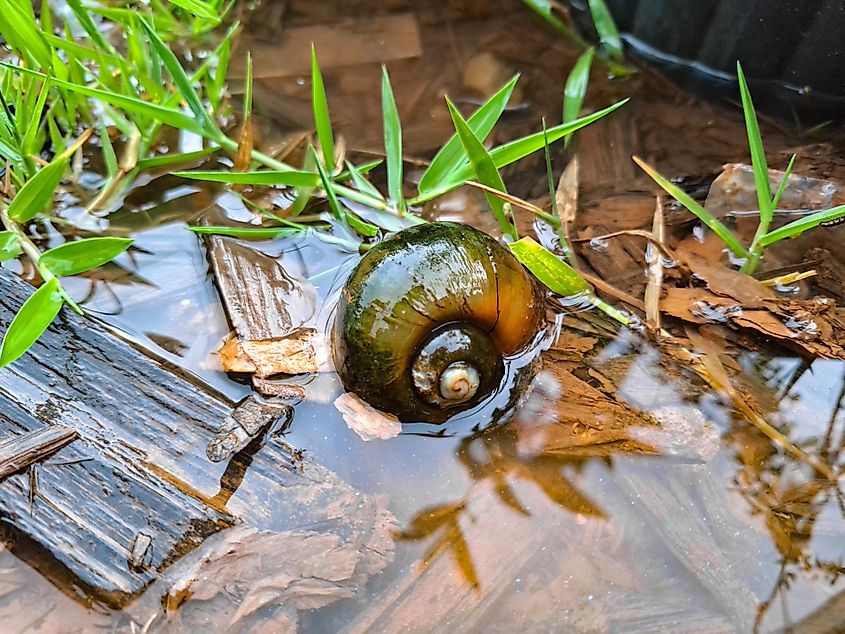
A freshwater snail - Crayfish: around 90 species, some living in burrows in wet meadows rather than open water, others restricted to single caves.
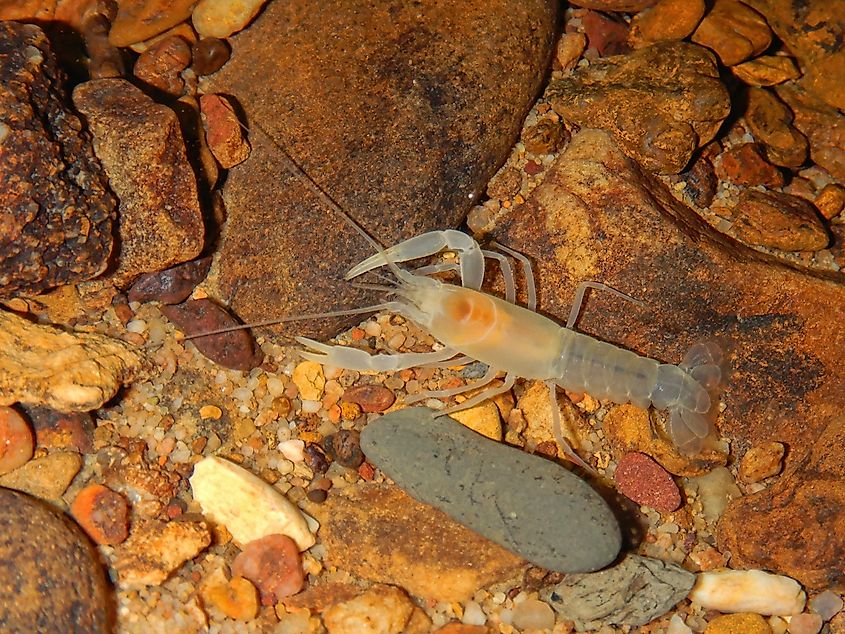
A Sweet Home Alabama cave crayfish (Cambarus speleocoopi)


Why this fauna is fragile: most of these species are narrow endemics: a snail or darter may exist in one shoal on one river. Dams flood shoals, slow the current, drop oxygen, and cut populations off from each other. Sediment from land clearing smothers the gravel that fish and mussels need to spawn. A single change to a single river can end a species, which is exactly what has happened repeatedly in the Coosa.
Section 08
Gulf And Marine Animals
Alabama's short coast punches above its weight because of what sits behind it. Mobile Bay is a nursery estuary: shrimp, blue crab, red drum, speckled trout, flounder, and menhaden all use its brackish water at some life stage, which in turn feeds everything larger.
- Bottlenose dolphins: resident in Mobile Bay and the nearshore Gulf, often seen from the Dauphin Island ferry.
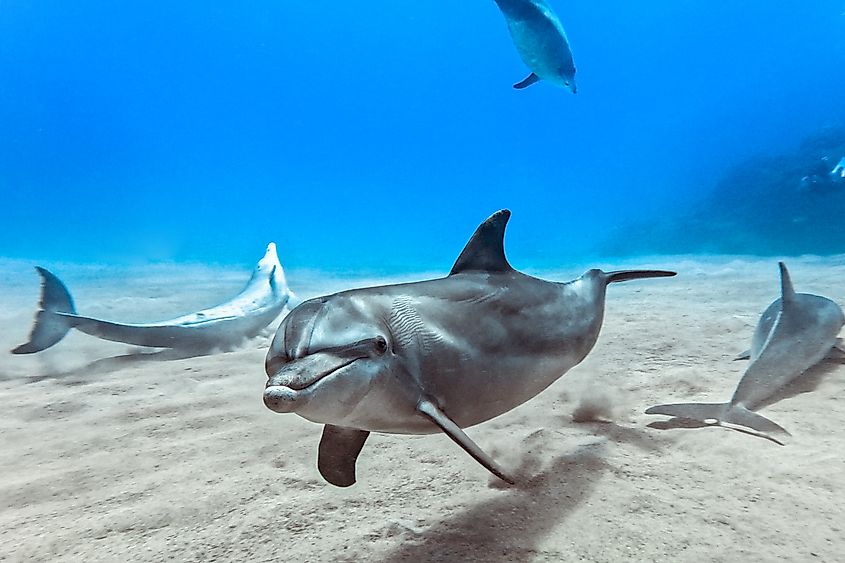
A bottlenose dolphin (Tursiops truncatus) - Sea turtles: loggerheads nest on Alabama's beaches most years, with occasional Kemp's ridley and green turtle nests. See the seven sea turtle species for the wider picture.
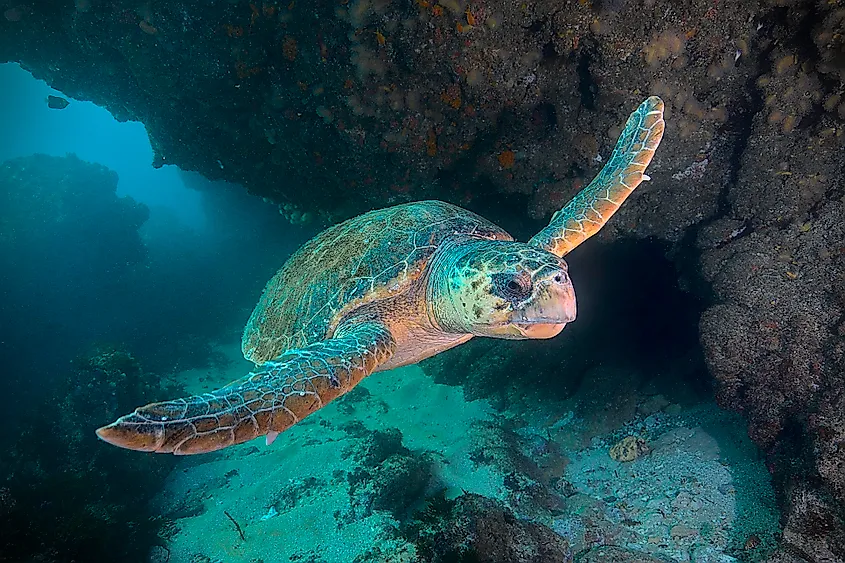
A loggerhead sea turtle (Caretta caretta) - West Indian manatee: a summer visitor moving west from Florida into Mobile Bay and the delta rivers, tracked by a state sighting network. Background: manatee facts and whether manatees are endangered.
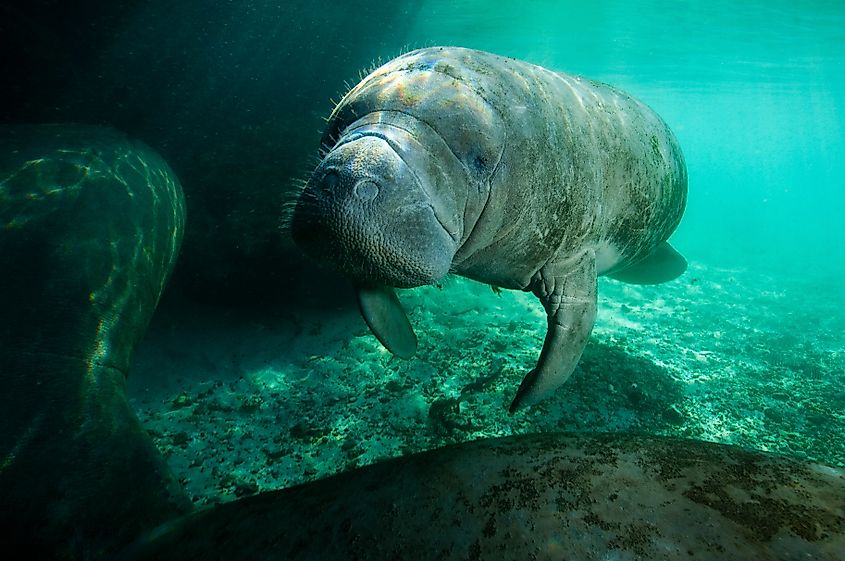
A West Indian manatee (Trichechus manatus) - Sharks and rays: Atlantic sharpnose, blacktip, bull, and bonnethead sharks; southern and cownose rays in the shallows.
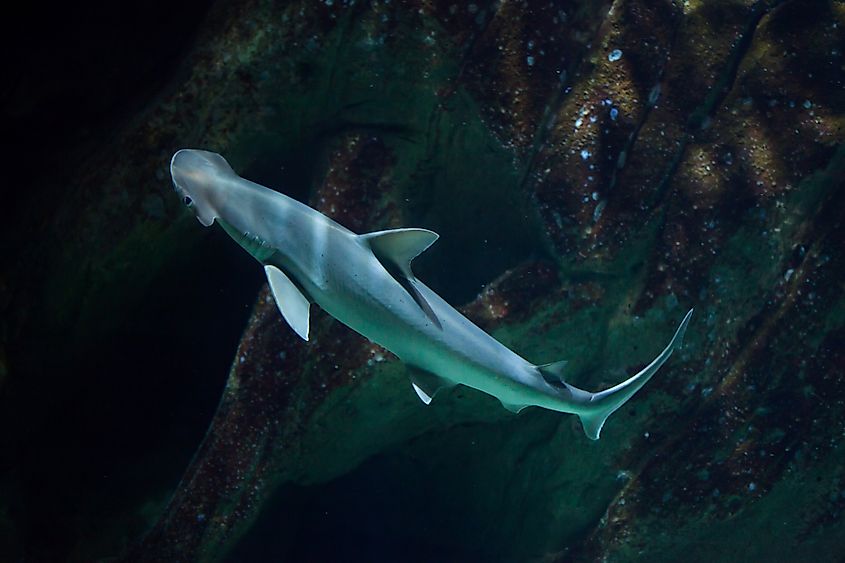
A bonnethead shark (Sphyrna tiburo) - Gulf sturgeon: a threatened, ancient fish that runs from the Gulf up into coastal rivers to spawn.
- Offshore reef fish: red snapper, grouper, amberjack, and king mackerel, concentrated around Alabama's very large artificial reef zone.
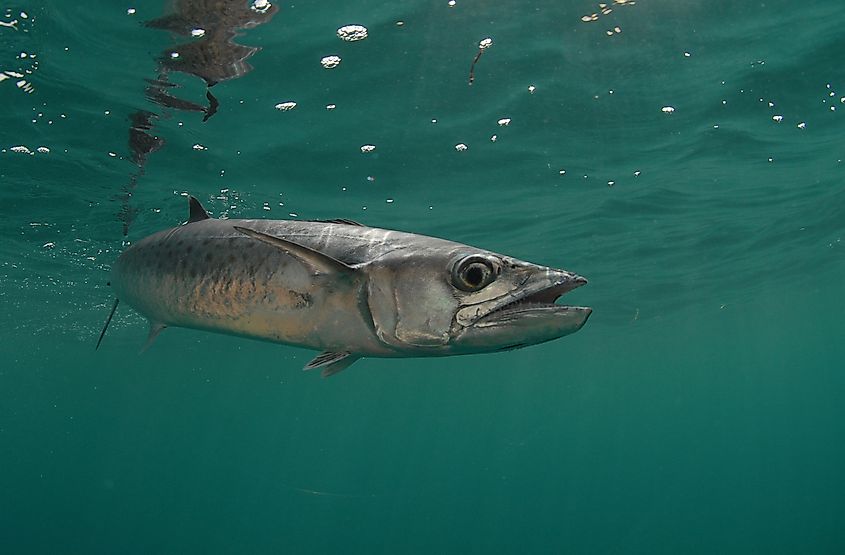
A king mackerel (Scomberomorus cavalla)


Section 09
Dangerous Animals In Alabama
Serious wildlife injuries in Alabama are rare, and the animals that actually cause harm are not the ones people fear. Deer-vehicle collisions and insect stings account for far more injuries and deaths than snakes, bears, and alligators combined.
The six venomous snakes
- Copperhead Agkistrodon contortrix: the most commonly encountered, statewide, and responsible for most bites. Rarely fatal.
- Cottonmouth Agkistrodon piscivorus: semi-aquatic, in swamps, sloughs, and river edges; will stand its ground and gape.
- Eastern diamondback rattlesnake: the largest venomous snake in North America, in southern pine and palmetto country, now much reduced.
- Timber rattlesnake: northern and central forests, including a lowland "canebrake" form.
- Pygmy rattlesnake: small, well camouflaged, easy to step near.
- Eastern coral snake: southern counties only, secretive, with potent neurotoxic venom; bites are very rare.
If you are bitten: get to a hospital. Do not cut, suck, apply ice, or use a tourniquet. Keep the limb still and roughly level with the heart, remove rings and watches, and let the emergency department decide about antivenom. A photo from a safe distance helps identification; catching the snake does not.
Other animals worth respecting
- American alligator: established in the southern third of the state, with an annual limited hunt. Attacks are very rare and strongly associated with people feeding them. Related: state parks where alligators roam free.
- Black bear: Alabama's bears are few, shy, and have no record of fatal attacks in the state. Secure garbage and never leave food out.
- Red imported fire ant: non-native and genuinely dangerous to people with sting allergies; among the most consequential animals in the state for human health.
- Black widow and brown recluse spiders: both present, both reclusive, both worth checking woodpiles and boxes for.
- Ticks and mosquitoes: the state's real disease vectors, carrying spotted fever, ehrlichiosis, and West Nile virus.
- Jellyfish and stingrays: sea nettles in late summer; shuffle your feet in shallow Gulf water to avoid stepping on a buried ray.
For a ranked treatment of this topic, see the 12 deadliest animals in Alabama.
Section 10
Endangered And Protected Species
Alabama has well over 100 federally listed animals and plants, and the great majority of the animals are aquatic: mussels, snails, and fish from the Mobile River basin and the Tennessee River drainage.
| Species | Where | Status |
|---|---|---|
| Red Hills salamander | South-central hardwood slopes | THREATENED |
| Alabama red-bellied turtle | Mobile Bay drainage | ENDANGERED |
| Flattened musk turtle | Black Warrior River system | THREATENED |
| Gopher tortoise | Longleaf pine, south Alabama | LISTED W. OF MOBILE R. |
| Eastern indigo snake | Conecuh NF (reintroduced) | THREATENED |
| Gray bat | Northern caves | ENDANGERED |
| Alabama beach mouse | Gulf dune systems | ENDANGERED |
| Wood stork | Delta and coastal wetlands | THREATENED |
| Gulf sturgeon | Coastal rivers | THREATENED |
| Watercress darter | A few springs near Birmingham | ENDANGERED |
| Vermilion darter | Turkey Creek only | ENDANGERED |
| Numerous mussels & snails | Mobile & Tennessee basins | MULTIPLE LISTED |
Two species are functionally gone. The red wolf, once native across the Southeast, no longer exists in the Alabama wild; the surviving wild population is in coastal North Carolina. The eastern cougar is likewise absent, though occasional confirmed sightings involve dispersing young males from western populations.
The main pressures are consistent: habitat loss to development and conversion, dams and altered river flow, sedimentation, fire suppression in longleaf pine systems, and disease in bats. The main tools are equally consistent: prescribed fire, dam removal and flow management, riparian buffers, and captive propagation for mussels and fish.
Section 11
Invasive And Non-Native Animals
- Feral hogs: the most destructive vertebrate in the state, rooting up ground cover, fouling streams, and eating turtle nests and ground-nesting birds' eggs. Present in nearly every county with no closed season.
- Red imported fire ant: arrived through Mobile in the early 20th century and spread across the South from there, displacing native ants and harming ground-nesting wildlife.
- Asian carp: silver and bighead carp in the Tennessee River system, competing with native filter feeders.
- Apple snails and zebra mussels: aquatic invaders in parts of the state's waterways.
- Coyote: technically a native North American animal that colonized Alabama on its own, and now permanent.
- Nutria, house sparrow, European starling, feral cats: all long-established and all with measurable effects on native species.
Section 12
Where To See Wildlife In Alabama
- Wheeler National Wildlife Refuge (Decatur): winter sandhill and whooping cranes, waterfowl, a heated observation building.
- Bon Secour National Wildlife Refuge (Gulf Shores): beach mice, nesting sea turtles, shorebirds, dune habitat.
- Dauphin Island & Fort Morgan: the state's premier spring and fall migration sites.
- Mobile-Tensaw Delta: best by kayak or shallow boat; alligators, otters, wading birds, swallow-tailed kites.
- Cahaba River National Wildlife Refuge: one of the most biologically diverse rivers in the country; the Cahaba lily bloom in May coincides with excellent fish and dragonfly watching.
- Bankhead National Forest: ravines, waterfalls, black bear range, salamanders.
- Conecuh National Forest: longleaf pine, gopher tortoise, indigo snake reintroduction, pitcher-plant bogs.
- Cheaha State Park & Talladega National Forest: the highest ground in Alabama and mountain longleaf pine.
Timing: April and early May for migrating birds and reptile activity; June for sea turtle nesting starts; October and November for deer and elk-like rut behavior in whitetails plus raptor movement; December through February for cranes and waterfowl. Midsummer midday is the worst time for almost everything except alligators.
Section 13
Common Questions
- What is the state animal of Alabama?
- The American black bear, designated the official state mammal in 2006. Alabama also names a state game bird (wild turkey), reptile (Alabama red-bellied turtle), amphibian (Red Hills salamander), and both a freshwater and saltwater state fish.
- Are there bears in Alabama?
- Yes, though not many. A remnant population lives in the southwest near Mobile and Washington counties, and a separate, growing population in the northeast has spread in from Georgia. Total numbers are likely in the low hundreds.
- How many venomous snakes live in Alabama?
- Six: copperhead, cottonmouth, eastern diamondback rattlesnake, timber rattlesnake, pygmy rattlesnake, and eastern coral snake. The other roughly 44 snake species in the state are non-venomous.
- Does Alabama have alligators?
- Yes, in the southern third of the state, concentrated in the Mobile-Tensaw Delta and southern rivers and lakes. The state runs a limited permit hunt each August and September.
- What animal is Alabama best known for biologically?
- Its freshwater fauna. Alabama leads the United States in freshwater fish, turtle, snail, and crayfish diversity, and historically recorded over 180 mussel species, a distinction driven by unglaciated, south-flowing river systems.
- Are there mountain lions in Alabama?
- No established population. The eastern cougar is considered gone from the state; verified reports involve occasional long-distance dispersing males from western populations.
- What is the most dangerous animal in Alabama?
- By actual harm caused, white-tailed deer, through vehicle collisions, and stinging insects, which cause deaths through allergic reactions. Venomous snakebites are common enough but rarely fatal.
This page was last updated on October 8, 2026