Section 01
Why Idaho Holds The Wildest Country In The Lower 48
Idaho contains the largest contiguous roadless area in the continental United States. The Frank Church River of No Return Wilderness and the adjoining Selway-Bitterroot together exceed 3.5 million acres with no roads through them, and that single fact explains most of what makes Idaho's wildlife different from its neighbours.
Animals that need space and tolerate no disturbance persist here in numbers unavailable elsewhere south of Canada: wolverine, mountain lion, gray wolf, and a growing grizzly presence. Roughly 63 percent of Idaho is federal land, the highest share of any state outside Alaska, Nevada, and Utah.
The geography is split in two. Northern Idaho, the panhandle, is wet, with inland temperate rainforest of cedar and hemlock receiving Pacific moisture, holding species otherwise found on the coast. Southern Idaho is the Snake River Plain, a vast arc of lava and sagebrush steppe that is dry, cold in winter, and ecologically closer to Nevada. Between them run the central mountains.
The Snake River ties it together and creates Idaho's defining conservation conflict. Salmon and steelhead born in Idaho streams travel roughly 900 miles to the Pacific and back, climbing over 6,500 feet in elevation, the longest and highest salmon migration remaining anywhere. Eight dams on the Snake and Columbia now stand in the way, and Idaho's Snake River sockeye came within a single returning fish of extinction.
Section 02
Idaho's Official State Animals
| Designation | Animal | Adopted |
|---|---|---|
| State bird | Mountain bluebird Sialia currucoides | 1931 |
| State raptor | Peregrine falcon Falco peregrinus | 2004 |
| State fish | Cutthroat trout Oncorhynchus clarkii | 1990 |
| State horse | Appaloosa | 1975 |
| State insect | Monarch butterfly Danaus plexippus | 1992 |
| State fossil | Hagerman horse Equus simplicidens | 1988 |
The peregrine designation came from Idaho schoolchildren and a specific local institution. The World Center for Birds of Prey in Boise was central to the peregrine's recovery in North America, breeding and releasing birds after DDT had wiped the species from the eastern US and reduced western populations severely. Naming it the state raptor in 2004 recognised work done in Idaho that mattered continentally. Idaho also holds the Morley Nelson Snake River Birds of Prey National Conservation Area, which has one of the densest nesting raptor concentrations in North America.

The Appaloosa is a Nez Perce breed. The tribe developed it in the Palouse country over generations, and most of the horses were seized or dispersed after the 1877 war, with the breed rebuilt in the 20th century. The Hagerman horse fossil, from beds along the Snake River, is one of the earliest known members of the modern horse genus.
Section 03
Habitats By Region, And Who Lives In Each
Panhandle inland rainforest

Western red cedar and western hemlock forest fed by Pacific moisture, unusually lush for a landlocked region. Species include mountain caribou, which used the Selkirks and are now effectively gone from the US, plus grizzly bear in the Selkirk and Cabinet-Yaak recovery zones, Canada lynx, fisher, moose, and coastal disjunct amphibians like the Coeur d'Alene salamander.
Central mountains and wilderness core

The Salmon River, Sawtooth, Bitterroot, and Clearwater country: granite peaks, deep canyons, and the roadless heart of the state. Elk, mule deer, mountain goat, bighorn sheep, gray wolf, mountain lion, wolverine, and black bear. Streams here hold bull trout and the spawning gravels for Idaho's remaining salmon and steelhead.
Snake River Plain and sagebrush steppe

Lava fields, sagebrush, and irrigated farmland across southern Idaho. Sagebrush is the key habitat and the most threatened: greater sage-grouse, pygmy rabbit (the smallest rabbit in North America and a sagebrush obligate), sage thrasher, Brewer's sparrow, pronghorn, and ground squirrels including two endangered Idaho endemics.
Snake River canyon and Hells Canyon

Hells Canyon is the deepest river gorge in North America, deeper than the Grand Canyon. Warm, dry, and steep, it holds bighorn sheep, chukar, rattlesnakes, and the densest raptor nesting in the region along the Snake River. White sturgeon in the river below can exceed ten feet and live over a century.
Eastern Idaho and the Yellowstone edge

The Caribou-Targhee country adjoining Yellowstone and Grand Teton, with lodgepole and spruce-fir forest. This is Idaho's link to the Greater Yellowstone Ecosystem: grizzly bears, wolves, elk, moose, trumpeter swans wintering on spring creeks, and the Yellowstone cutthroat trout.
Section 04
Mammals Of Idaho
- Elk: roughly 120,000, and Idaho is one of the premier elk states. Herds in the Clearwater declined sharply after wolf recovery and habitat succession, and the interaction between the two remains contested. See where to watch the elk rut.
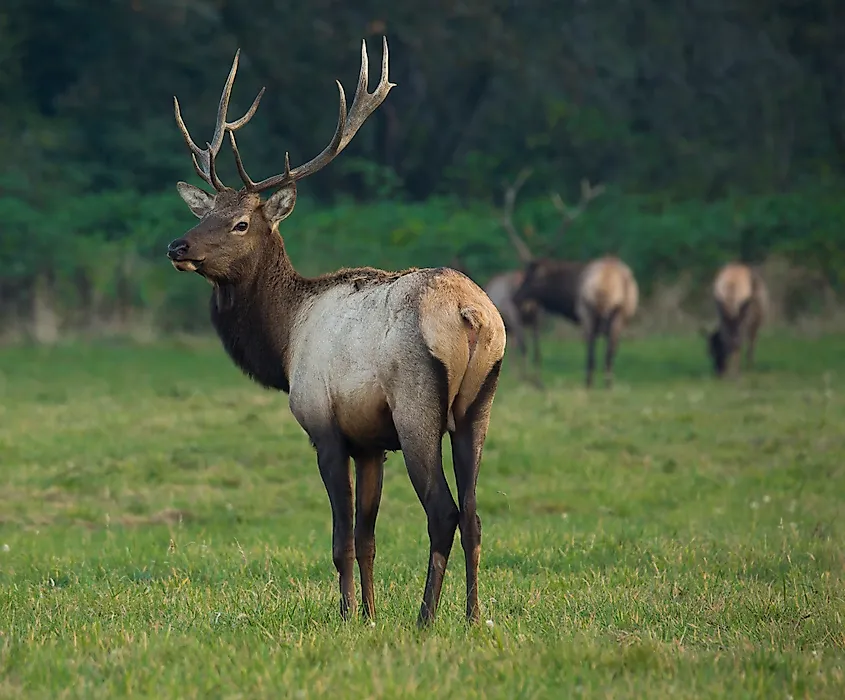
A Roosevelt elk (Cervus canadensis roosevelti) - Mule deer and white-tailed deer: mule deer statewide, whitetails mainly in the panhandle and river bottoms.
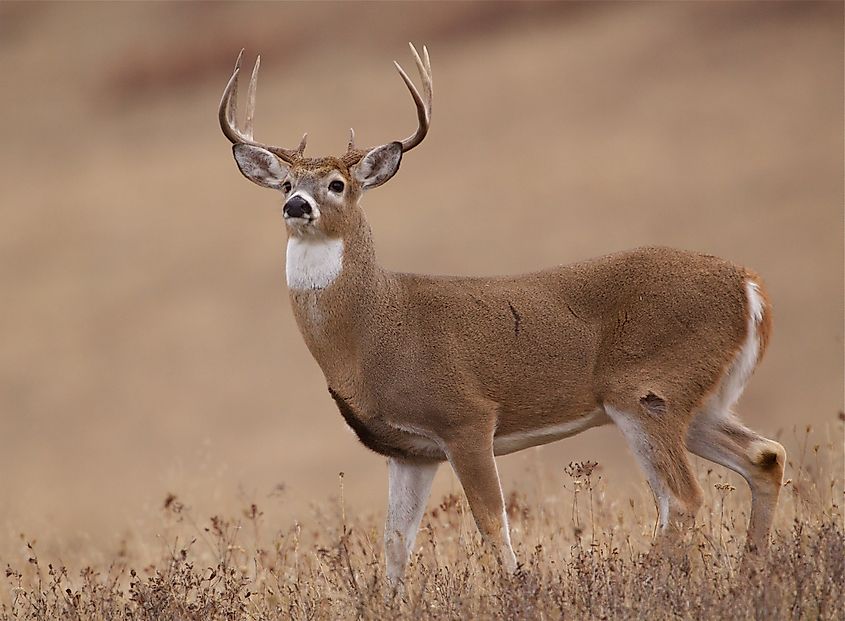
A white-tailed deer (Odocoileus virginianus) - Moose: several thousand, mainly in the north and east, and unusually visible in Idaho's willow bottoms.
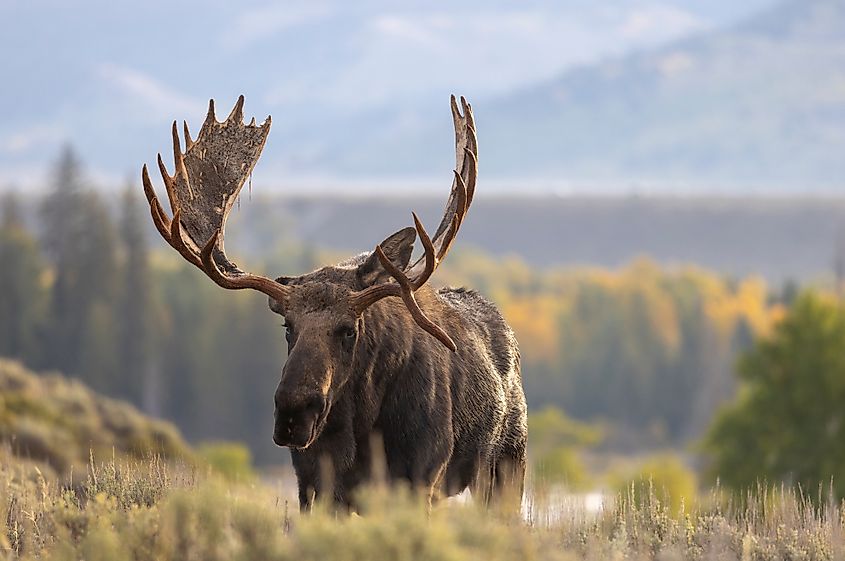
A moose (Alces alces) - Pronghorn and bighorn sheep: pronghorn on the southern plains, with both Rocky Mountain and California bighorn subspecies in separate ranges. Disease from domestic sheep remains the limiting factor.

A pronghorn (Antilocapra americana) - Mountain goat: native here, unlike in Colorado, on the high central peaks.
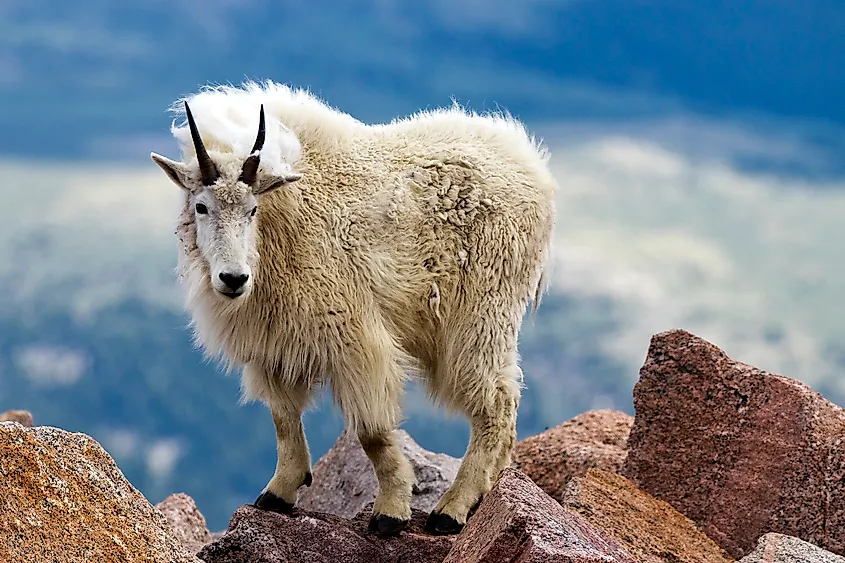
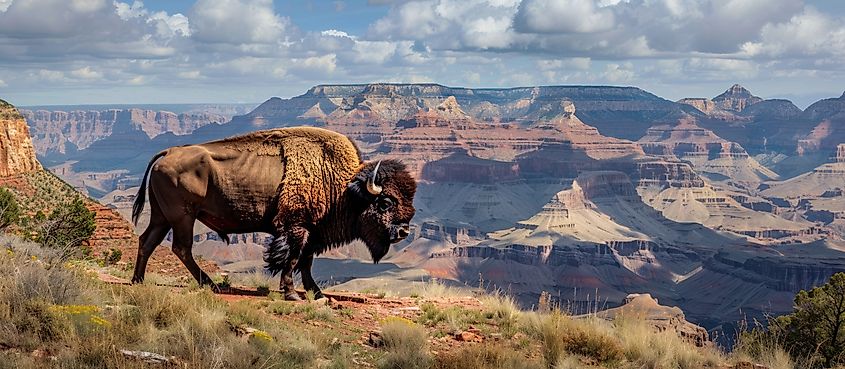
A mountain goat (Oreamnos americanus) - Bison: no wild free-ranging herd in Idaho, though animals occasionally cross from Yellowstone. Related: state parks where bison still roam.
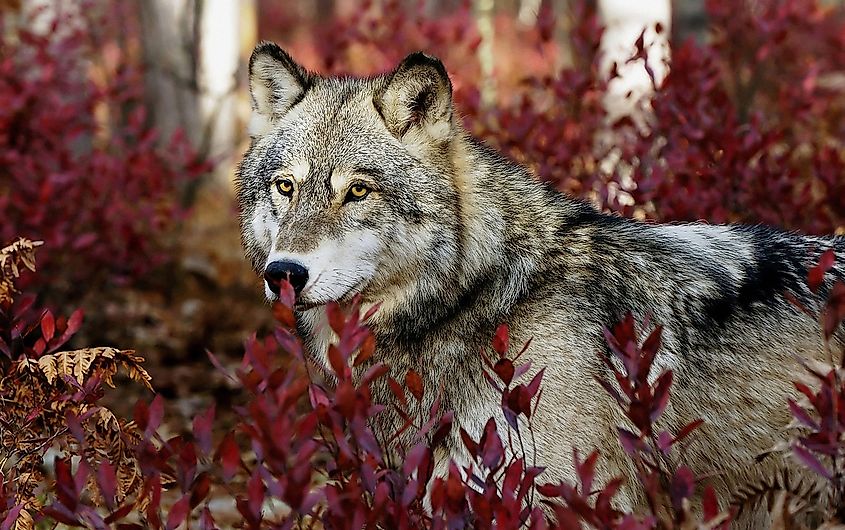
An American bison (Bison bison) - Gray wolf: reintroduced to central Idaho in 1995 alongside Yellowstone, with 15 wolves released initially. The population grew to well over a thousand and was federally delisted in 2011. Idaho has since adopted aggressive reduction policies, and wolf management here is among the most contested wildlife issues in the country.
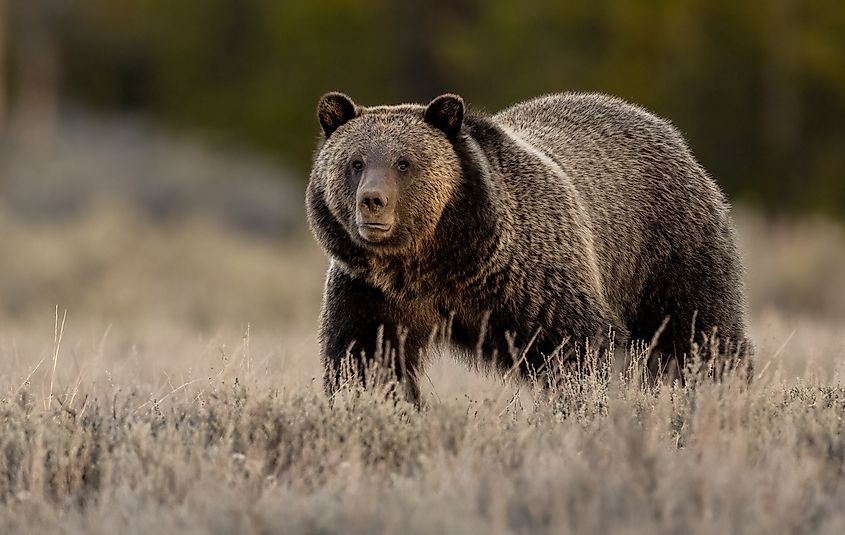
A gray wolf (Canis lupus) - Grizzly bear: present in small numbers in the Selkirk, Cabinet-Yaak, and Yellowstone-adjacent areas, with the Bitterroot recovery zone largely unoccupied. See where grizzly bears live.
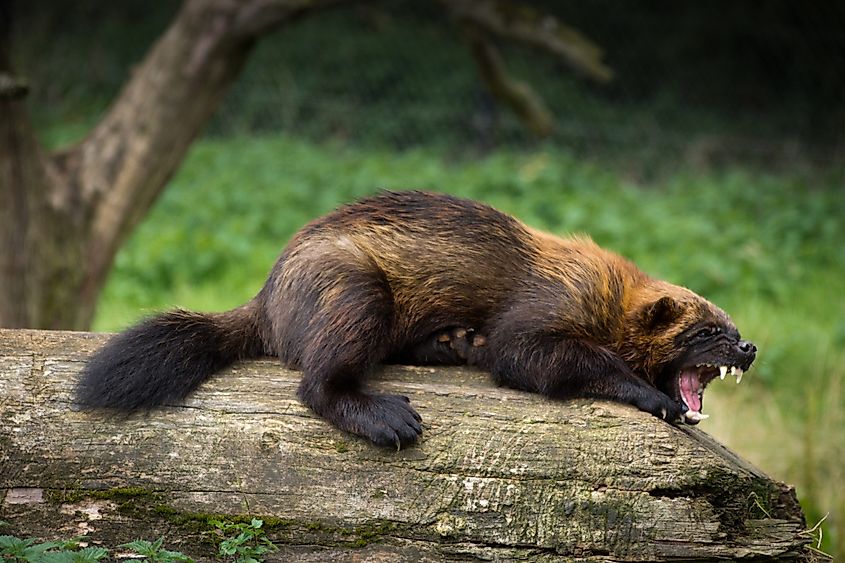
A grizzly bear (Ursus arctos horribilis) - Black bear, mountain lion, bobcat, lynx, wolverine, fisher, marten, badger, river otter, beaver, coyote, red fox, kit fox: a nearly complete native carnivore guild, which very few states can still claim.
A wolverine (Gulo gulo) - Pygmy rabbit: North America's smallest rabbit, about a pound, digging its own burrows in deep sagebrush soils. The Columbia Basin population in Washington is endangered; Idaho holds core range.
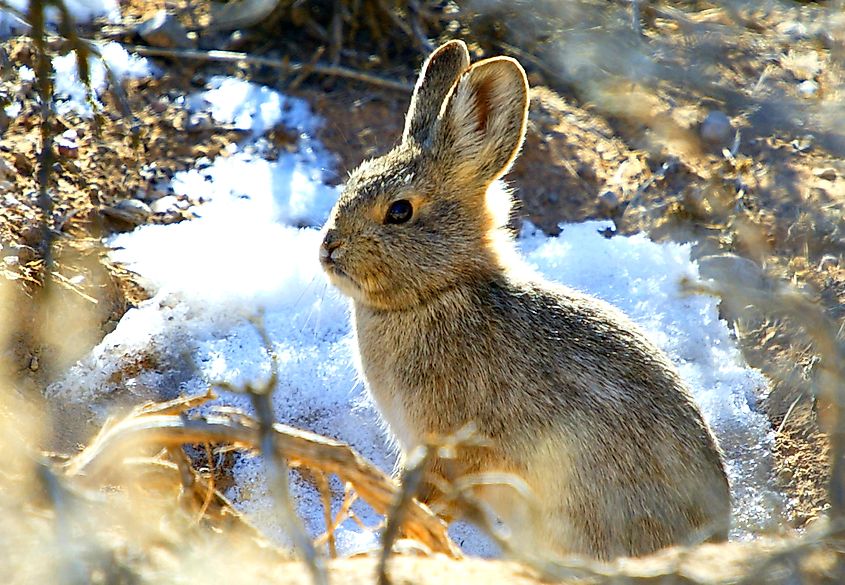
A pygmy rabbit (Sylvilagus idahoensis) - Northern Idaho and southern Idaho ground squirrels: both endemic to small areas of the state and both federally listed.
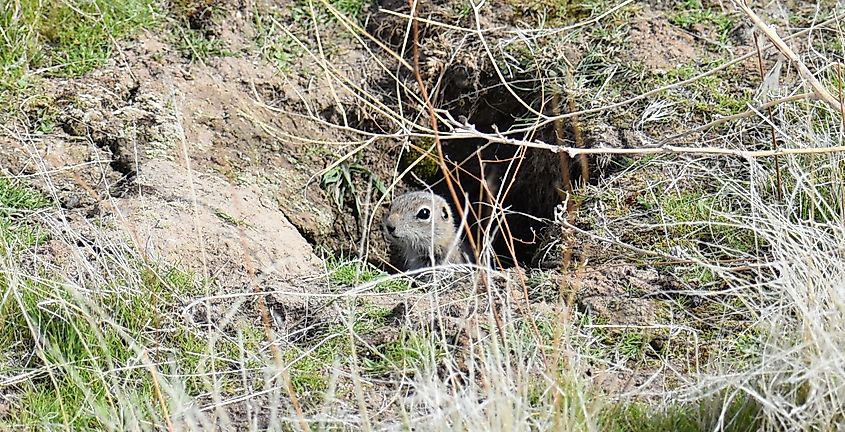
A southern Idaho ground squirrel (Urocitellus endemicus) - Mountain caribou: the last herd using the US portion of the Selkirks dwindled to a handful and no longer persists south of the border, making caribou functionally extirpated from the lower 48. Background: caribou facts.
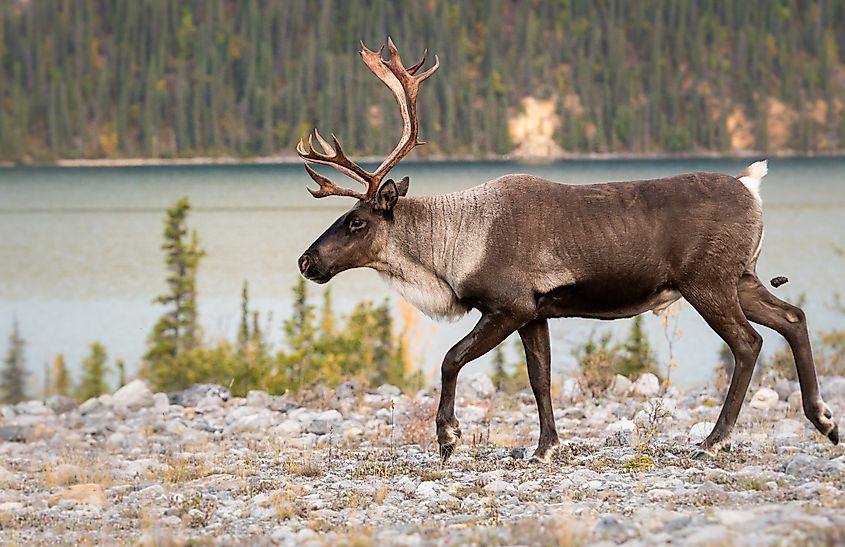
A mountain caribou (Rangifer tarandus caribou)


Section 05
Birds Of Idaho
Around 430 species have been recorded. Idaho's specialty is raptors and sagebrush birds.
- Raptors: the Morley Nelson Snake River Birds of Prey NCA supports exceptional nesting densities of prairie falcon, golden eagle, red-tailed hawk, and several owls, drawn by enormous ground squirrel and jackrabbit populations on the plain below the cliffs. Also bald eagle, ferruginous hawk, Swainson's hawk, northern goshawk, and the peregrine falcon, the state raptor.
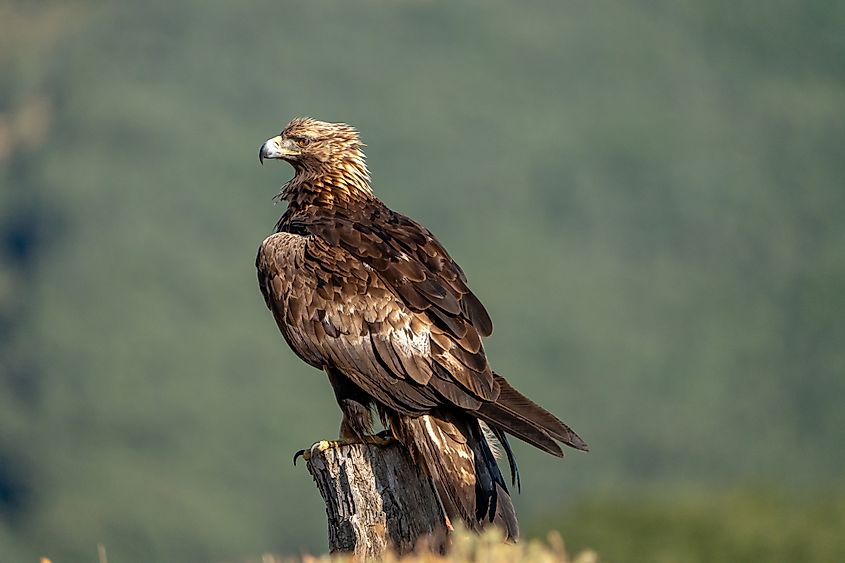
A golden eagle (Aquila chrysaetos) - Sagebrush birds: greater sage-grouse, sage thrasher, Brewer's sparrow, sagebrush sparrow, and loggerhead shrike. All decline with sagebrush conversion, cheatgrass invasion, and the larger and more frequent fires that cheatgrass fuels.
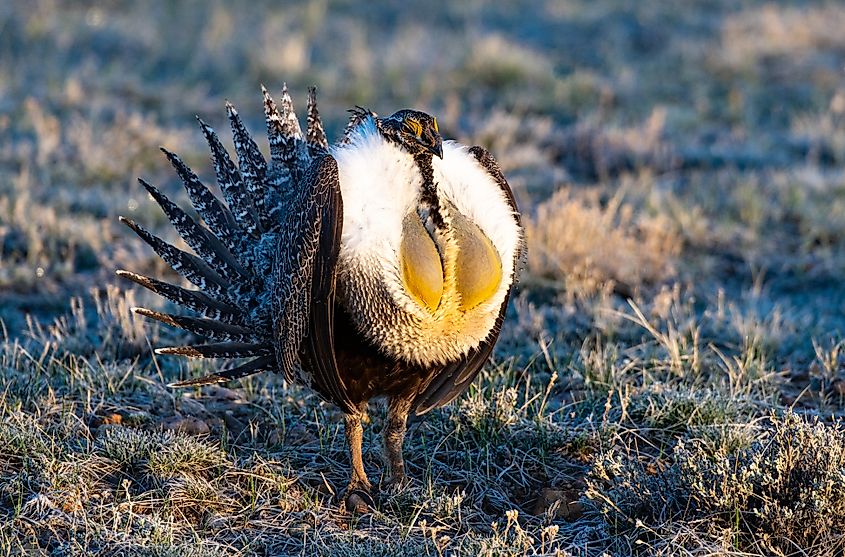
A greater sage-grouse (Centrocercus urophasianus) - Forest birds: Clark's nutcracker, mountain bluebird (the state bird), varied thrush and Pacific wren in the panhandle rainforest, three-toed and black-backed woodpeckers in burned forest, boreal owl, and great gray owl.
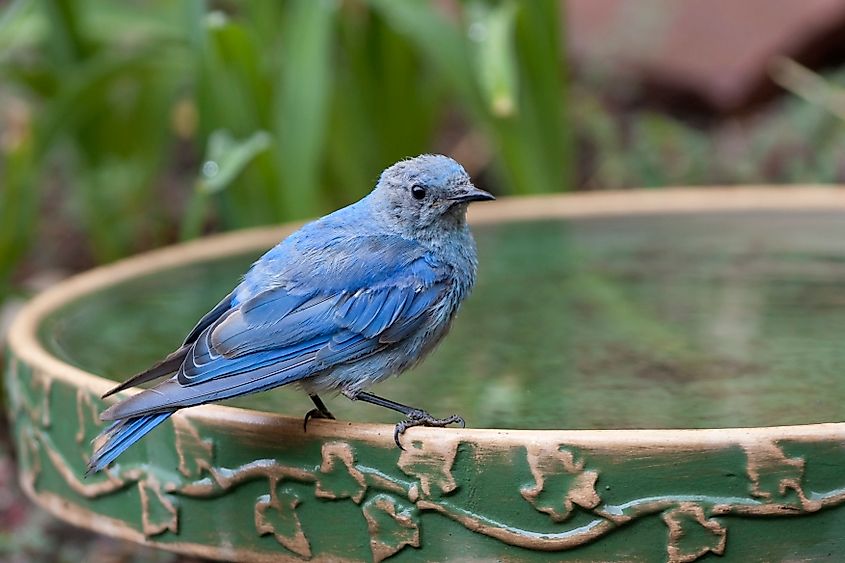
A mountain bluebird (Sialia currucoides) - Waterbirds: trumpeter swans wintering on spring-fed creeks in the east, white pelicans and Franklin's gulls at Bear Lake and Blackfoot Reservoir, long-billed curlew on wet meadows, and sandhill cranes breeding in the valleys.
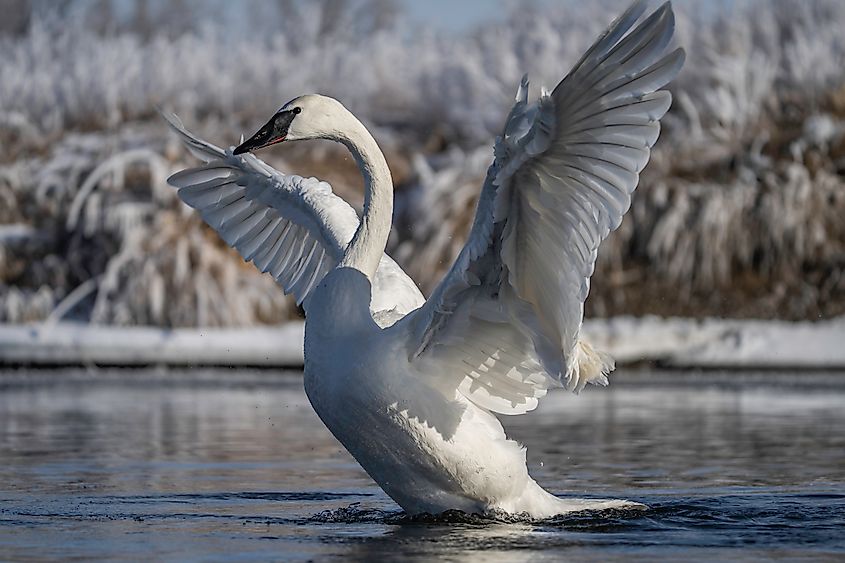
A trumpeter swan (Cygnus buccinator)


Section 06
Salmon, Steelhead, And The Idaho Fish Story
This is the single most consequential wildlife issue in the state, and it is worth understanding in full.
Chinook salmon, sockeye salmon, and steelhead hatch in Idaho streams, migrate to the Pacific as juveniles, spend one to several years at sea, and return to spawn in the same gravel where they hatched. The Idaho leg is extraordinary: roughly 900 river miles inland and over 6,500 feet of elevation gain, the longest and highest salmon run left on Earth. Redfish Lake in the Sawtooths, named for the crimson sockeye that once filled it, sits at 6,500 feet.

Eight federal dams on the lower Snake and Columbia now sit between Idaho and the sea. Juveniles must pass all eight going down and adults all eight coming up. Historic runs numbered in the millions. In 1992 exactly one Snake River sockeye returned to the Sawtooth basin, a male nicknamed Lonesome Larry, and the entire lineage was rebuilt from captive broodstock derived from a handful of fish.
- Snake River sockeye: federally endangered, sustained largely by hatchery intervention.
- Snake River spring, summer, and fall Chinook: threatened, with returns far below recovery targets.
- Steelhead: threatened, and culturally and economically central to central Idaho towns.
- Bull trout: threatened, requiring very cold, clean, connected water, which makes it an indicator of stream health.
- White sturgeon: landlocked between dams in the Snake, long-lived and no longer able to complete natural migrations.
- Cutthroat trout: the state fish, in Westslope and Yellowstone forms, threatened mainly by hybridisation with introduced rainbow trout.
Whether to breach the four lower Snake River dams is the central policy question. Related: the rivers where salmon returned after the dams came down.
Section 07
Dangerous Animals In Idaho
- Moose: the most likely animal to injure a person in Idaho. Cows with calves and rutting bulls both charge, and dogs provoke them.
- Grizzly bear: present in the east and north. Carry bear spray, make noise on blind trails, and store food properly. Attacks are rare but this is the one animal that warrants real preparation.
- Black bear: common statewide and mostly a food-conditioning problem.
- Mountain lion: widespread and rarely seen. Attacks are very rare.
- Western rattlesnake: the state's only venomous snake, in the Snake River canyon, Hells Canyon, and dry southern country. Bites are uncommon.
- Wolves: no verified fatal wolf attack on a person has occurred in Idaho. Livestock and hunting dogs are the practical conflict.
- Cold water and swift rivers: Idaho's rivers injure and kill far more people than its wildlife.
Section 08
Endangered And Protected Species
| Species | Where | Status |
|---|---|---|
| Snake River sockeye salmon | Sawtooth Valley lakes | ENDANGERED |
| Snake River Chinook salmon | Central Idaho streams | THREATENED |
| Snake River steelhead | Salmon, Clearwater basins | THREATENED |
| Bull trout | Cold headwaters statewide | THREATENED |
| Grizzly bear | Selkirk, Cabinet-Yaak, east | THREATENED |
| Canada lynx | Northern and central forest | THREATENED |
| Northern Idaho ground squirrel | Adams and Valley counties | THREATENED |
| Southern Idaho ground squirrel | Southwest Idaho | THREATENED |
| Woodland caribou | Selkirks, no longer present | EXTIRPATED FROM US |
| Yellow-billed cuckoo | Riparian woodland | THREATENED |
| Banbury Springs limpet | Snake River springs | ENDANGERED |
The pressures are dams and water diversion for anadromous fish, cheatgrass and altered fire regimes destroying sagebrush, disease transmission from domestic to wild sheep, road and residential development fragmenting migration corridors, and spring-fed Snake River habitats altered by aquaculture and groundwater pumping. Idaho's advantage is that its habitat is largely intact at a scale most states cannot match.
Section 09
Where To See Wildlife In Idaho
- Morley Nelson Snake River Birds of Prey NCA: raptor nesting density unmatched in the region, best in April and May.
- Sawtooth National Recreation Area and Redfish Lake: sockeye return in August and September, plus elk, moose, and mountain goat.
- Frank Church River of No Return Wilderness: wolves, bighorn, and elk in genuinely roadless country, accessible by raft or backcountry airstrip.
- Hells Canyon: bighorn sheep, chukar, and sturgeon, best by jet boat or raft.
- Camas National Wildlife Refuge and Market Lake: waterfowl, cranes, and swans.
- Harriman State Park and Henrys Fork: trumpeter swans, moose, and one of the most famous trout rivers in the world.
- Coeur d'Alene and the panhandle forests: inland rainforest species and moose.
- Craters of the Moon National Monument: sagebrush and lava-adapted wildlife.
Timing: late March through May for sage-grouse leks and raptor nesting. June for newborn ungulates and high water. August and September for salmon returns and the elk rut beginning. Late autumn for bighorn rut. Winter access to the central mountains is very limited, though wintering elk and swans concentrate in valleys and are easy to find.
Section 10
Common Questions
- What is the state animal of Idaho?
- Idaho does not designate a state mammal. It names a state bird (mountain bluebird), state raptor (peregrine falcon), state fish (cutthroat trout), state horse (Appaloosa), and state insect (monarch butterfly).
- Are there wolves in Idaho?
- Yes. Fifteen wolves were reintroduced to central Idaho in 1995, the population grew to well over a thousand, and it was federally delisted in 2011. Idaho has since adopted aggressive reduction policies, and it remains one of the most contested wildlife issues in the country.
- Are there grizzly bears in Idaho?
- Yes, in small numbers in the Selkirk and Cabinet-Yaak areas of the panhandle and in the eastern part of the state near Yellowstone. The Bitterroot recovery zone remains largely unoccupied.
- Why are Idaho's salmon so important?
- They make the longest and highest salmon migration left on Earth, roughly 900 river miles inland and over 6,500 feet up. Eight dams now sit in the way. In 1992 a single Snake River sockeye returned to the Sawtooth basin, and the lineage was rebuilt from captive broodstock.
- How many venomous snakes live in Idaho?
- One, the western rattlesnake, found mainly in the Snake River canyon, Hells Canyon, and dry southern areas.
- What is the most dangerous animal in Idaho?
- Moose cause the most injuries. Grizzly bears warrant the most preparation. Rivers and cold water kill far more people than any Idaho animal.
- Are there caribou in Idaho?
- Not any more. The Selkirk herd was the last using the lower 48, and it dwindled to a handful before no longer persisting south of the Canadian border, effectively ending caribou presence in the contiguous United States.
This page was last updated on October 14, 2026