Section 01
Why Florida's Animal Life Is Unlike Anywhere Else In The US
Florida is the only state in the continental US with a genuinely subtropical and, at its southern tip, tropical climate. That single fact separates its fauna from every other state. It is the only place in the country where you find wild flamingos, crocodiles alongside alligators, manatees year-round, and coral reef.
The peninsula's geography compounds it. Florida is a 400-mile limestone platform sticking into warm ocean, low, flat, and saturated. Its highest point is 345 feet. Water, not elevation, organises everything: the slow sheet flow of the Everglades, thousands of sinkhole lakes, more than 700 freshwater springs including some of the largest artesian springs on Earth, and 1,350 miles of coastline.
Being a peninsula also makes it a funnel and a dead end. Migratory birds moving south down the Atlantic Flyway concentrate in Florida before crossing to the Caribbean or wintering there. Species stranded on the peninsula during past sea level changes evolved in isolation, which is why Florida has an unusual number of endemics, including the Florida scrub-jay, the only bird species found exclusively within the state.
The other defining fact is invasion. Florida's climate, ports, and enormous exotic pet trade have made it the most heavily invaded state in the country. More than 500 non-native species are established, and in the Everglades the invasive fauna has fundamentally rewritten the food web. Florida is simultaneously one of the most biologically distinctive states and the one where native wildlife faces the most novel competition.
Section 02
Florida's Official State Animals
| Designation | Animal | Adopted |
|---|---|---|
| State animal | Florida panther Puma concolor coryi | 1982 |
| State bird | Northern mockingbird Mimus polyglottos | 1927 |
| State marine mammal | West Indian manatee Trichechus manatus | 1975 |
| State saltwater mammal | Bottlenose dolphin Tursiops truncatus | 1975 |
| State reptile | American alligator Alligator mississippiensis | 1987 |
| State freshwater fish | Florida largemouth bass | 1975 |
| State saltwater fish | Atlantic sailfish Istiophorus platypterus | 1975 |
| State butterfly | Zebra longwing Heliconius charithonia | 1996 |
| State saltwater reptile | Loggerhead sea turtle Caretta caretta | 2008 |
| State tortoise | Gopher tortoise Gopherus polyphemus | 2008 |
The state animal was chosen by schoolchildren in 1982, when it was nearly gone. The Florida panther had fallen to an estimated 20 to 30 animals confined to southwest Florida, inbred to the point of heart defects, kinked tails, and low fertility. In 1995 wildlife managers released eight female Texas cougars to restore genetic diversity, a controversial intervention that worked: the population is now estimated at roughly 200 adults. It remains the only breeding cougar population east of the Mississippi.

Florida's gopher tortoise designation matters ecologically. Its burrows, which can run 40 feet long, shelter more than 350 other species including indigo snakes, gopher frogs, burrowing owls, and invertebrates found nowhere else. Protecting one animal protects hundreds.
Section 03
Habitats By Region, And Who Lives In Each
Panhandle and north Florida

The most temperate part of the state, with longleaf pine sandhills, steephead ravines, and clear rivers. This region holds the highest reptile and amphibian diversity in Florida and some of the richest freshwater biodiversity in North America: the Apalachicola basin has exceptional mussel, crayfish, and salamander numbers. Species include red-cockaded woodpecker, eastern indigo snake, Apalachicola dusky salamander, and black bear in Apalachicola National Forest.
Central highlands, scrub and lake country

The Lake Wales Ridge is an ancient chain of sand dunes, an island archipelago when sea levels were higher, and one of the most endemic-rich places in the continental US. Florida scrub-jay, sand skink, blue-tailed mole skink, and dozens of endemic plants and insects live in the fire-dependent scrub. Surrounding lake country holds sandhill cranes, snail kites, and Florida's densest alligator populations.
Springs and rivers

More than 700 freshwater springs discharge from the limestone aquifer at constant temperature year-round, which is why manatees gather in them in winter. Springs also hold Suwannee cooter, Gulf sturgeon, and endemic cave invertebrates.
The Everglades and Big Cypress

A slow sheet of water moving south across sawgrass prairie, dotted with tree islands, cypress domes, and mangrove at the coastal edge. Signature species: American alligator, American crocodile at the southern margin, wood stork, roseate spoonbill, snail kite, Everglades mink, and Florida panther. See Everglades National Park and the parks with the most alligators.
The Keys and coral reef

A limestone island chain with tropical hardwood hammock, mangrove, and the only living barrier coral reef in the continental US. Endemic and near-endemic animals: Key deer, a dwarf white-tailed deer standing under three feet at the shoulder, Key Largo woodrat, Lower Keys marsh rabbit, American crocodile, and white-crowned pigeon. Background: coral reefs.
Coasts, estuaries, and the Gulf

Mangrove forest in the south, salt marsh in the north, seagrass beds throughout, and beaches that host the largest loggerhead sea turtle nesting aggregation in the western hemisphere. Also bottlenose dolphins, wintering shorebirds, and offshore in the Gulf of Mexico the endangered Rice's whale, of which perhaps 50 remain.
Section 04
Mammals Of Florida
- Florida panther: roughly 200 adults, the only breeding cougar population east of the Mississippi. Vehicle strikes are the leading cause of death, and the main conservation need is safe passage north of the Caloosahatchee River.
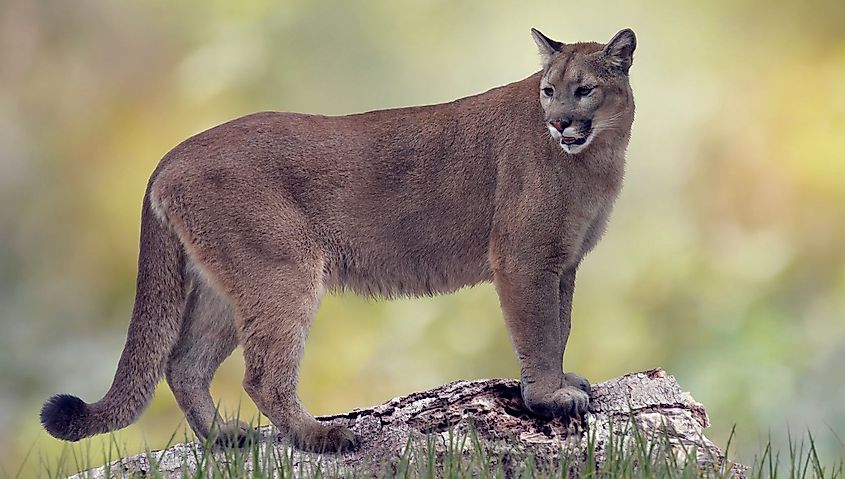
A Florida panther (Puma concolor coryi) - Florida black bear: a distinct subspecies, recovered from a few hundred animals in the 1970s to several thousand in fragmented subpopulations.
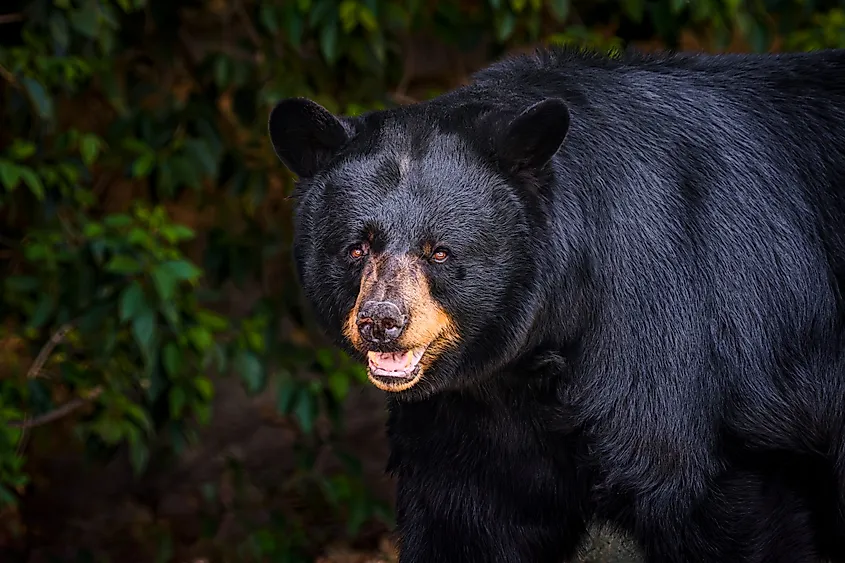
A Florida black bear (Ursus americanus floridanus) - West Indian manatee: the state marine mammal, with a Florida population of several thousand. Boat strikes, cold stress, and seagrass die-offs in the Indian River Lagoon that caused a mass mortality event are the main threats. See are manatees endangered.
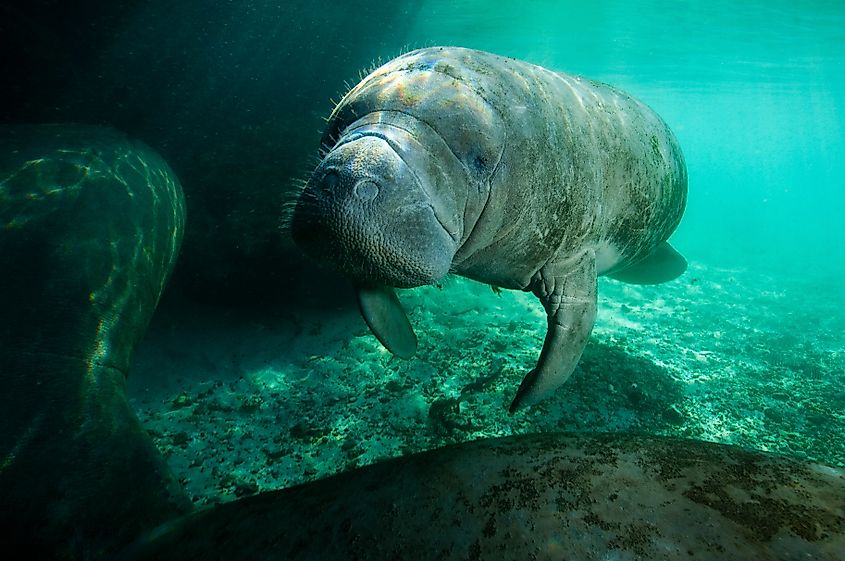
A West Indian manatee (Trichechus manatus) - Key deer: a dwarf subspecies confined to the Lower Keys, numbering under a thousand, threatened by road mortality, sea level rise, and a screwworm outbreak in 2016.
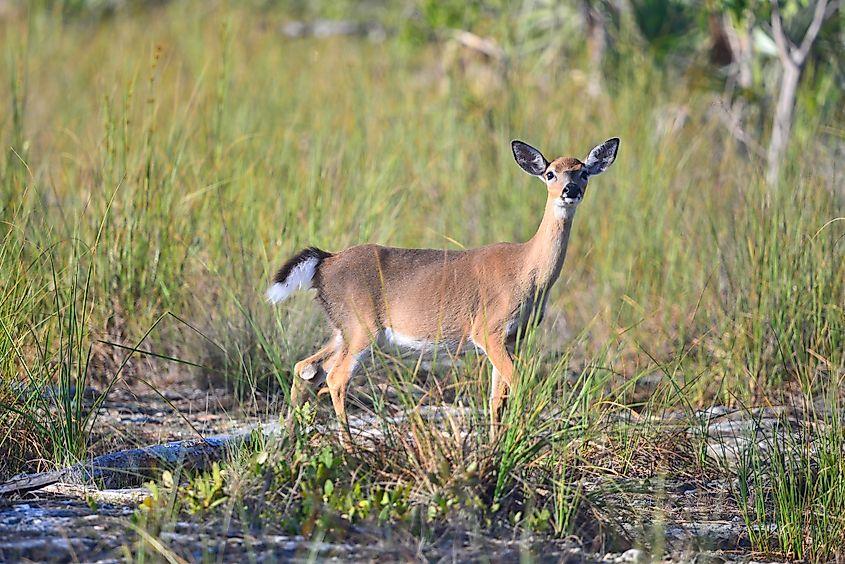
A Key deer (Odocoileus virginianus clavium) - White-tailed deer, bobcat, gray fox, river otter, raccoon, opossum, striped skunk, armadillo, marsh rabbit, round-tailed muskrat: all widespread.
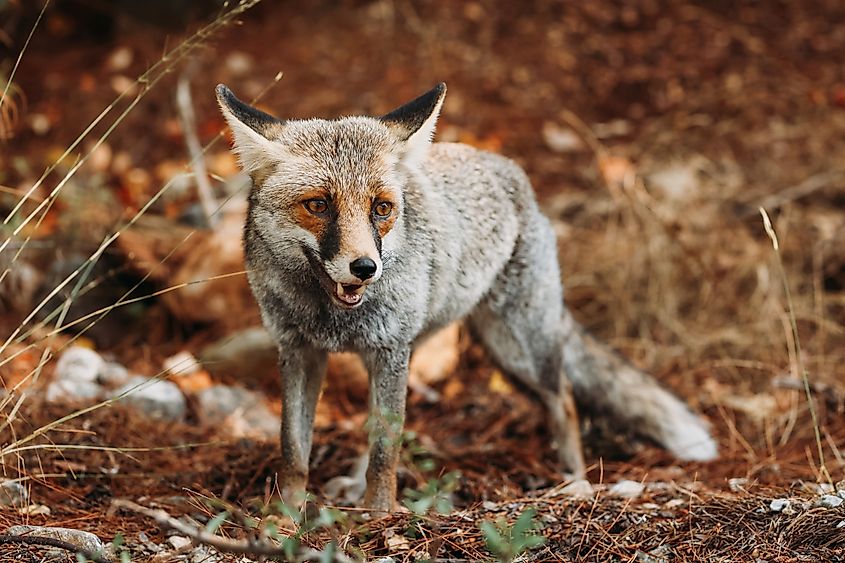
A gray fox (Urocyon cinereoargenteus) - Florida mouse: the only mammal species endemic to Florida, living in scrub and often in gopher tortoise burrows.
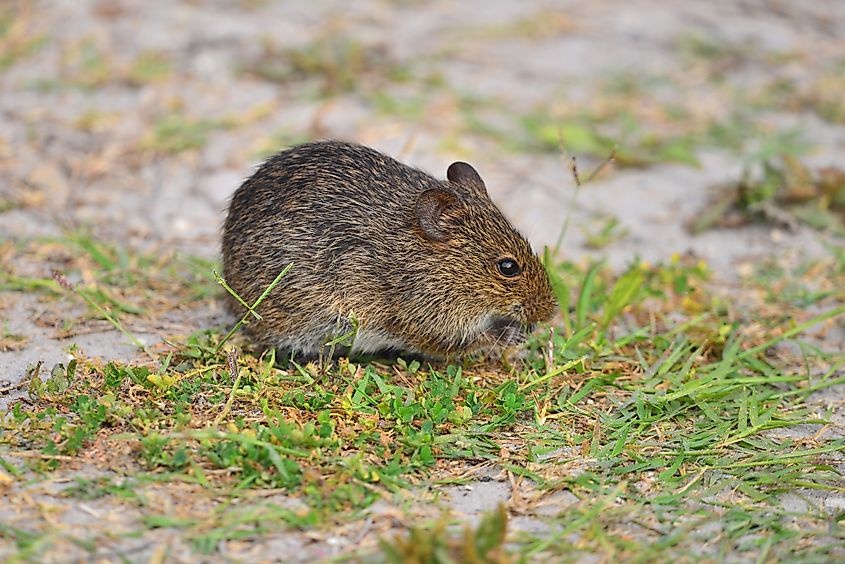
A Florida mouse (Podomys floridanus) - Bats: 13 species, including the Florida bonneted bat, one of the rarest bats in North America and endemic to south Florida.
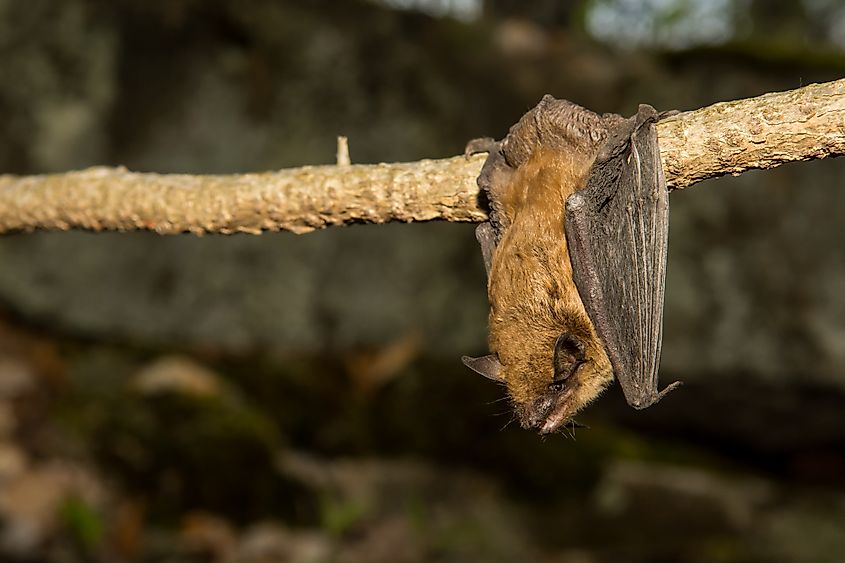
A big brown bat (Eptesicus fuscus) - Marine mammals: bottlenose dolphin, Atlantic spotted dolphin, pilot whales, North Atlantic right whales calving off the northeast coast in winter, and the Rice's whale in the Gulf.
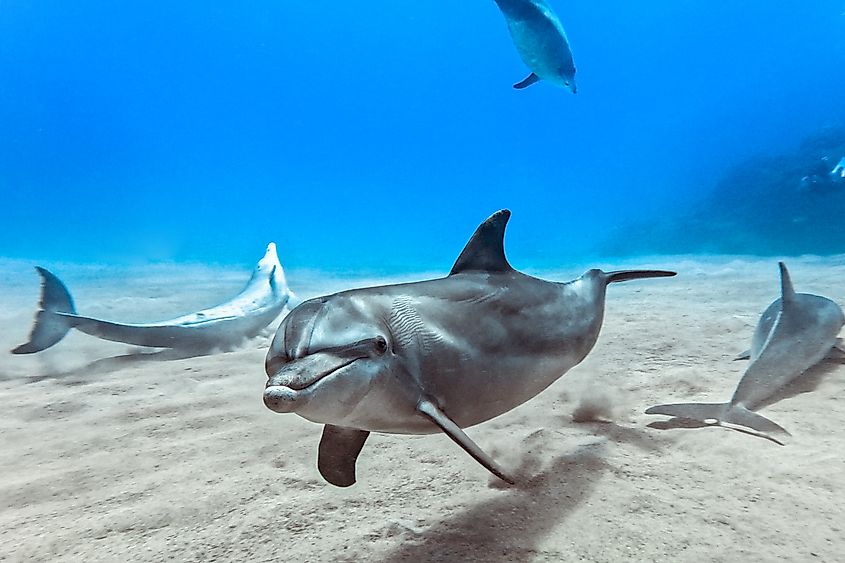
A bottlenose dolphin (Tursiops truncatus)


Red wolves are gone from Florida. The last verified Florida population of the eastern subspecies disappeared long ago, and a Gulf coast island reintroduction site in the 1990s was later discontinued.
Section 05
Birds Of Florida
More than 500 species have been recorded, and Florida is one of the top birding destinations in the country because it mixes temperate, subtropical, and Caribbean species.

- Wading birds: roseate spoonbill, wood stork, reddish egret, tricolored heron, white ibis, limpkin, and both night-heron species. Historic Everglades wading bird colonies were reduced by roughly 90 percent from their pre-drainage size, and their recovery is the benchmark for Everglades restoration.
- Endemics and specialties: Florida scrub-jay (the only species found solely in Florida), snail kite (which eats almost exclusively apple snails), short-tailed hawk, Florida grasshopper sparrow (one of the most endangered birds in North America), and mangrove cuckoo.
- Caribbean visitors: white-crowned pigeon, black-whiskered vireo, and American flamingos, which are now understood to be returning natives rather than escapees.
- Raptors and coastal birds: bald eagle, in one of the largest populations in the lower 48, plus swallow-tailed kite, crested caracara, magnificent frigatebird, brown pelican, black skimmer, and least tern.
Section 06
Reptiles And Amphibians
Florida has the most reptile species of any state east of the Mississippi, plus a large amphibian list. It is also the only state with both alligators and crocodiles.

Crocodilians: the American alligator, with a statewide population of roughly 1.3 million, and the American crocodile, a saltwater species at the northern edge of its range in extreme south Florida and the Keys, recovered from a few hundred animals to a few thousand.
Sea turtles: Florida beaches host the largest loggerhead nesting population in the western hemisphere, plus green, leatherback, Kemp's ridley, and hawksbill turtles. Nest numbers run into the tens of thousands annually.
Snakes: around 45 native species, six venomous: eastern diamondback rattlesnake, timber rattlesnake in the north, dusky pygmy rattlesnake, eastern copperhead in the panhandle only, cottonmouth, and eastern coral snake. The eastern indigo snake, North America's longest native snake, is federally threatened. Related: are there copperheads in the Everglades.
Turtles and lizards: gopher tortoise (state tortoise and a keystone species), Suwannee cooter, Florida softshell, striped mud turtle, plus green anole, six-lined racerunner, sand skink, and the endemic Florida worm lizard.
Amphibians: around 55 species, including the two-toed amphiuma, greater siren, gopher frog, pine barrens treefrog, Apalachicola dusky salamander, and the reticulated flatwoods salamander, which is critically imperiled.
Section 07
Invasive Species, Florida's Defining Problem
No other state comes close. More than 500 non-native species are established in Florida, including roughly 50 reptile and amphibian species, more introduced lizards than native ones.
- Burmese python: established in the Everglades since the 1990s, likely from released pets and a 1992 hurricane that destroyed a breeding facility. Surveys in Everglades National Park found catastrophic declines in mid-sized mammals: raccoons, opossums, and bobcats fell by 85 to 99 percent in python-occupied areas, and marsh rabbits effectively vanished. See how pythons took over the Everglades.
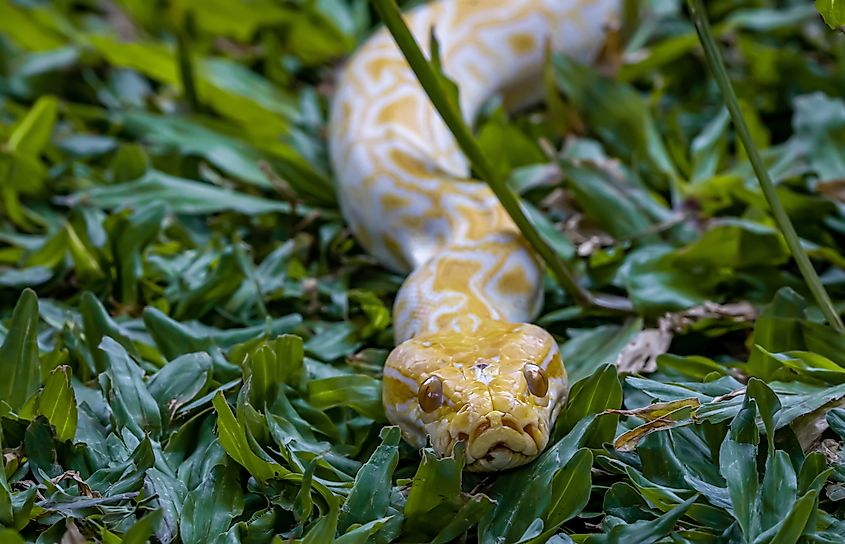
A Burmese python (Python bivittatus) - Lionfish: an Indo-Pacific reef predator now abundant on Atlantic and Gulf reefs, with venomous spines, no natural predators here, and an appetite for juvenile reef fish.
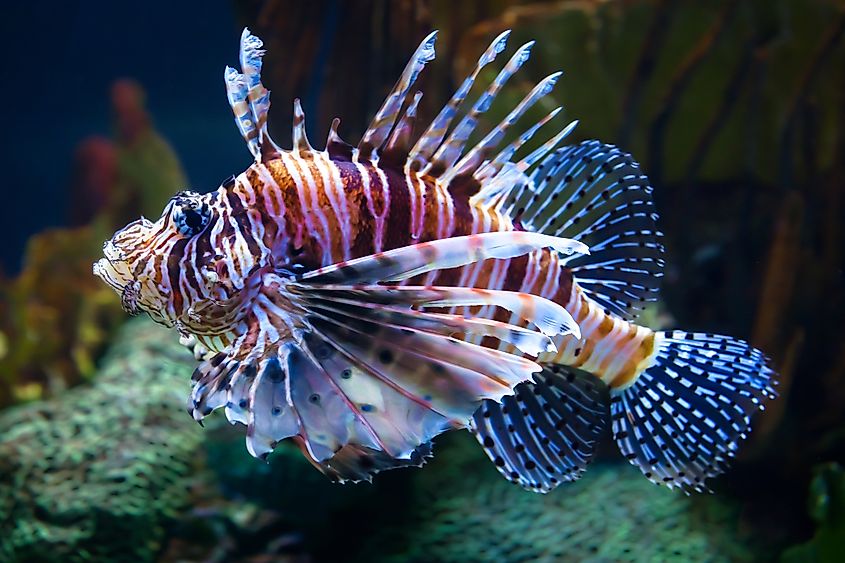
A red lionfish (Pterois volitans) - Green iguana, black spiny-tailed iguana, Nile monitor, tegu: Argentine black and white tegus eat alligator and turtle eggs and are spreading.
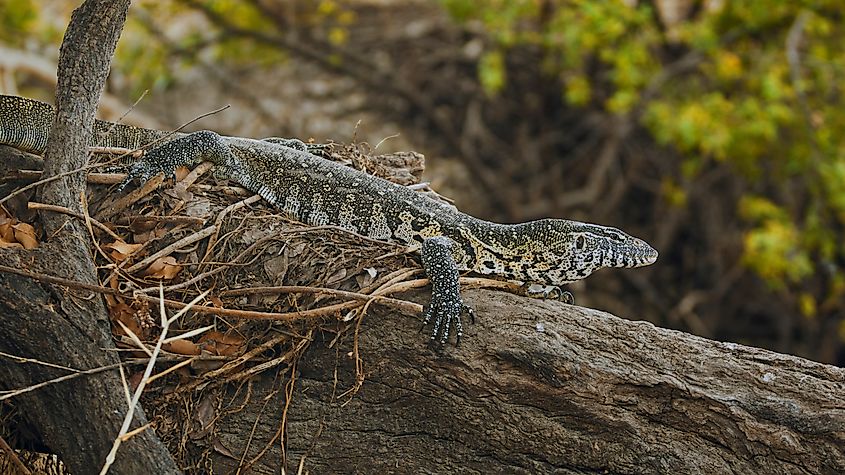
A Nile monitor (Varanus niloticus) - Cuban treefrog: eats native treefrogs and is now common across the peninsula.
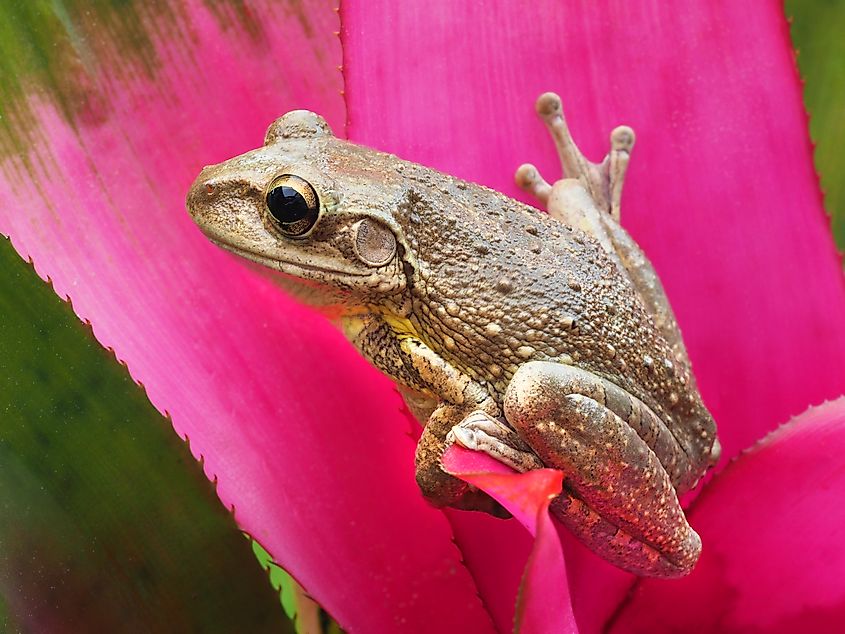
A Cuban tree frog (Osteopilus septentrionalis) - Feral hogs, feral cats, and rhesus macaques: macaques along the Silver River carry herpes B virus.
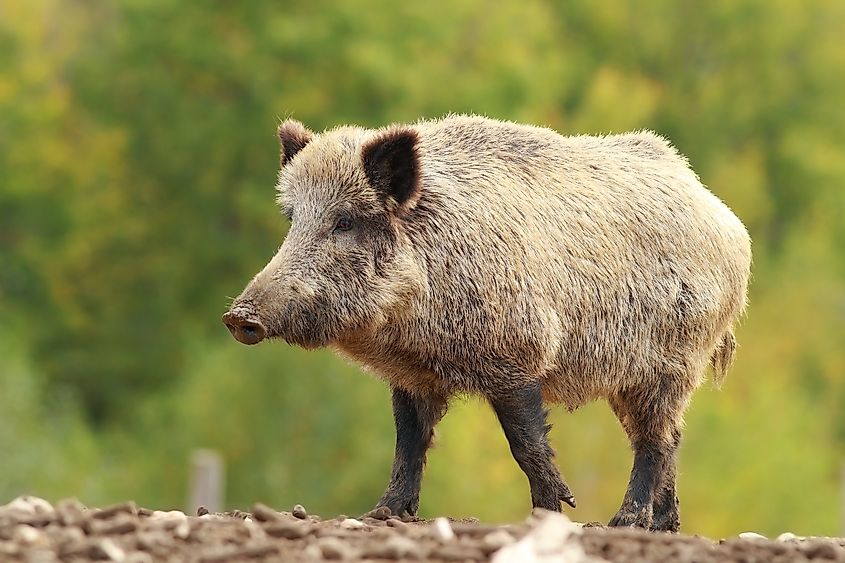
A wild boar (Sus scrofa) - Fish: blue tilapia, walking catfish, Asian swamp eel, and many aquarium escapees established in canals.
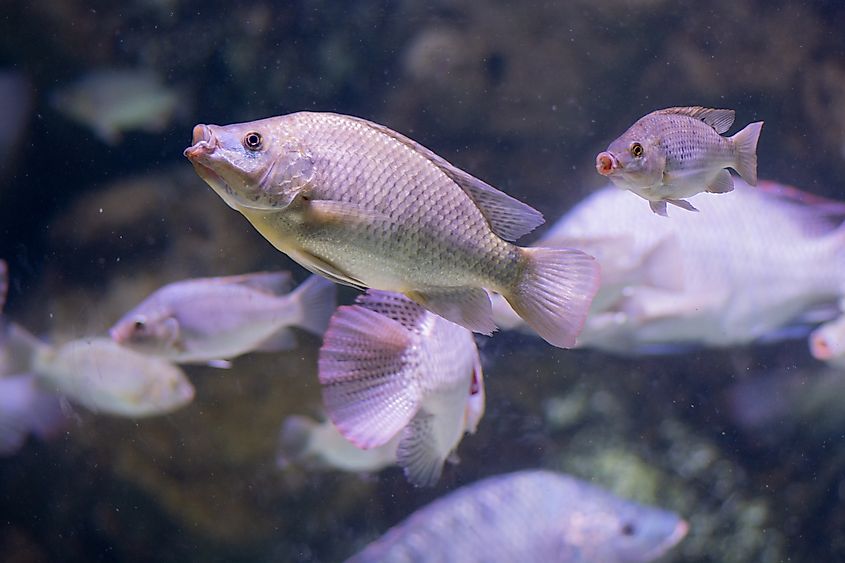
A small school of blue tilapia (Oreochromis aureus) - Invertebrates: island apple snail, which alters snail kite feeding, plus red imported fire ant and Africanized honeybees.
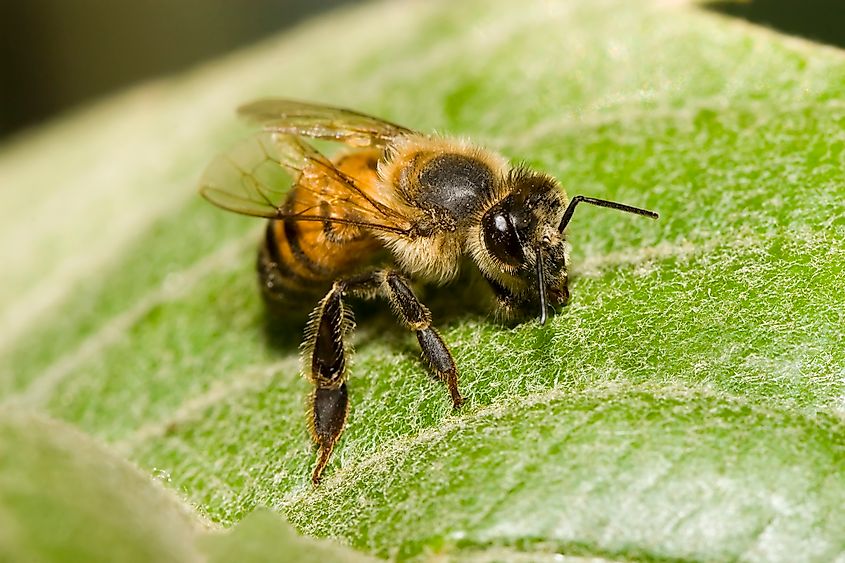
An Africanized honey bee


More on the wider picture: invasive species in the Florida Everglades and whether pythons will spread beyond Florida.
Section 08
Dangerous Animals In Florida
- American alligator: roughly 1.3 million in the state. Serious bites average a handful per year against many millions of water-based recreation days. Never swim at dusk or dawn in fresh water, keep dogs away from shorelines, and never feed an alligator, which is illegal and the single biggest cause of dangerous behaviour.
- Venomous snakes: six species. The eastern diamondback is the largest rattlesnake in North America; the cottonmouth is the most commonly encountered near water; the coral snake has potent venom but bites very rarely.
- Sharks: Florida records more shark bites than any other state, concentrated in Volusia County. Almost all are minor bites from small species in the surf zone. Avoid dawn and dusk, murky water, and swimming near fishing or bait.
- Lightning and rip currents: worth naming because they kill far more Floridians and visitors than every animal combined.
- Africanized honeybees and fire ants: both widespread, and the leading cause of animal-related deaths through allergic reaction.
- Bull sharks, barracuda, jellyfish, stingrays, and lionfish spines: marine injuries are mostly stings and punctures rather than bites.
- Florida panther and black bear: no fatal panther attack has ever been recorded in Florida. Bear conflicts are increasing in central Florida suburbs.
Section 09
Endangered And Protected Species
| Species | Where | Status |
|---|---|---|
| Florida panther | Southwest Florida | ENDANGERED |
| Florida grasshopper sparrow | Dry prairie, central Florida | ENDANGERED |
| Rice's whale | Gulf of Mexico | ENDANGERED |
| Key deer | Lower Keys | ENDANGERED |
| Florida bonneted bat | South Florida | ENDANGERED |
| West Indian manatee | Statewide waters | THREATENED |
| Florida scrub-jay | Scrub, central ridges | THREATENED |
| Gopher tortoise | Sandhill and scrub | STATE THREATENED |
| Eastern indigo snake | Sandhill, flatwoods | THREATENED |
| Loggerhead sea turtle | Atlantic and Gulf beaches | THREATENED |
| Wood stork | Wetlands statewide | THREATENED |
| Snail kite | Central and south wetlands | ENDANGERED |
Florida's pressures are unusually intense: it is one of the fastest-growing states, so habitat conversion is relentless; the Everglades lost roughly half its original extent to drainage and its water flow is still being re-engineered; sea level rise threatens the Keys and coastal marsh directly; nutrient pollution drives algal blooms and seagrass loss that starve manatees; fire suppression degrades scrub and longleaf pine; and the invasive load is the heaviest in the nation.
Section 10
Where To See Wildlife In Florida
- Everglades National Park, Anhinga Trail and Shark Valley: alligators, wading birds, and anhingas at close range on a boardwalk.
- Merritt Island National Wildlife Refuge: manatees, roseate spoonbills, and enormous winter waterfowl numbers next to Kennedy Space Center.
- Ding Darling National Wildlife Refuge, Sanibel: mangrove wading birds on a tidal drive.
- Crystal River and Blue Spring: manatees congregating in constant-temperature springs, best in cold snaps from December to February.
- Big Cypress National Preserve and Fakahatchee Strand: the best panther country, though sightings are very rare.
- Archbold Biological Station and Lake Wales Ridge: Florida scrub-jay and scrub endemics.
- Dry Tortugas National Park: sooty terns, frigatebirds, and spring migrant fallouts.
- Archie Carr National Wildlife Refuge: the densest loggerhead sea turtle nesting beach in the hemisphere, with permitted night walks in summer.
Timing: December through March is the best all-round window: dry season concentrates wading birds and alligators at remaining water, manatees crowd the springs, migratory ducks are present, and mosquitoes are tolerable. April and May for songbird migration and Dry Tortugas fallouts. June and July for sea turtle nesting, and August and September for hatchlings. Summer means heat, thunderstorms, mosquitoes, and dispersed wildlife.
Section 11
Common Questions
- What is the state animal of Florida?
- The Florida panther, chosen by schoolchildren in 1982. Florida also names a state marine mammal (manatee), saltwater mammal (bottlenose dolphin), reptile (American alligator), saltwater reptile (loggerhead sea turtle), and tortoise (gopher tortoise).
- How many alligators are in Florida?
- Roughly 1.3 million. Serious bites average only a handful per year despite millions of water recreation days. Feeding alligators, which is illegal, is the main cause of dangerous behaviour.
- Does Florida have crocodiles?
- Yes. Florida is the only state with both. The American crocodile lives in saltwater and brackish habitat in extreme south Florida and the Keys, and has recovered from a few hundred animals to a few thousand.
- How bad is the Burmese python problem?
- Severe. Surveys in Everglades National Park documented declines of 85 to 99 percent in raccoons, opossums, and bobcats in python-occupied areas, with marsh rabbits effectively eliminated.
- How many Florida panthers are left?
- Roughly 200 adults. The population fell to 20 to 30 animals by the 1980s and was rescued partly by introducing eight female Texas cougars in 1995 to restore genetic diversity.
- What is the most dangerous animal in Florida?
- Africanized bees and fire ants cause the most deaths, through allergic reactions. Alligators and sharks are far more feared than they are dangerous. Lightning and rip currents kill more people than all Florida animals combined.
- Are the flamingos in Florida wild?
- Increasingly understood to be, yes. Flamingos were long assumed to be escapees from captive flocks, but historical and tracking evidence indicates they are a returning native population that was largely shot out by plume hunters.
This page was last updated on October 12, 2026