Section 01
Why The Second Smallest State Matters Globally
Delaware is 96 miles long, never more than 35 miles wide, and has the lowest mean elevation of any state at about 60 feet. It has no mountains, no large forest wilderness, and only around 60 mammal species. On paper it is unremarkable.
What Delaware has is a bay. Delaware Bay hosts the largest spawning aggregation of horseshoe crabs on Earth, and that single fact makes the state internationally significant. On spring high tides around the new and full moons in May and June, hundreds of thousands of horseshoe crabs come ashore to lay eggs in the sand. Those eggs arrive precisely when hundreds of thousands of shorebirds, having flown from South America, need to refuel before continuing to the Arctic.
The red knot is the species that made this famous. It can nearly double its body weight in two weeks on horseshoe crab eggs, and it cannot complete its migration without them. When horseshoe crab harvest for bait and biomedical use reduced egg availability in the 1990s, the red knot population fell sharply, and the two species are now managed together as a single system. Delaware Bay is designated a Wetland of International Importance and a hemispheric site in the Western Hemisphere Shorebird Reserve Network.
Beyond the bay, Delaware is a boundary state. It sits where northern and southern species meet: bald cypress swamp reaches its northern limit in Sussex County, while some northern species reach their southern limit in the state's few remaining upland forests.
Section 02
Delaware's Official State Animals
| Designation | Animal | Adopted |
|---|---|---|
| State bird | Blue hen chicken | 1939 |
| State wildlife animal | Gray fox Urocyon cinereoargenteus | 2010 |
| State fish | Weakfish Cynoscion regalis | 1981 |
| State insect | Convergent lady beetle Hippodamia convergens | 1974 |
| State butterfly | Eastern tiger swallowtail Papilio glaucus | 1999 |
| State marine animal | Horseshoe crab Limulus polyphemus | 2002 |
| State macroinvertebrate | Stonefly Order Plecoptera | 2005 |
The blue hen is not a wild bird. It is a fighting-gamecock breed, and the designation comes from Revolutionary War tradition: Delaware soldiers were said to carry blue hen gamecocks and to fight like them. It is a domestic breed honoured for military history, which makes Delaware one of a handful of states whose official bird is not a wild species. That is partly why the gray fox was later named the state wildlife animal, filling the gap.
Two of the symbols are quietly sophisticated. Naming the horseshoe crab the state marine animal in 2002 came directly out of the red knot crisis and the fight over harvest limits. And the stonefly designation is a genuinely unusual choice: stoneflies are among the most pollution-sensitive aquatic insects, so their presence in a stream is a direct measure of water quality. Delaware effectively made a bioindicator an official symbol.
Section 03
Habitats By Region, And Who Lives In Each
Piedmont, the northern sliver

Only the far northwest corner above Wilmington sits in the Piedmont, with rolling hills, rocky streams, and mature oak-tulip poplar forest. It holds species found nowhere else in the state: forest-interior songbirds like Louisiana waterthrush and hooded warbler, plus salamanders needing cold, rocky headwaters.
Coastal Plain uplands and Delmarva forest

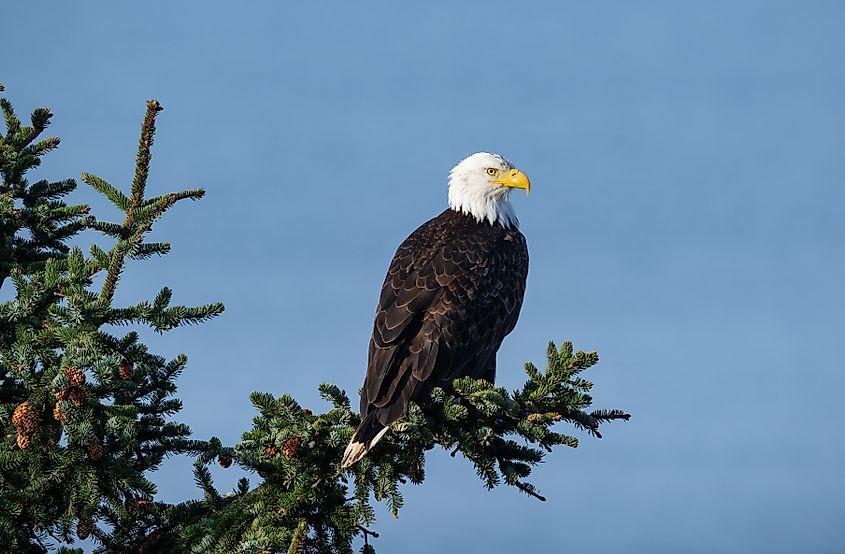
Most of the state, low and flat, historically mixed oak and loblolly pine with a high water table. This is Delmarva fox squirrel country, and it holds white-tailed deer, coyote (which only arrived in Delaware in the 1990s, making it the last state in the continental US to be colonized), red and gray fox, and the state's small but growing bald eagle population.
Delmarva bays and freshwater wetlands

Shallow, seasonal depressions scattered across the coastal plain, sometimes called Delmarva bays or whale wallows. They fill in winter and dry in summer, which excludes fish and makes them ideal amphibian nurseries. Tiger salamanders, barking treefrogs, and several rare frogs depend on them, and they are among the state's most threatened habitats.
Bald cypress swamp, Great Cypress Swamp

In southern Sussex County, bald cypress reaches its northern range limit. The Great Cypress Swamp, once heavily logged and burned, is now the largest contiguous forest on the Delmarva Peninsula and holds breeding prothonotary warblers, barred owls, and a returning population of forest specialists.
Delaware Bay shore and salt marsh

Extensive tidal salt marsh, mudflat, and sand beach along the bay. This is the horseshoe crab and shorebird zone, and also holds saltmarsh sparrow, seaside sparrow, clapper rail, black rail, diamondback terrapin, and enormous numbers of wintering snow geese and ducks.
Atlantic coast and inland bays

Ocean beaches from Cape Henlopen to Fenwick Island, plus the shallow Rehoboth, Indian River, and Little Assawoman bays behind them. Piping plover and least tern nest on the beaches, bottlenose dolphins feed offshore in summer, and gray and harbor seals haul out in winter.
Section 04
The Horseshoe Crab And Shorebird System
This deserves its own section because it is the single most important wildlife event in the state and one of the great migration spectacles in the world.
Horseshoe crabs are not crabs. They are closer to spiders and scorpions, and the lineage is roughly 450 million years old, older than dinosaurs and largely unchanged. Females come ashore on spring tides, dig shallow nests, and lay tens of thousands of eggs each. Waves and later crabs dig up a large share of those eggs, and the surplus washes into the surf zone where birds can reach it.
The birds arriving to eat them have flown extraordinary distances. Red knots of the rufa subspecies winter as far south as Tierra del Fuego and breed in the central Canadian Arctic, a round trip that can exceed 18,000 miles. They reach Delaware Bay with depleted fat reserves and roughly two weeks to rebuild. Also present in large numbers: ruddy turnstone, semipalmated sandpiper, sanderling, dunlin, and short-billed dowitcher.

The conflict is that horseshoe crabs are valuable to people too. They have been harvested as bait for eel and conch fisheries, and their blue, copper-based blood contains Limulus amebocyte lysate, which detects bacterial contamination in vaccines and injectable drugs. Every batch of injectable medicine made in the US has historically been tested with it. Crabs are bled and returned to the water, with some mortality. More on that: how horseshoe crabs guard our vaccines.
Where it stands: the red knot was federally listed as threatened in 2014. Harvest quotas, a bait moratorium on female crabs in Delaware, and coordinated management through the Atlantic States Marine Fisheries Commission have stabilized but not clearly reversed the decline. A synthetic alternative to crab blood, recombinant factor C, now exists and is being adopted, which could eventually remove the biomedical pressure entirely.
Section 05
Mammals Of Delaware
Around 60 species, with no large predators and no bears. Delaware is one of only a few states with no established black bear population.
- White-tailed deer: abundant and the state's only large wild mammal, dense enough to damage forest regeneration and crops.
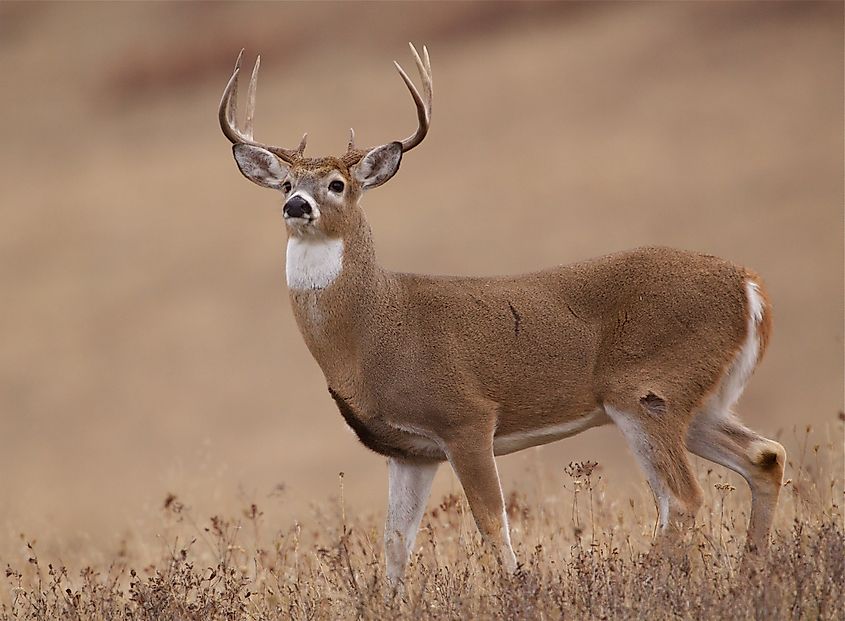
A white-tailed deer (Odocoileus virginianus) buck - Gray fox: the state wildlife animal, and the only North American canid that routinely climbs trees.
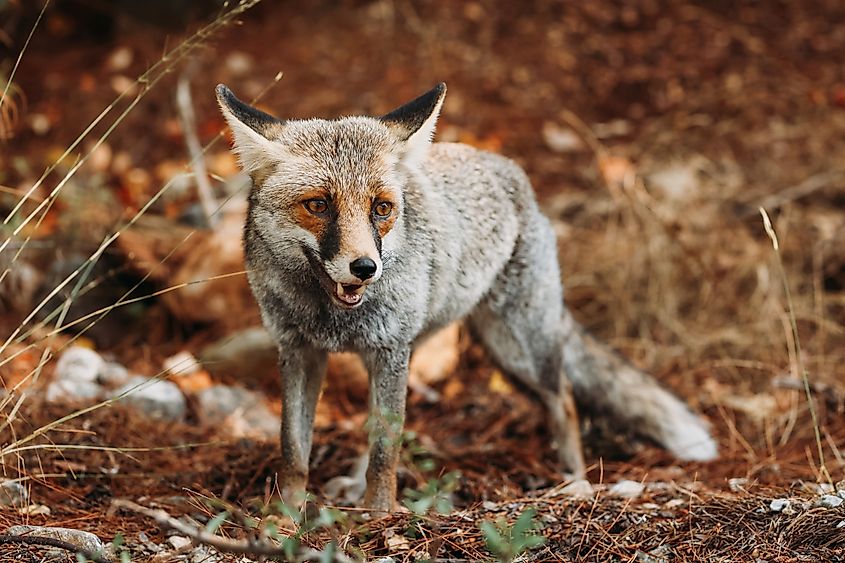
A gray fox (Urocyon cinereoargenteus) - Red fox: more common in open farmland, and largely descended from European stock introduced for hunting.
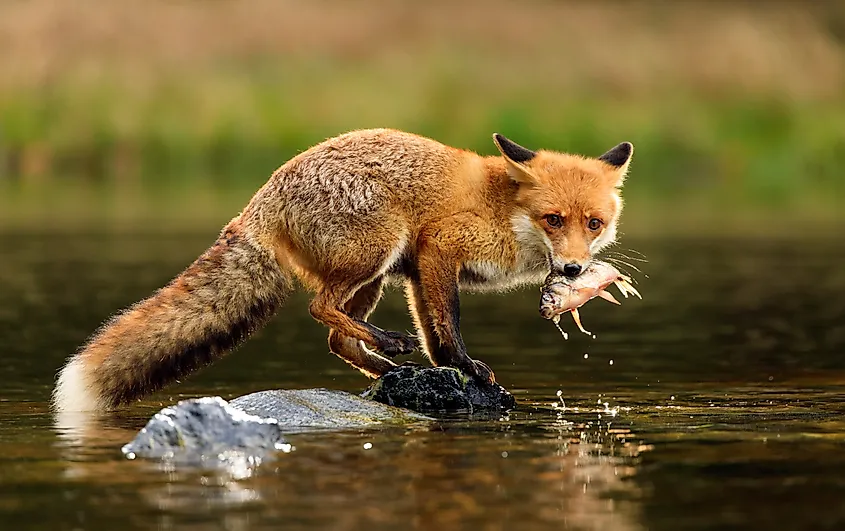
A red fox (Vulpes vulpes) - Coyote: the newest arrival, first confirmed breeding in the 1990s, and still at low density compared with neighboring states.
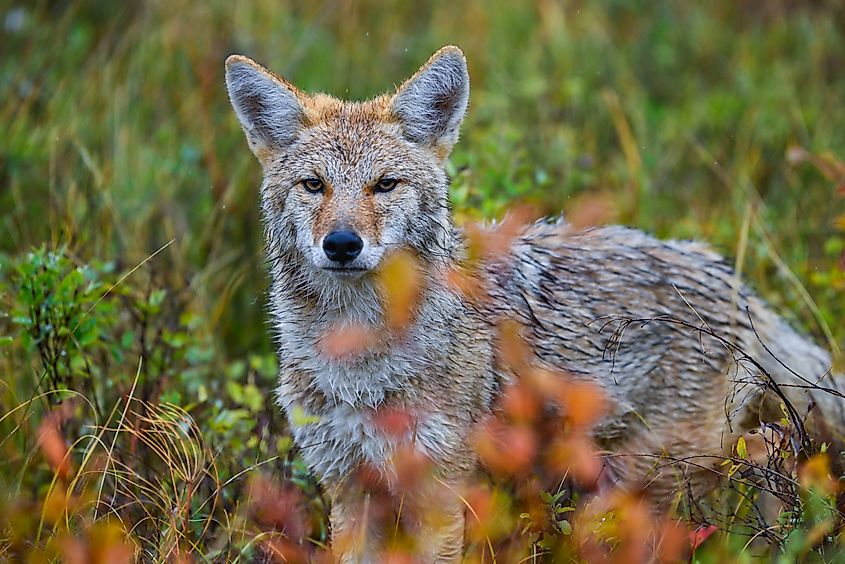
A coyote (Canis latrans) - Delmarva fox squirrel Sciurus niger cinereus: a large, silvery squirrel endemic to the Delmarva Peninsula. It was federally endangered from 1967, recovered through habitat protection and translocation, and was delisted in 2015, one of the clearer endangered species successes on the East Coast.
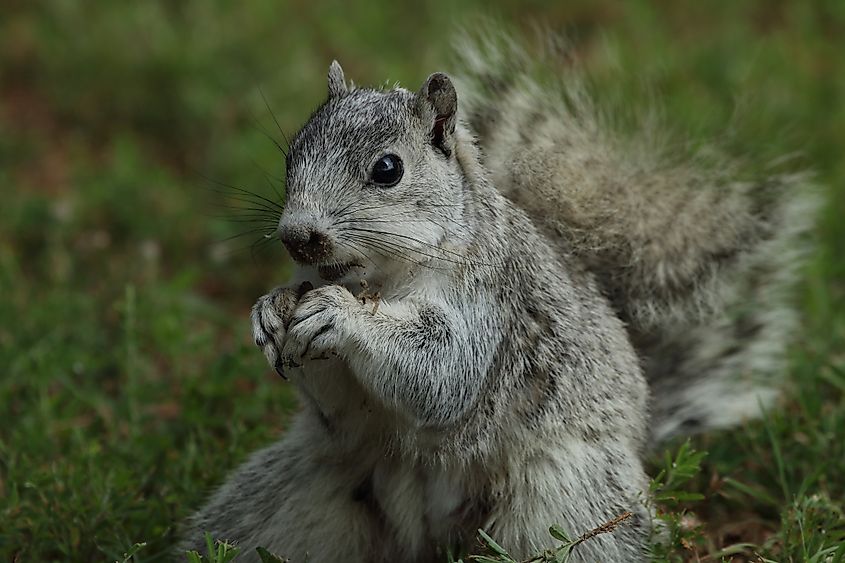
A Delmarva fox squirrel (Sciurus niger cinereus) - River otter, mink, muskrat, beaver, raccoon, Virginia opossum, striped skunk, woodchuck, eastern cottontail, gray squirrel, southern flying squirrel: all widespread.
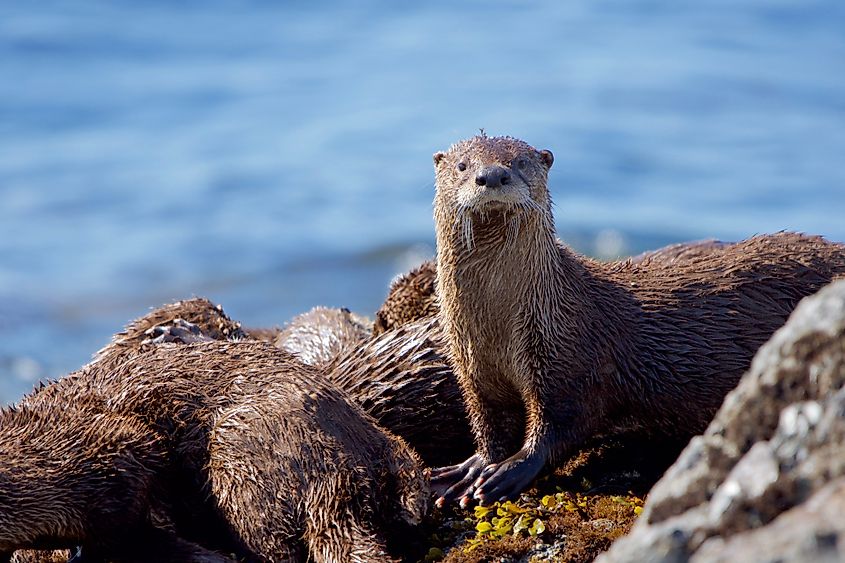
A river otter (Lontra canadensis) - Nutria: an invasive South American rodent that was the target of a large Delmarva eradication program.
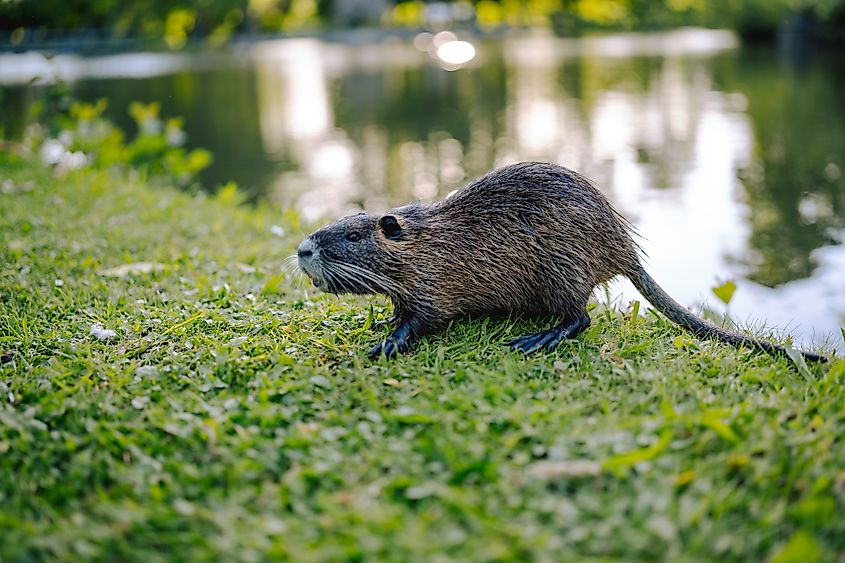
A coypu (Myocastor coypus) - Bats: nine species, with the northern long-eared bat federally endangered and little brown bats sharply reduced by white-nose syndrome.
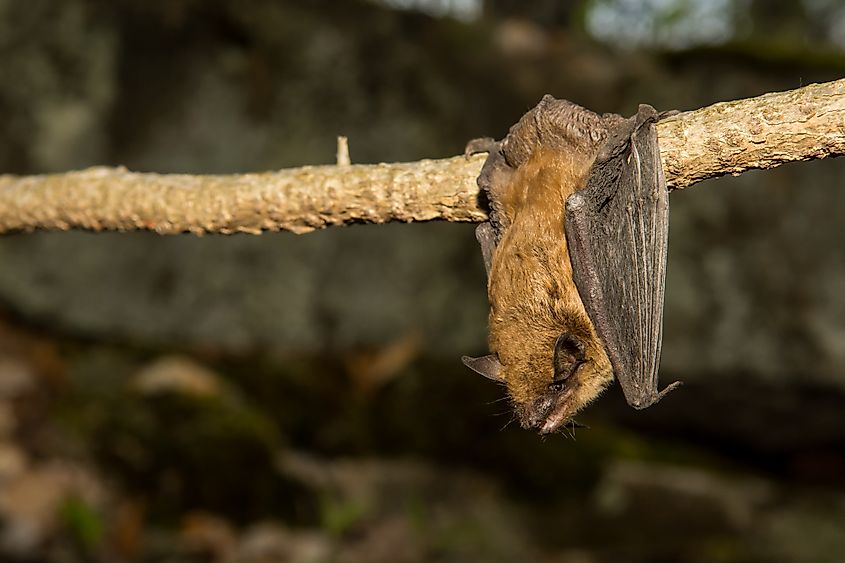
A big brown bat (Eptesicus fuscus) - Marine mammals: bottlenose dolphin in summer, harbor and gray seals in winter, plus humpback and North Atlantic right whales offshore. Right whales pass through Delaware's offshore waters on migration and are among the most endangered whales on Earth.
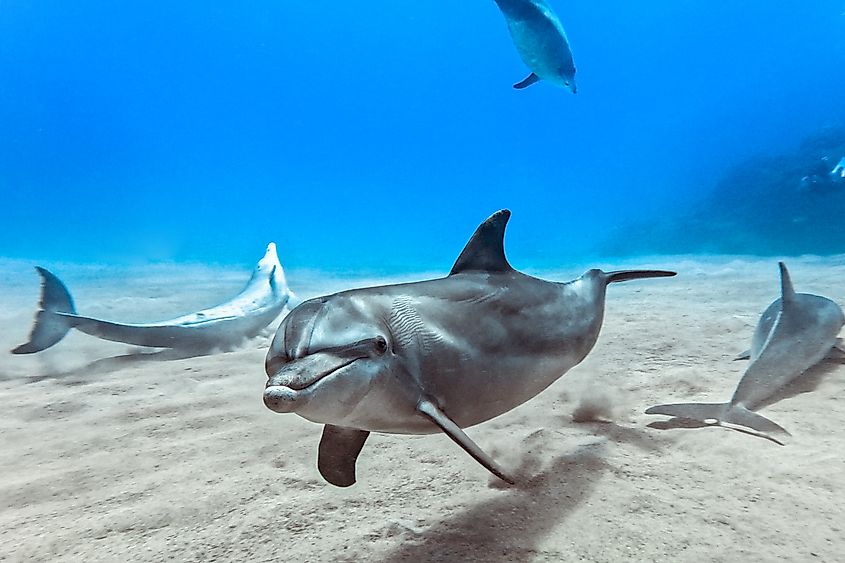
A bottlenose dolphin (Tursiops truncatus)


Bobcat, black bear, elk, wolf, and mountain lion are all absent, extirpated in the colonial and early industrial periods. Occasional bobcat and bear wanderers are reported from Maryland and Pennsylvania.
Section 06
Birds Of Delaware
More than 420 species have been recorded in a state of under 2,000 square miles, a density explained entirely by position on the Atlantic Flyway.
- Waterfowl: Bombay Hook and Prime Hook refuges winter very large numbers of snow geese, Canada geese, northern pintail, American black duck, and green-winged teal. Snow goose flocks can number in the tens of thousands.
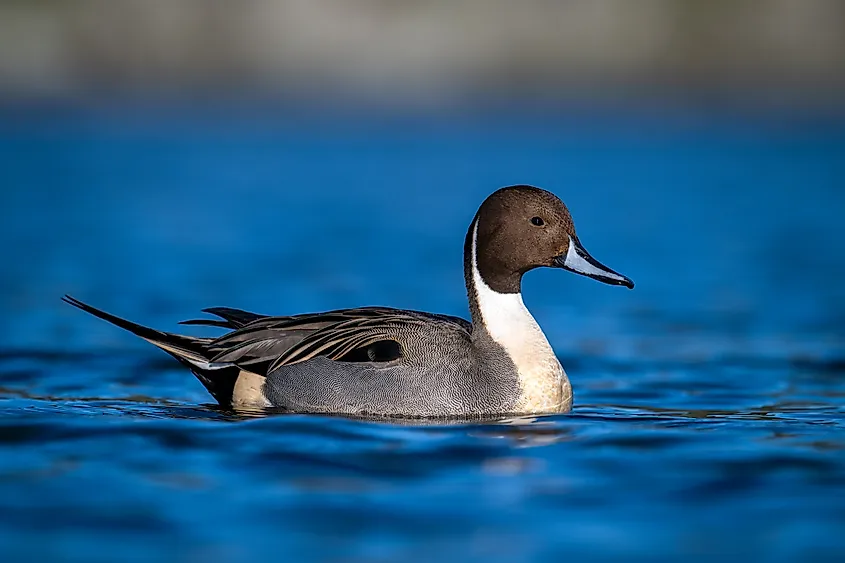
A northern pintail (Anas acuta) - Wading birds: great blue heron, great and snowy egrets, glossy ibis, black-crowned and yellow-crowned night-herons, and one of the region's notable heronries at Pea Patch Island in the Delaware River.
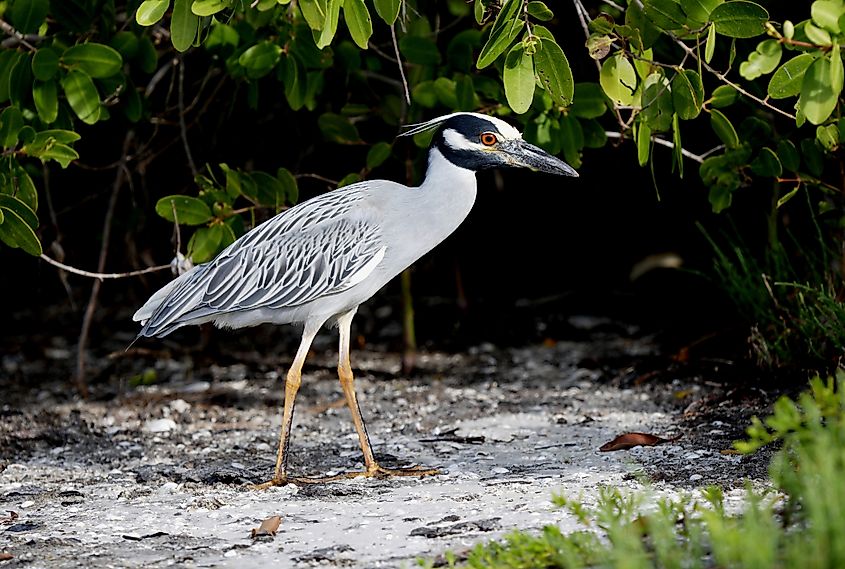
A yellow-crowned night heron (Nyctanassa violacea) - Raptors: bald eagle, which grew from a handful of pairs to well over 100 nesting pairs, plus osprey on nearly every channel marker, northern harrier over marsh, and short-eared owl in winter.
A bald eagle (Haliaeetus leucocephalus) - Marsh specialists: saltmarsh sparrow, seaside sparrow, clapper and Virginia rails, and the very secretive black rail, which has declined severely.
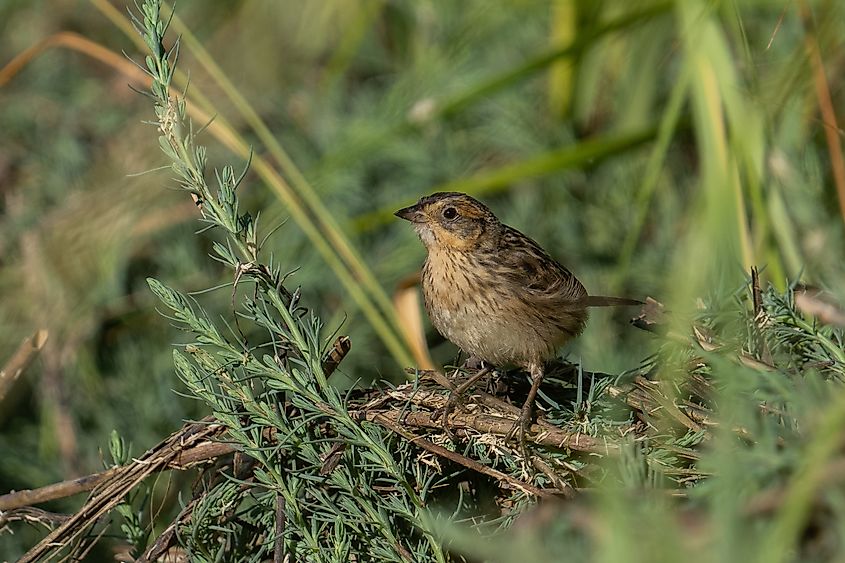
A saltmarsh sparrow (Ammospiza caudacuta) - Beach nesters: piping plover, least tern, American oystercatcher, and black skimmer, all requiring beach closures during nesting.
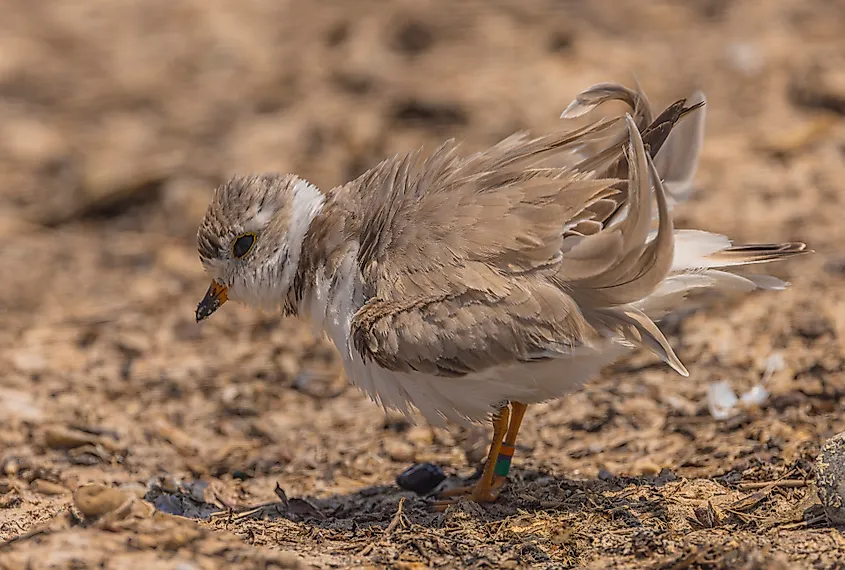
A piping plover (Charadrius melodus)


Section 07
Reptiles, Amphibians, And Fish
Delaware has around 25 reptile and 20 amphibian species. Only one snake is venomous.
Snakes

The northern copperhead occurs only in the northern Piedmont sliver and is uncommon. Every other snake in the state is harmless, including eastern rat snake, black racer, northern water snake, eastern kingsnake, corn snake, and eastern garter snake. Timber rattlesnakes were extirpated from Delaware long ago.
Turtles

Diamondback terrapin in brackish creeks, eastern box turtle, spotted turtle, mud and musk turtles, painted turtle, red-bellied turtle, snapping turtle, plus loggerhead, green, Kemp's ridley, and leatherback sea turtles offshore. See the seven sea turtle species.
Amphibians

Eastern tiger salamander (state endangered and dependent on Delmarva bays), marbled and spotted salamanders, four-toed salamander, eastern newt, plus barking treefrog, carpenter frog, southern leopard frog, spring peeper, wood frog, and Fowler's toad.
Fish

Weakfish is the state fish, and the estuary is a nursery for summer flounder, striped bass, bluefish, and blue crab, which is culturally and economically central to the region. Atlantic sturgeon spawn in the Delaware River and are federally endangered; the river's population is one of the most closely watched on the coast. American shad and river herring runs are the focus of dam removal and fish passage work.
Section 08
Dangerous Animals In Delaware
Delaware is close to the safest state in the country for wildlife encounters. There are no bears, no big cats, no alligators, and one uncommon venomous snake in one corner of the state.
- Ticks: the real risk. Lyme disease incidence in Delaware is among the highest per capita in the nation, and lone star ticks also transmit ehrlichiosis and cause alpha-gal syndrome.
- White-tailed deer: vehicle collisions are the leading source of wildlife-related injury.
- Northern copperhead: northern Piedmont only, uncommon, and bites are rare and rarely serious.
- Mosquitoes and greenhead flies: salt marsh greenheads are a genuine summer nuisance, and mosquitoes carry West Nile virus and eastern equine encephalitis.
- Jellyfish and stingrays: sea nettles in the inland bays in late summer; shuffle your feet in shallow water.
- Rabies: raccoons, foxes, skunks, and bats are the vectors. Do not handle wild mammals.
Section 09
Endangered And Protected Species
| Species | Where | Status |
|---|---|---|
| Red knot (rufa) | Delaware Bay stopover | THREATENED |
| Atlantic sturgeon | Delaware River | ENDANGERED |
| North Atlantic right whale | Offshore migration route | ENDANGERED |
| Piping plover | Atlantic beaches | THREATENED |
| Saltmarsh sparrow | Tidal salt marsh | STATE ENDANGERED |
| Black rail | High marsh | STATE ENDANGERED |
| Eastern tiger salamander | Delmarva bays | STATE ENDANGERED |
| Northern long-eared bat | Statewide | ENDANGERED |
| Bog turtle | Northern fens | THREATENED |
| Delmarva fox squirrel | Coastal plain forest | DELISTED 2015 |
Sea level rise is the defining threat in Delaware in a way it is not in most states. With the lowest mean elevation in the country and extensive tidal marsh, the state is losing high marsh to open water, and species like saltmarsh sparrow and black rail that nest just above normal high tide have very little margin. Marsh migration inland is blocked by roads and development in many places.
Section 10
Where To See Wildlife In Delaware
- Bombay Hook National Wildlife Refuge: the state's premier site, with a wildlife drive through impoundments and marsh. Snow geese in winter, shorebirds in spring, waders all summer.
- Prime Hook National Wildlife Refuge: marsh restoration in progress, excellent for waterfowl and marsh birds.
- Mispillion Harbour and Slaughter Beach: the classic horseshoe crab spawning and red knot viewing sites in May.
- Cape Henlopen State Park: seabirds, seals in winter, dolphins in summer, and migrant songbirds.
- Great Cypress Swamp: northern-limit bald cypress and forest interior birds.
- Pea Patch Island, via Fort Delaware: one of the region's largest wading bird colonies.
- White Clay Creek State Park: the Piedmont species that occur nowhere else in the state.
Timing: the second and third weeks of May, on the high tides around the new and full moon, for horseshoe crabs and red knots together. This is the single best wildlife week in Delaware. December through February for snow geese and wintering waterfowl in the tens of thousands. Late summer for wading birds and southbound shorebirds. Beach nesting areas are closed spring through midsummer, so watch from marked boundaries.
Section 11
Common Questions
- What is the state animal of Delaware?
- The gray fox is the official state wildlife animal, named in 2010. The state bird is the blue hen chicken, a domestic gamecock breed honouring Revolutionary War tradition rather than a wild species, and the horseshoe crab is the state marine animal.
- Why is Delaware Bay important for birds?
- It holds the largest horseshoe crab spawning aggregation on Earth, and the eggs feed hundreds of thousands of migrating shorebirds each May. Red knots flying from South America to the Arctic nearly double their weight there and cannot complete the journey without it.
- Are there bears in Delaware?
- No established population. Delaware is one of the few states with no resident black bears, though occasional wanderers arrive from Maryland or Pennsylvania.
- Are there venomous snakes in Delaware?
- One, the northern copperhead, and only in the small Piedmont area in the far north. Every other snake in the state is harmless.
- What is the most dangerous animal in Delaware?
- Ticks. Delaware has among the highest per capita Lyme disease rates in the country. Deer-vehicle collisions are the main cause of direct injury.
- Are horseshoe crabs endangered?
- Not federally listed, but the Atlantic population is managed under harvest quotas because of its role in the shorebird food web and in biomedical testing. The red knot, which depends on their eggs, was listed as threatened in 2014.
This page was last updated on October 12, 2026