Section 01
Why California Holds More Species Than Any Other State
California is the most biologically diverse state in the country by almost every measure, and it also has the most species found nowhere else. The reasons are stacked on top of each other.
It spans ten degrees of latitude, from a temperate rainforest border with Oregon to a desert border with Mexico. It contains the highest point in the contiguous United States, Mount Whitney at 14,505 feet, and the lowest, Badwater Basin in Death Valley at 282 feet below sea level, roughly 85 miles apart. It has a Mediterranean climate found in only four other regions on Earth, characterised by wet winters and long dry summers, which produced the chaparral and oak woodland communities that define much of the state.
Then there is the coast. The California Current runs south along the shore, driving cold, nutrient-rich water to the surface in one of the world's four great upwelling systems. That upwelling feeds kelp forests, which feed everything else, and it is why a single bay near Monterey can hold sea otters, elephant seals, sea lions, blue whales, and great white sharks within a few miles of each other.
Finally, isolation. The Channel Islands have been separate from the mainland long enough to produce their own fox, their own scrub-jay, and dozens of endemic plants and invertebrates. Desert springs in the Mojave hold pupfish confined to single pools. Sierra Nevada peaks hold species stranded by retreating ice. California has more endemic vertebrates than any other state, and also more species at risk, because endemism and vulnerability are two sides of the same coin.
Section 02
California's Official State Animals
California has one of the longest animal symbol lists in the country, and one striking oddity: its official state animal is extinct.
| Designation | Animal | Adopted |
|---|---|---|
| State animal | California grizzly bear Ursus arctos californicus | 1953 |
| State bird | California quail Callipepla californica | 1931 |
| State marine mammal | Gray whale Eschrichtius robustus | 1975 |
| State reptile | Desert tortoise Gopherus agassizii | 1972 |
| State amphibian | California red-legged frog Rana draytonii | 2014 |
| State freshwater fish | Golden trout Oncorhynchus aguabonita | 1947 |
| State marine fish | Garibaldi Hypsypops rubicundus | 1995 |
| State insect | California dogface butterfly Zerene eurydice | 1972 |
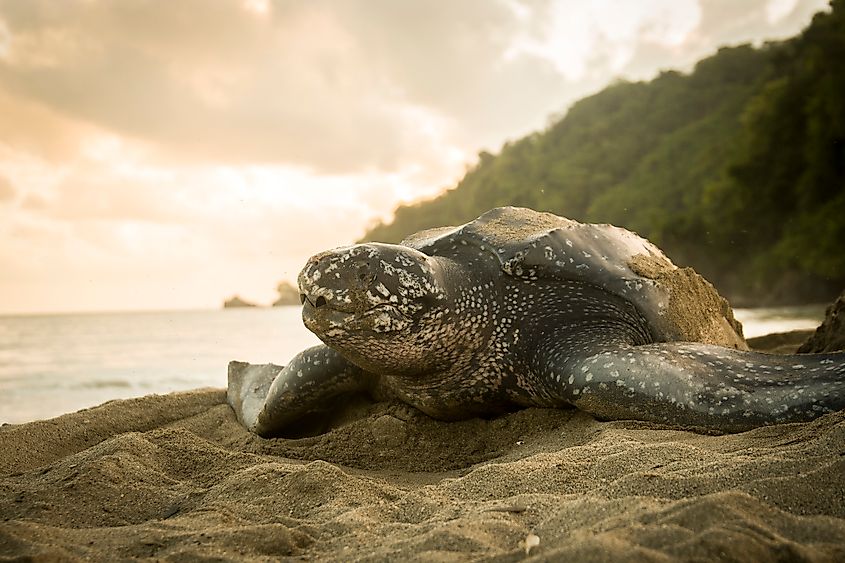
| State marine reptile | Pacific leatherback sea turtle Dermochelys coriacea | 2012 |
| State fossil | Saber-toothed cat Smilodon fatalis | 1973 |
The grizzly on the flag no longer exists. The California grizzly was abundant across the state's valleys and foothills when Europeans arrived, possibly numbering 10,000 animals. The last confirmed wild individual was killed in Tulare County in 1922, with a final probable sighting in Sequoia National Park in 1924. The legislature named it the state animal in 1953, roughly thirty years after eliminating it. It remains on the state flag and seal.

The golden trout is worth noting for the opposite reason. Native only to a few headwater streams of the Kern River drainage in the southern Sierra, it is a genuine California endemic, and one whose survival now depends on keeping introduced trout out of its remaining range.
Section 03
Habitats By Region, And Who Lives In Each
North Coast redwood forest

Coastal fog belt from Big Sur north to Oregon, holding the tallest trees on Earth. Roosevelt elk graze the prairies at Redwood National and State Parks, alongside black bear, mountain lion, Pacific fisher, marbled murrelet nesting high in old-growth canopy, and northern spotted owl. Streams here hold coho salmon, steelhead, and Pacific giant salamander.
Sierra Nevada

A 400-mile granite range rising to over 14,000 feet, with oak foothills, ponderosa and giant sequoia belts, subalpine forest, and alpine rock. Residents include black bear, mule deer, Sierra Nevada bighorn sheep, yellow-bellied marmot, pika, Douglas squirrel, Clark's nutcracker, great gray owl, and the mountain yellow-legged frog. Related: Sequoia National Park and Yosemite, plus the snakes you might spot in Yosemite.
Central Valley and coastal ranges

Once a vast complex of grassland, vernal pool, and tule marsh; now the most intensively farmed landscape in the country, with roughly 95 percent of its wetlands gone. What remains is disproportionately important: refuges like Sacramento and San Joaquin winter millions of ducks, geese, and sandhill cranes on the Pacific Flyway. Tule elk, a California endemic subspecies reduced to a single herd in the 1870s, survive in reintroduced populations. Vernal pools hold fairy shrimp found nowhere else. The coastal ranges hold oak woodland with acorn woodpecker, western scrub-jay, bobcat, and coyote.
Deserts: Mojave, Colorado, and Great Basin

The Mojave holds Joshua tree woodland, desert tortoise, chuckwalla, desert bighorn, kit fox, and roadrunner. The lower, hotter Colorado Desert in the southeast has fringe-toed lizards and desert pupfish. Death Valley contains isolated springs with pupfish species restricted to single pools, including the Devils Hole pupfish, whose entire wild population lives in one water-filled cavern. See what animals live in Death Valley.
The coast, kelp forests, and offshore

Rocky headlands, sandy beaches, estuaries, and kelp forests along 840 miles of coastline. Monterey Bay sits above a submarine canyon as deep as the Grand Canyon, which brings deep water and its animals close to shore. Sea otters, harbour seals, California sea lions, northern elephant seals, gray whales, humpbacks, blue whales, orcas, and great white sharks all use these waters. The Channel Islands add island endemics including the island fox, which occurs in six subspecies on six islands.
Section 04
Mammals Of California
California has roughly 190 mammal species, more than any other state. Three of the largest are gone: the grizzly, the gray wolf until recently, and the jaguar, which historically reached southern California.
Large mammals
- American black bear: the state's only remaining bear, with a population estimated around 30,000 to 40,000 and expanding into areas grizzlies once held.
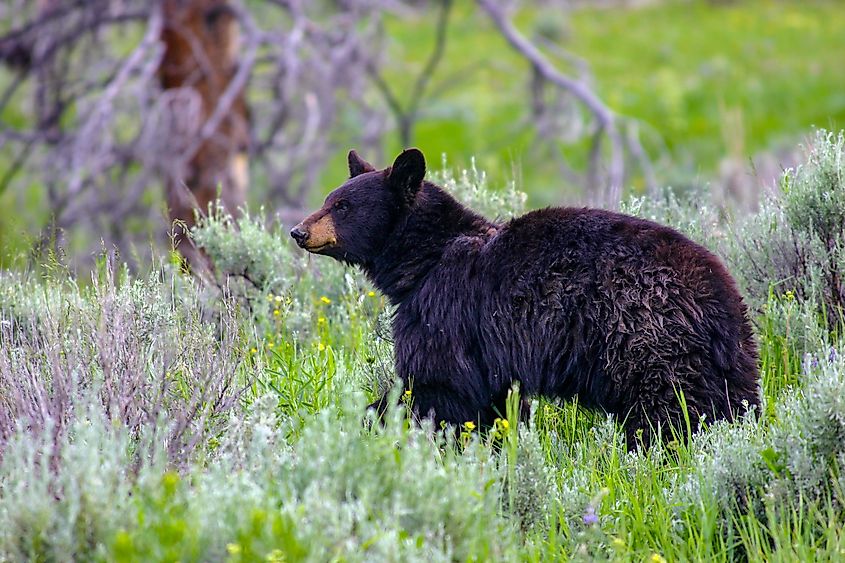
An American black bear (Ursus americanus) - Mountain lion: several thousand statewide, protected from hunting since 1990. Los Angeles is one of only two megacities in the world with big cats living inside city limits, and the Santa Monica Mountains population is genetically isolated by freeways.
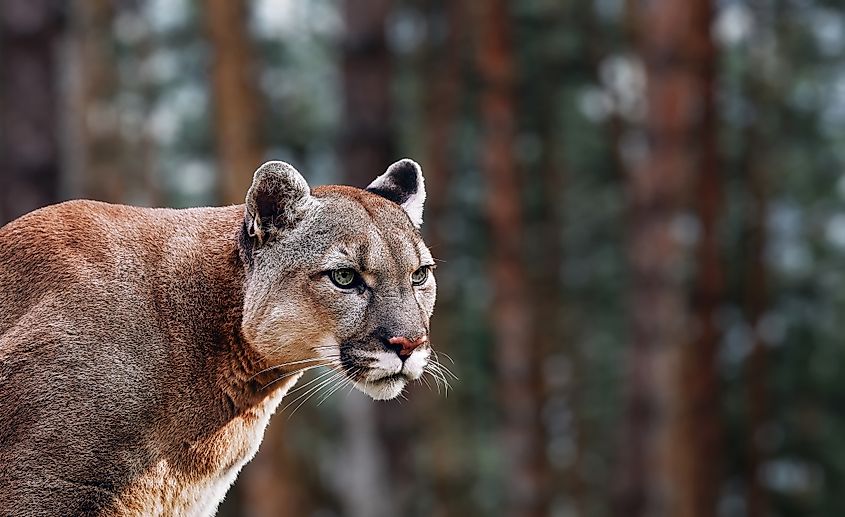
A mountain lion (Puma concolor) - Tule elk, Roosevelt elk, and Rocky Mountain elk: three subspecies in the state. Tule elk are found only in California and were reduced to as few as a handful of animals before recovery.
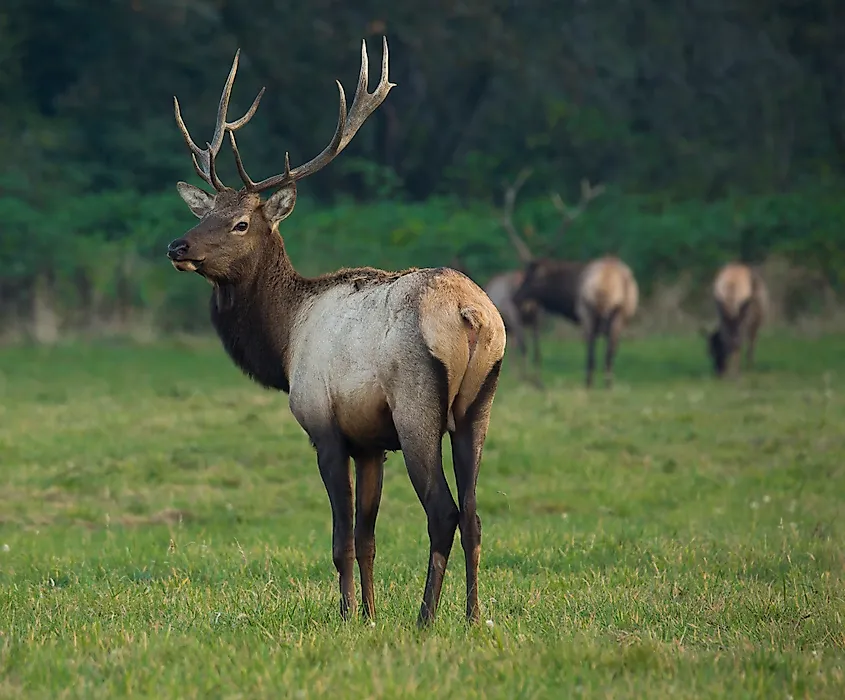
A Roosevelt elk (Cervus canadensis roosevelti) - Mule deer and black-tailed deer: statewide and the mountain lion's primary prey.
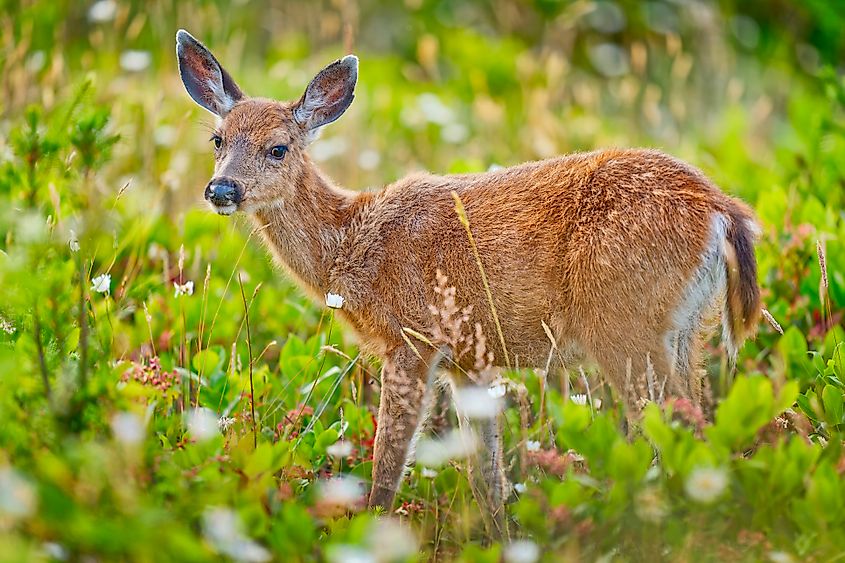
A black-tailed deer (Odocoileus hemionus) - Pronghorn and bighorn sheep: pronghorn on the northeastern plateaus; bighorn in three distinct groups, including the endangered Sierra Nevada and Peninsular populations.

A pronghorn (Antilocapra americana) - Gray wolf: extirpated by 1924, then recolonised naturally when a dispersing Oregon wolf entered the state in 2011. Several packs are now established in the north.
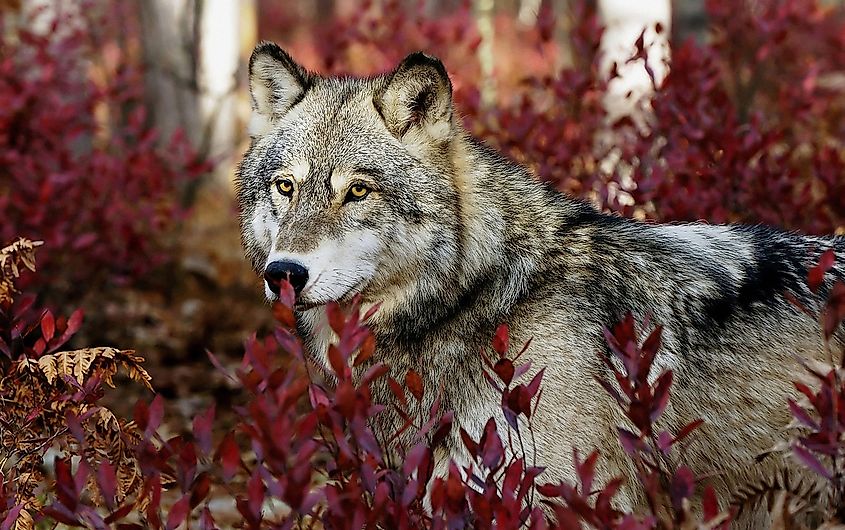
A gray wolf (Canis lupus)


Smaller mammals and specialists
- Coyote, bobcat, gray fox, red fox, kit fox, ringtail, badger: all widespread; the San Joaquin kit fox is endangered by valley agriculture.
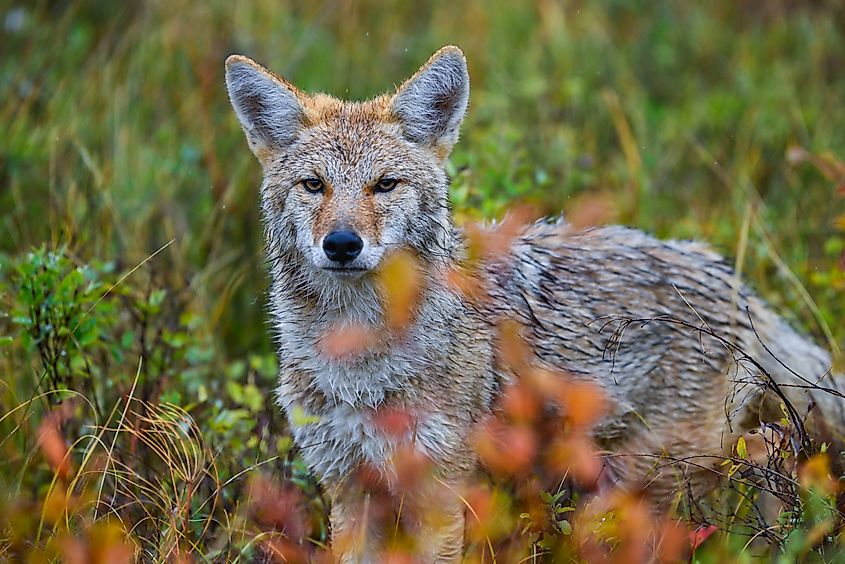
A coyote (Canis latrans) - Island fox: a dwarf fox the size of a house cat, endemic to the Channel Islands, which crashed to fewer than 100 animals on some islands and recovered after golden eagle removal and pig eradication. Four subspecies were delisted in 2016 in the fastest recovery of any US mammal.
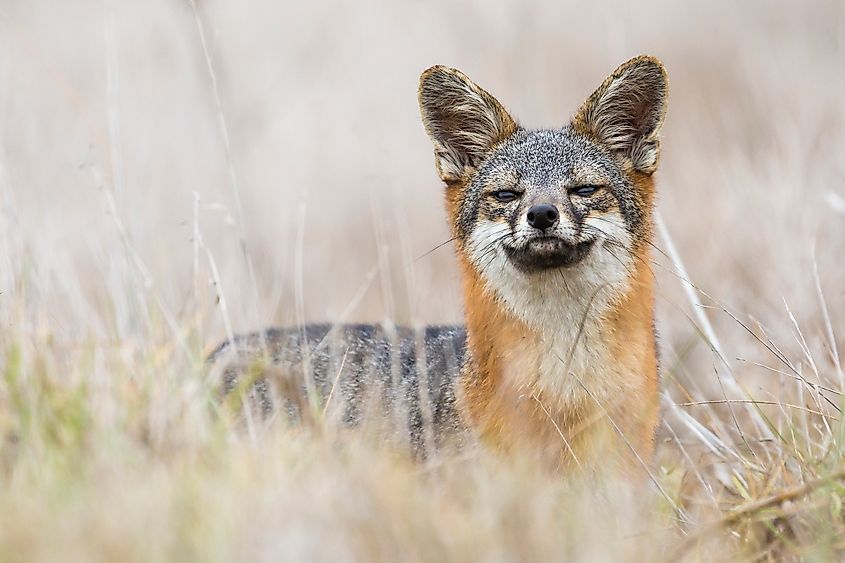
An island fox (Urocyon littoralis) - Pacific fisher and American marten: forest mustelids dependent on old growth.
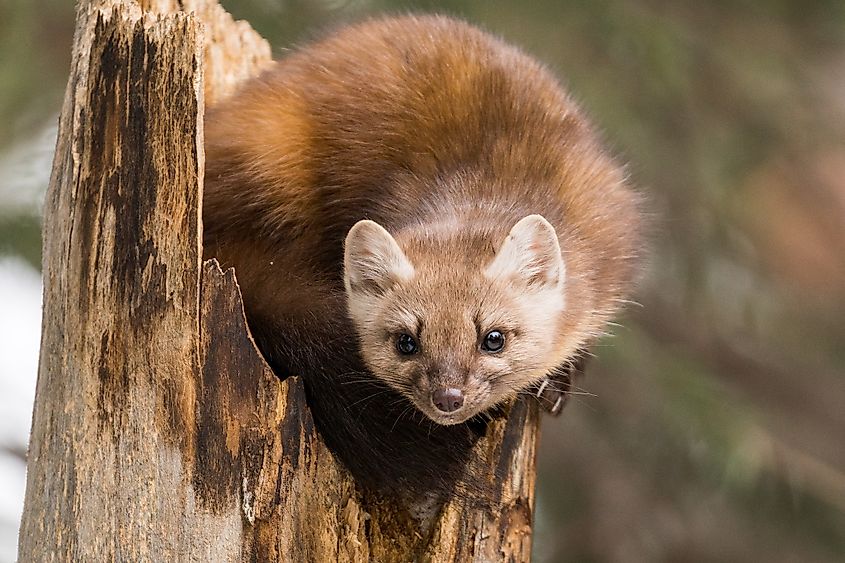
An American marten (Martes americana) - Sierra Nevada red fox: fewer than 100 known animals in two populations.
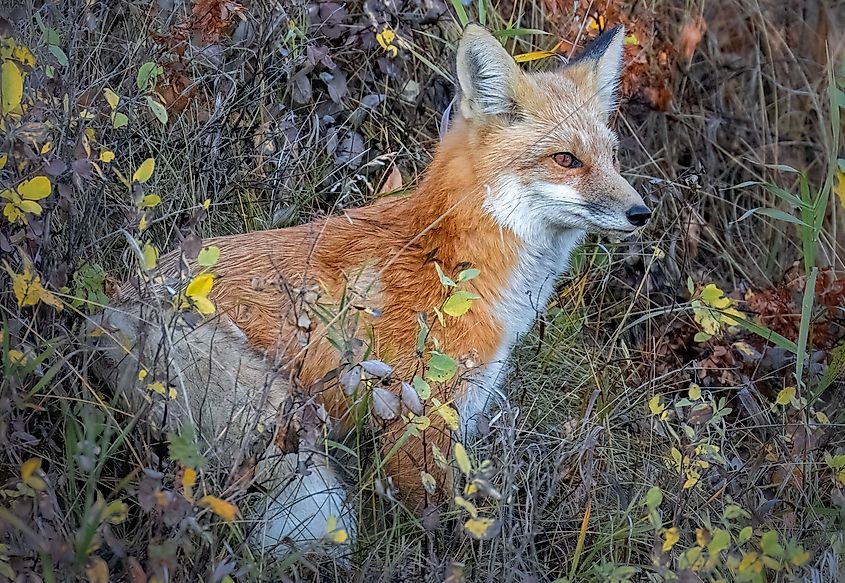
A Sierra Nevada red fox (Vulpes vulpes necator) - Pika, marmot, chipmunks, ground squirrels, kangaroo rats, pocket mice, and around 25 bat species: the small-mammal base. Several kangaroo rat species are federally listed because of valley and desert development.
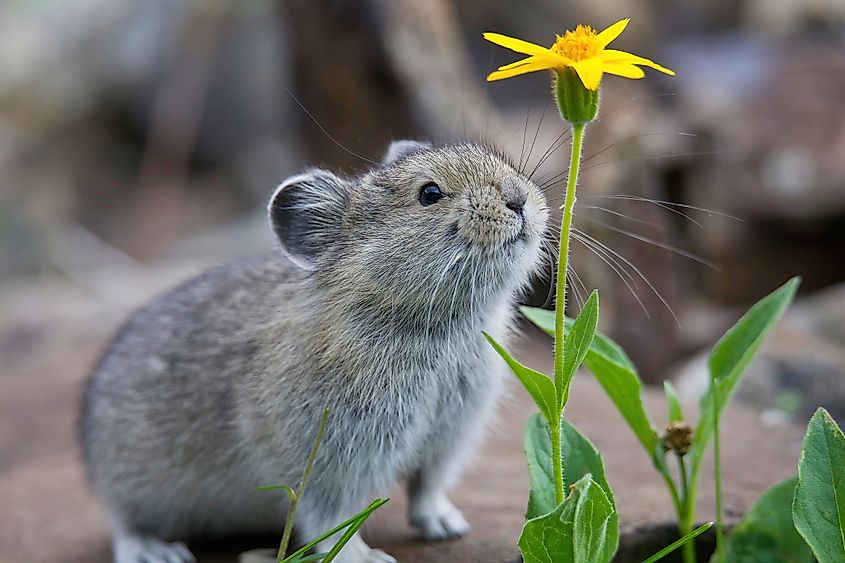
An American pika (Ochotona princeps)


Section 05
Marine Mammals And Ocean Animals
California's coast is one of the best places in the world to see large marine mammals from land or from a small boat, largely because the continental shelf is narrow and deep water comes close in.
- Gray whale: the state marine mammal, migrating roughly 10,000 miles round trip between Arctic feeding grounds and Baja calving lagoons, passing California southbound from December to February and northbound with calves from March to May.
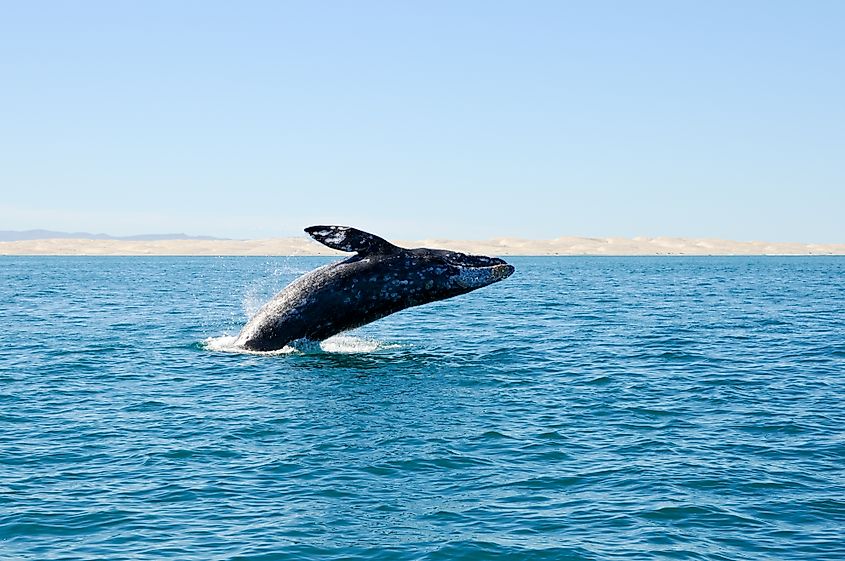
A gray whale (Eschrichtius robustus) - Blue whale: the largest animal that has ever lived, feeding on krill off Monterey and the Channel Islands in summer. More on their scale: the blue whale's car-sized heart.
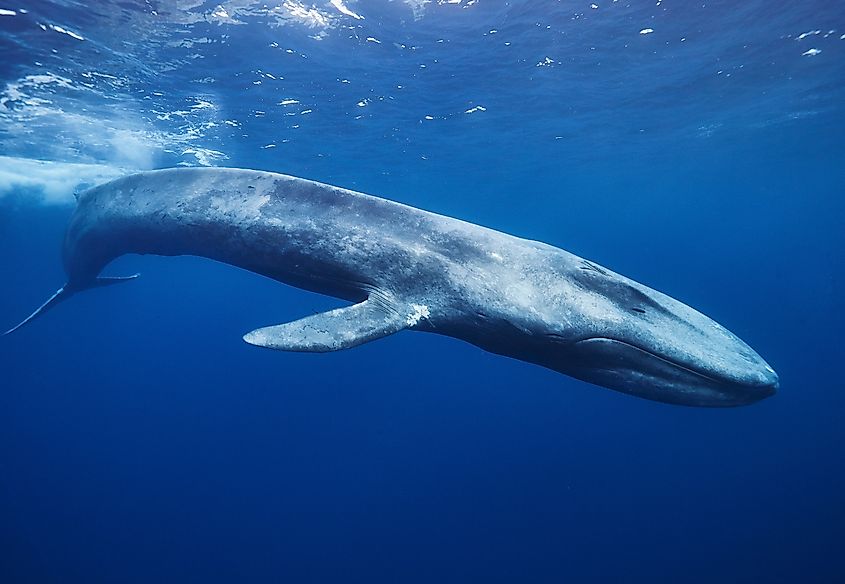
A blue whale (Balaenoptera musculus) - Humpback whale: increasingly common close to shore, sometimes lunge-feeding inside harbours.
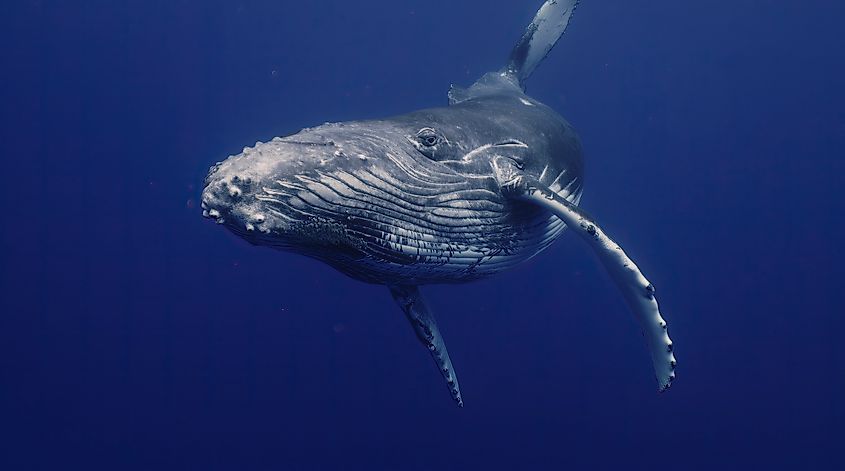
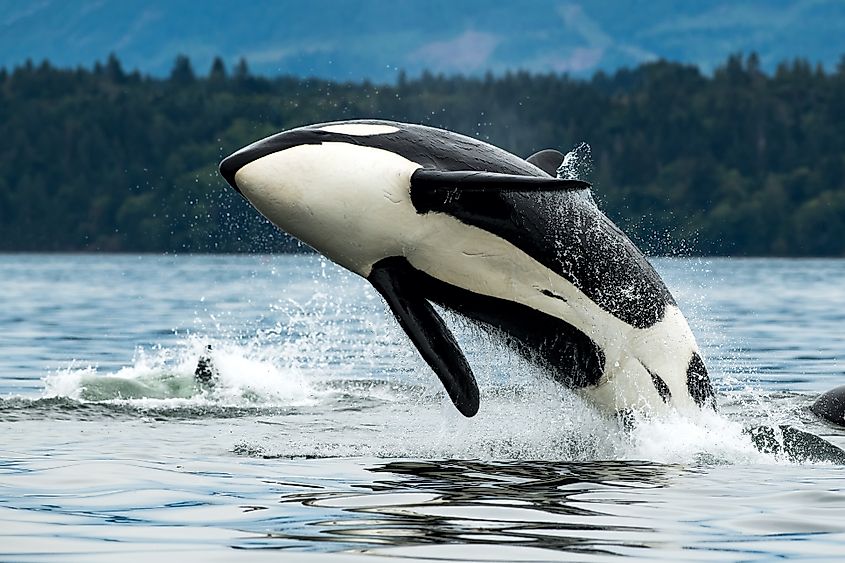
A humpback whale (Megaptera novaeangliae) - Orca: transient mammal-hunting pods intercept gray whale calves off Monterey in spring.
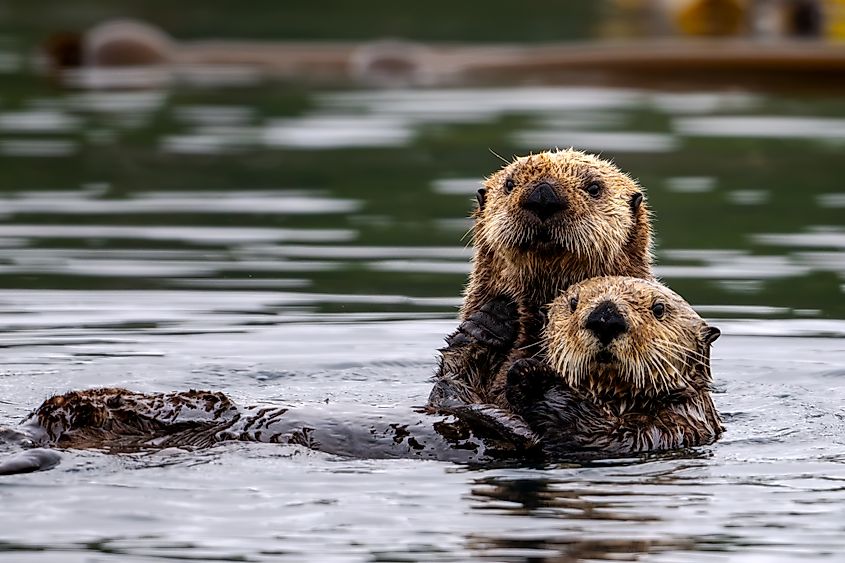
An orca (Orcinus orca) - Southern sea otter: reduced to perhaps 50 animals near Big Sur by 1911, now around 3,000 along the central coast. As a keystone species it controls sea urchins and protects kelp.
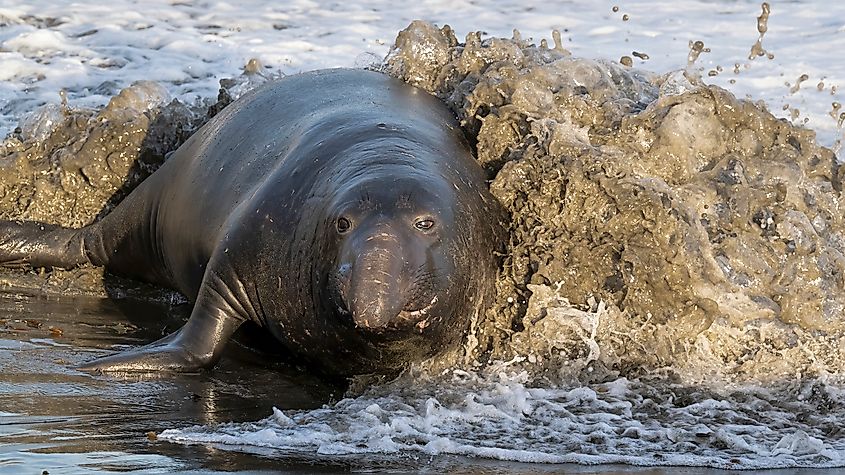
A pair of sea otters - Northern elephant seal: hunted to possibly fewer than 100 individuals, now over 100,000, with accessible colonies at Piedras Blancas and Point Reyes. Males reach 5,000 pounds and dive over 5,000 feet.
A northern elephant seal (Mirounga angustirostris) - California sea lion, harbor seal, northern fur seal, Guadalupe fur seal, Steller sea lion: all present along the coast and islands.
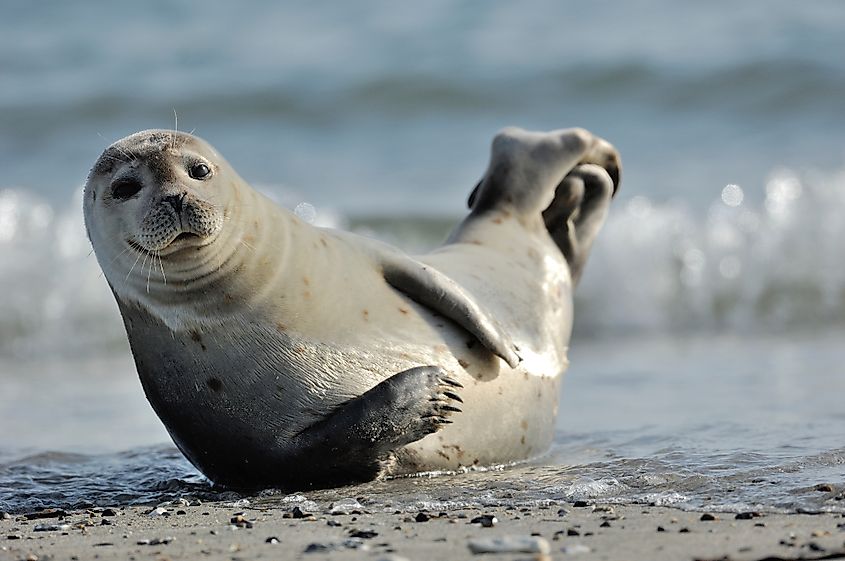
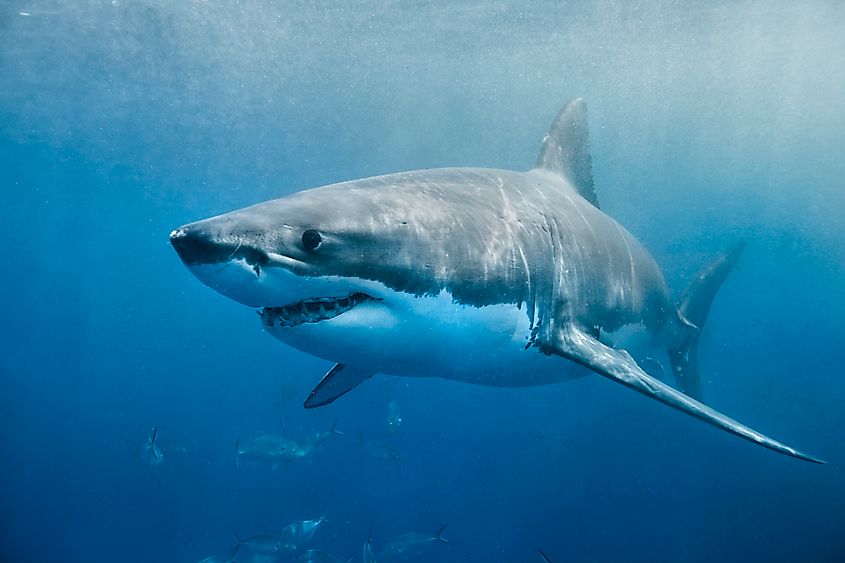
A harbor seal (Phoca vitulina) - Great white shark: the northeastern Pacific population aggregates near elephant seal colonies at the Farallones and Point Reyes in autumn, and juveniles nurse in warm southern California bays.
A great white shark (Carcharodon carcharias) - Leatherback sea turtle: the state marine reptile, crossing the entire Pacific from Indonesian nesting beaches to feed on jellyfish off California.
A leatherback sea turtle (Dermochelys coriacea)


Section 06
Birds Of California
More than 650 species have been recorded in California, the highest total of any state. The Pacific Flyway funnels an enormous volume of migratory waterfowl and shorebirds through the Central Valley and coastal estuaries every winter.
Residents and endemics

- California quail, the state bird, with its forward-curling head plume
- Acorn woodpecker, which stores thousands of acorns in communal granary trees
- California scrub-jay, oak titmouse, wrentit, California thrasher, yellow-billed magpie, which is found only in California
- Island scrub-jay, restricted entirely to Santa Cruz Island, one of the smallest ranges of any North American bird
- Northern spotted owl, great gray owl, burrowing owl, and California condor
The condor

The California condor is the state's defining conservation story. By 1982 there were 22 birds left on Earth. Every remaining wild condor was captured by 1987, and a captive breeding programme rebuilt the population from that base. Wild releases resumed in 1992, and the total population is now several hundred, with free-flying birds in central California, Big Sur, southern California, Arizona, Utah, and Baja. Lead poisoning from ammunition in carrion remains the main obstacle to self-sustaining wild populations.
Waterbirds and migration

Central Valley refuges hold millions of wintering ducks, snow and Ross's geese, tundra swans, and sandhill cranes. The coast supports brown pelican, which recovered fully after DDT was banned, plus western snowy plover on beaches, California least tern, marbled murrelet, elegant tern, black oystercatcher, and vast shorebird numbers in San Francisco Bay and the Salton Sea. The Salton Sea, despite being an accidental and shrinking body of water, is one of the most important inland bird sites in North America.
Section 07
Reptiles, Amphibians, And Freshwater Fish
California has roughly 90 reptile and 60 amphibian species, with high endemism in salamanders and desert lizards.
Reptiles

The desert tortoise is the state reptile and a listed species, declining from disease, road mortality, raven predation on hatchlings, and habitat loss. Other notable reptiles: chuckwalla, desert iguana, coast horned lizard, western fence lizard, California legless lizard, southern alligator lizard, gopher snake, California kingsnake, and the rosy boa. Nine or ten rattlesnake species occur, including the western rattlesnake complex, sidewinder, Mojave, red diamond, and speckled rattlesnakes.
Amphibians

California red-legged frog, the state amphibian and the likely subject of Mark Twain's jumping frog story, is threatened and much reduced by bullfrog introduction and habitat loss. The mountain yellow-legged frog has declined catastrophically in the Sierra from introduced trout and chytrid fungus. California also has remarkable salamander diversity: California giant salamander, Pacific giant salamander, arboreal salamander, ensatina, California newt, and many slender salamanders with tiny ranges.
Freshwater fish

Roughly two thirds of California's native freshwater fish are extinct, listed, or in decline, the worst record of any state. Chinook salmon runs on the Sacramento and Klamath have been reduced by dams and water diversion, with the winter-run Chinook federally endangered. Coho salmon, steelhead, delta smelt, and Sacramento perch are all in trouble. Delta smelt, a small fish endemic to the Sacramento-San Joaquin Delta, has become the central species in California's water politics because its survival is tied directly to how much fresh water flows through the Delta rather than being pumped south. Desert pupfish persist in isolated springs, several as single-pool populations.
Section 08
Dangerous Animals In California
California's genuine wildlife risks are few and mostly avoidable. Statistically the most dangerous animals in the state are deer, through vehicle collisions, and bees, through allergic reactions.

- Rattlesnakes: the only venomous snakes in the state. The northern Pacific and western rattlesnakes are the most widely encountered; the Mojave rattlesnake in the southeast has a neurotoxic venom component. Bites are uncommon and rarely fatal, and most occur when someone handles the snake.
- Mountain lion: attacks are extremely rare, with roughly two dozen verified in a century. Do not run, make yourself large, maintain eye contact, and pick up small children.
- Black bear: no fatal attacks recorded in California. The real problem is food-conditioned bears breaking into cars and campsites, which is why bear boxes are mandatory in Sierra parks.
- Great white shark: a handful of bites a year statewide across tens of millions of ocean visits. Most involve surfers or swimmers near seal colonies.
- Black widow spider: common statewide. The brown recluse is largely absent from California despite persistent belief otherwise.
- Africanized honeybees: established in southern and central California and responsible for the state's most serious mass-sting incidents.
- Stingrays: shuffle your feet in southern California surf; stingray injuries outnumber shark bites by orders of magnitude.
- Ticks and mosquitoes: western black-legged ticks carry Lyme disease, and mosquitoes carry West Nile virus.
In rattlesnake country: stay on trails, watch where you place hands and feet on rock, and never attempt to move or kill a snake. If bitten, go to a hospital immediately, keep the limb still, remove rings, and do not cut, ice, or apply a tourniquet.
Section 09
Endangered And Protected Species
California has more federally listed species than any state except Hawaii, a direct consequence of having both the most endemic species and the largest human population.
| Species | Where | Status |
|---|---|---|
| California condor | Central & southern California | ENDANGERED |
| Delta smelt | Sacramento-San Joaquin Delta | ENDANGERED |
| Winter-run Chinook salmon | Sacramento River | ENDANGERED |
| Sierra Nevada bighorn sheep | Eastern Sierra | ENDANGERED |
| Southern sea otter | Central coast | THREATENED |
| Desert tortoise | Mojave Desert | THREATENED |
| California red-legged frog | Coastal ranges, foothills | THREATENED |
| Mountain yellow-legged frog | Sierra Nevada, So. Cal ranges | ENDANGERED |
| San Joaquin kit fox | Central Valley | ENDANGERED |
| Marbled murrelet | Old-growth coastal forest | THREATENED |
| Western snowy plover | Coastal beaches | THREATENED |
| Devils Hole pupfish | One cavern in Death Valley | ENDANGERED |
The recoveries are equally dramatic. Brown pelicans, bald eagles, and peregrine falcons all recovered after DDT was banned. Northern elephant seals went from perhaps fewer than a hundred animals to well over a hundred thousand. Four Channel Islands fox subspecies were delisted in 2016 after just over a decade of intervention. Sea otters climbed from about 50 animals to around 3,000.
The pressures are concentrated: water diversion and dams in aquatic systems, agricultural and urban conversion of valley and coastal habitat, habitat fragmentation by roads, altered fire regimes, non-native predators and competitors, and increasingly drought and heat driving species upslope and northward.
Section 10
Invasive And Non-Native Animals
- American bullfrog: introduced from the east and now the primary predator on native frogs and young turtles across much of the state.
- Introduced trout: stocked into naturally fishless Sierra lakes for a century, and the main cause of mountain yellow-legged frog collapse.
- Feral pigs: widespread in oak woodland, destroying ground cover and vernal pools.
- Nutria: detected in the Central Valley in 2017 and the subject of an active eradication effort.
- Northern pike, striped bass, and largemouth bass: established predators in Delta and reservoir systems.
- Argentine ant, red imported fire ant, and Africanized honeybees: all established and displacing native insects.
- European starling, house sparrow, rock pigeon, Eurasian collared-dove, and free-ranging cats: the most significant urban and suburban pressures on native birds.
- Golden eagles on the Channel Islands: an unusual case, where a native species colonised the islands after bald eagles were lost and pigs provided food, then began eating island foxes. Removing eagles and pigs and restoring bald eagles reversed it.
Section 11
Where To See Wildlife In California
- Monterey Bay and Point Lobos: sea otters, harbour seals, sea lions, and whale-watching over the submarine canyon.
- Piedras Blancas and Point Reyes: elephant seal colonies, viewable from boardwalks in winter.
- Point Reyes National Seashore: tule elk, gray whale migration from the lighthouse, and enormous bird lists.
- Channel Islands National Park: island foxes, island scrub-jay, seabird colonies, and kelp forest diving.
- Big Sur and Pinnacles National Park: two of the best places to see wild California condors.
- Sacramento and Merced National Wildlife Refuges: winter waterfowl and sandhill cranes in the hundreds of thousands.
- Redwood National and State Parks: Roosevelt elk in the prairies, marbled murrelet habitat.
- Yosemite and Sequoia: black bear, mule deer, marmot, pika, and great gray owl in Yosemite meadows.
- Death Valley and Joshua Tree: desert bighorn, pupfish, tortoise, and nocturnal desert species.
Timing: December to February for gray whales southbound, elephant seal breeding, and peak Central Valley waterfowl. March to May for northbound whales with calves, wildflowers, and songbird migration. Summer for blue and humpback whales off Monterey and high-Sierra alpine species. Autumn for great white shark aggregations near seal colonies and the tule elk rut at Point Reyes.
Section 12
Common Questions
- What is the state animal of California?
- The California grizzly bear, designated in 1953. It is extinct: the last confirmed wild individual was killed in 1922. It still appears on the state flag and seal.
- Are there grizzly bears in California?
- No. Grizzlies were eliminated from the state by the mid-1920s. Black bears are the only bears in California today, numbering roughly 30,000 to 40,000.
- Are there wolves in California?
- Yes, again. Gray wolves were extirpated by 1924, then recolonised naturally when a wolf from Oregon crossed into the state in 2011. Several packs are now established in northern California.
- Why does California have the most species of any state?
- It combines ten degrees of latitude, elevations from below sea level to over 14,000 feet, a rare Mediterranean climate, a highly productive cold-water coast, and many isolated habitats such as islands and desert springs that generate endemic species.
- What is the most dangerous animal in California?
- Deer, through vehicle collisions, followed by bees and wasps through allergic reactions. Rattlesnakes, mountain lions, and sharks all cause far fewer injuries than their reputations suggest.
- How many rattlesnakes live in California?
- Around nine or ten species depending on how the western rattlesnake complex is classified. They are the state's only venomous snakes.
- Where can I see whales in California?
- Monterey Bay is the most reliable year-round location because of its deep submarine canyon. Gray whales pass close to shore in winter and spring, and blue and humpback whales feed offshore in summer and autumn.
This page was last updated on October 9, 2026