Section 01
Why Alaska's Wildlife Works Differently
Species diversity typically decreases with distance from the equator, and the contrast between Alabama and Alaska illustrates this clearly. Alabama has more than 90 reptile species and roughly 450 species of freshwater fish, compared with just one reptile species and around 40 freshwater fish species in Alaska. By conventional measures of biodiversity, Alaska therefore appears far less diverse.
That scorecard measures the wrong thing. Alaska's biological significance lies not in species variety but in the scale and intactness of its ecosystems. The state covers more than 663,000 square miles, larger than Texas, California, and Montana combined, and roughly 60 percent of it is federal land, much of it never logged, farmed, or fragmented. Animals here still exhibit behaviors that are rarely possible elsewhere in the country. Caribou herds numbering in the hundreds of thousands migrate hundreds of miles, brown bears gather in double digits at a single waterfall, and entire populations of seabirds nest on cliffs that no road reaches.
Another defining characteristic of Alaska is its extensive coastline, which exceeds that of the rest of the United States combined and spans the Gulf of Alaska, the Bering Sea, the Chukchi Sea, and the Beaufort Sea. The upwelling of cold, nutrient-rich water along the continental shelf creates some of the most productive marine ecosystems globally. As a result, Alaska sustains disproportionately large populations of whales, seals, seabirds, and fish relative to its species diversity. Additionally, much of the state's terrestrial wildlife, particularly bears, ultimately depends on marine resources, primarily through the salmon population.
Section 02
Alaska's Official State Animals
Alaska's symbol list is short and unusually well chosen. Every animal on it is genuinely characteristic of the state rather than a generic regional pick.
| Designation | Animal | Adopted |
|---|---|---|
| State bird | Willow ptarmigan Lagopus lagopus | 1955 |
| State land mammal | Moose Alces alces | 1998 |
| State marine mammal | Bowhead whale Balaena mysticetus | 1983 |
| State fish | King (Chinook) salmon Oncorhynchus tshawytscha | 1962 |
| State insect | Four-spotted skimmer dragonfly Libellula quadrimaculata | 1995 |
| State dog | Alaskan malamute | 2010 |
| State fossil | Woolly mammoth Mammuthus primigenius | 1986 |
The ptarmigan choice is smarter than it looks. The willow ptarmigan is a grouse that turns pure white in winter and mottled brown in summer, with feathered feet that work as snowshoes. It was chosen by schoolchildren during the territorial period, and its name reflects a defining feature of life in Alaska, where survival often depends on the seasonal transition between snow and snow-free conditions.

The bowhead whale designation reflects the animal's central place in Iñupiat and Yupik coastal culture. Bowheads can live over 200 years, making them the longest-lived mammals known, and they winter under sea ice using their massive skulls to break through to breathe.
Section 03
Habitats By Region, And Who Lives In Each
Southeast: the coastal temperate rainforest

The Alexander Archipelago and Tongass region contain vast forests of western hemlock and Sitka spruce, with some areas receiving more than 200 inches of precipitation each year across a landscape of thousands of islands. Together, they form Alaska's most biologically productive terrestrial region. The area provides habitat for coastal brown bears, black bears, including the rare glacier-blue "glacier bear" color morph, Sitka black-tailed deer, martens, and mountain goats. The surrounding waters are home to humpback whales, orcas, Steller sea lions, harbor seals, and sea otters, which were reintroduced after being driven from the region by intensive hunting.
Southcentral & the Kenai Peninsula

The region where the mountains converge with the Gulf of Alaska is characterized by glaciated valleys, boreal forests, and extensive tidal estuaries such as Cook Inlet. Moose are prevalent in this area, alongside Dall sheep on the Chugach slopes, brown and black bears, and one of the state's most accessible salmon fisheries. Cook Inlet also supports a small, isolated, and critically endangered population of beluga whales.
The Alaska Range & Interior

North of the Alaska Range, including Denali National Park and Preserve, the landscape gives way to vast taiga forests dominated by stunted black spruce, muskeg, and braided glacial rivers. The region experiences extreme continental temperatures, ranging from about -50°F to 90°F. Its wildlife includes caribou, grizzly bears, wolves that can often be seen traveling in packs, Dall sheep, lynx, and wolverines. Lynx populations closely follow those of snowshoe hares, producing a well-documented cycle that rises and falls roughly every decade.
Western Alaska & the Bering coast

The Yukon-Kuskokwim Delta ranks among the largest river deltas globally and serves as the most significant waterfowl nesting ground in North America. Each summer, millions of geese, ducks, swans, and shorebirds breed on this expansive treeless wetland. Offshore, walrus congregate on ice and beaches, while the Aleutian Islands chain supports seabird colonies numbering in the millions.
Arctic Alaska: Brooks Range & North Slope

North of the Brooks Range, the treeline ends and the landscape transitions to a permafrost tundra that remains wet during summer and frozen for most of the year. This region serves as habitat for polar bears, musk oxen, Arctic foxes, and is a primary calving area for caribou. The Western Arctic and Porcupine caribou herds migrate through this area, undertaking some of the longest overland migrations of any terrestrial mammal. For additional information, refer to the caribou trails in Kobuk Valley.
Section 04
The Three Bears
Alaska is the only state where brown, black, and polar bears all occur, a distinction worth understanding properly, since two of the three are the same species.
- Brown bear / grizzly Ursus arctos: one species, two common names driven by diet and geography. Coastal bears with access to salmon grow enormous; the ones on Kodiak Island are the largest bears on Earth alongside polar bears, with big males exceeding 1,200 pounds. The same species inland, living on roots, ground squirrels, and berries, is called a grizzly and may weigh less than half that. Alaska holds roughly 30,000 brown bears, about 98 percent of the US population.
- American black bear Ursus americanus: around 100,000 statewide, in forested country from the southeast panhandle through the interior, but absent from the Arctic, the Aleutians, and several large islands. Includes the cinnamon phase and the very rare blue-grey glacier bear.
- Polar bear Ursus maritimus: a marine mammal by legal classification, dependent on sea ice as a hunting platform for ringed and bearded seals. Two populations use Alaska: the Chukchi Sea and Southern Beaufort Sea stocks. Listed as threatened in 2008 because of sea ice loss. The town of Kaktovik has become the state's polar bear viewing centre precisely because bears now spend more time ashore.
The salmon connection: a single coastal brown bear may eat dozens of salmon a day during a run, and the carcasses it drags into the forest fertilise the trees. Researchers can measure marine-derived nitrogen in spruce growing hundreds of feet from a salmon stream. The bears are moving the ocean inland.
Section 05
Other Land Mammals
Hoofed animals
- Moose: the state land mammal and the largest deer on Earth; Alaska-Yukon bulls can top 1,600 pounds with antler spreads over 6 feet. Around 175,000 to 200,000 statewide. More on the state's population: Alaska's great land giant.
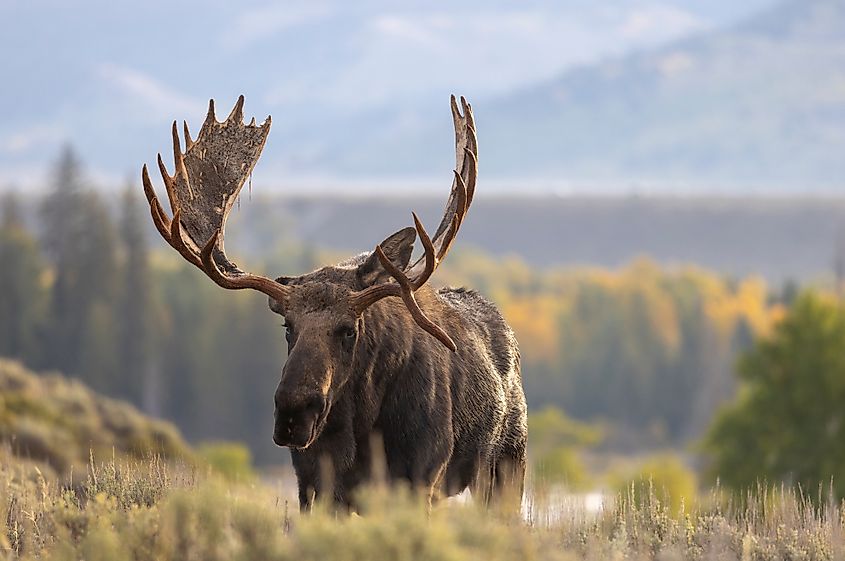
A moose (Alces alces) - Caribou: roughly 750,000 across some 30 herds, though numbers swing dramatically. The Western Arctic Herd alone has ranged from over 400,000 to under 200,000 within living memory. Both sexes grow antlers, uniquely among deer.
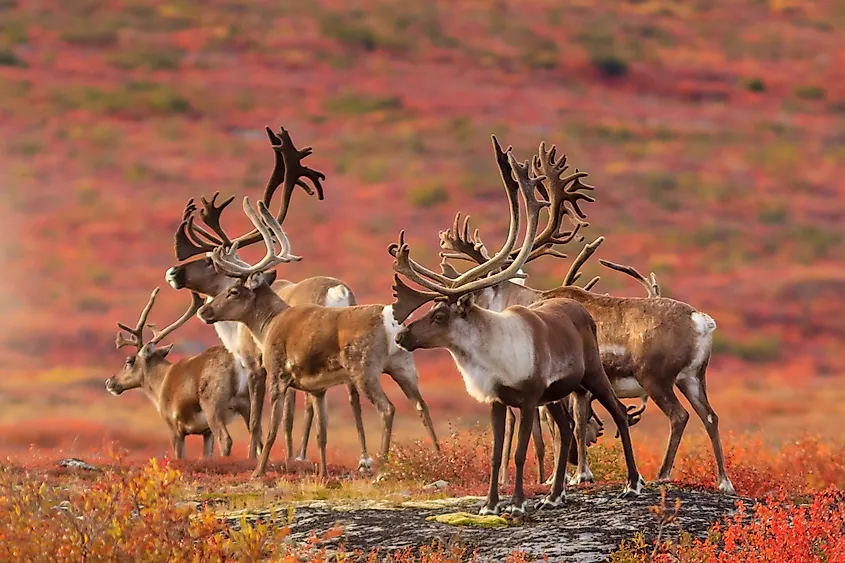
A herd of barren-ground caribou - Dall sheep Ovis dalli: white wild sheep of the alpine, found in the Alaska, Brooks, Chugach, and Wrangell ranges. Closest relative of the bighorn sheep.
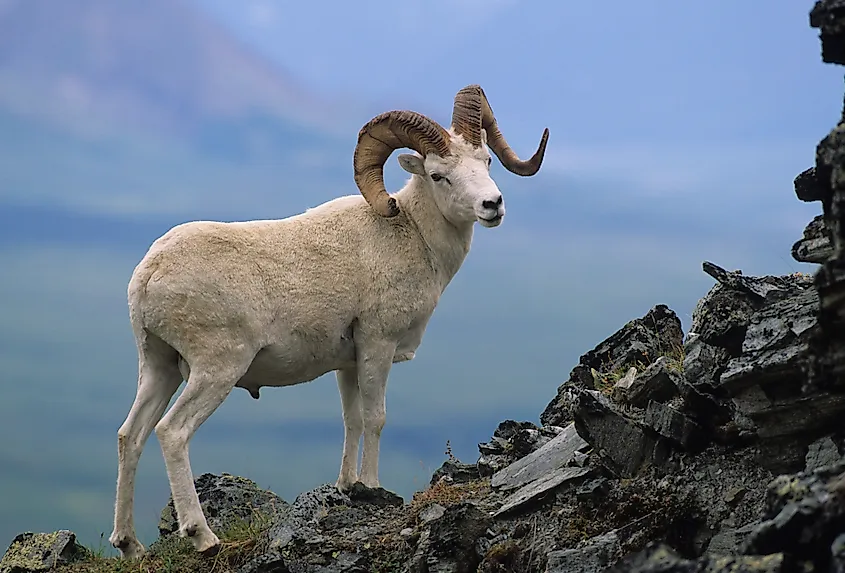
A dall sheep (Ovis dalli) - Mountain goat: southeast and southcentral cliffs; not a true goat.
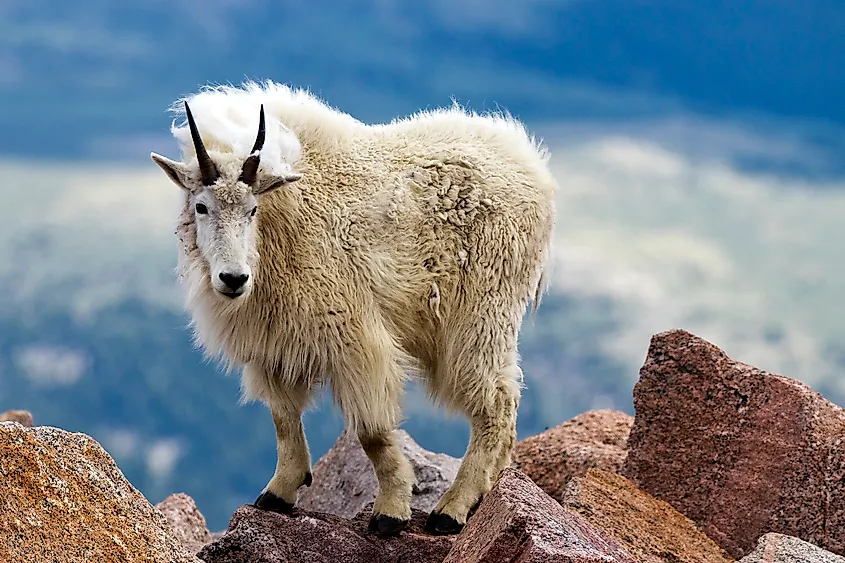
A mountain goat (Oreamnos americanus) - Sitka black-tailed deer: the southeast rainforest deer, a coastal mule deer subspecies.
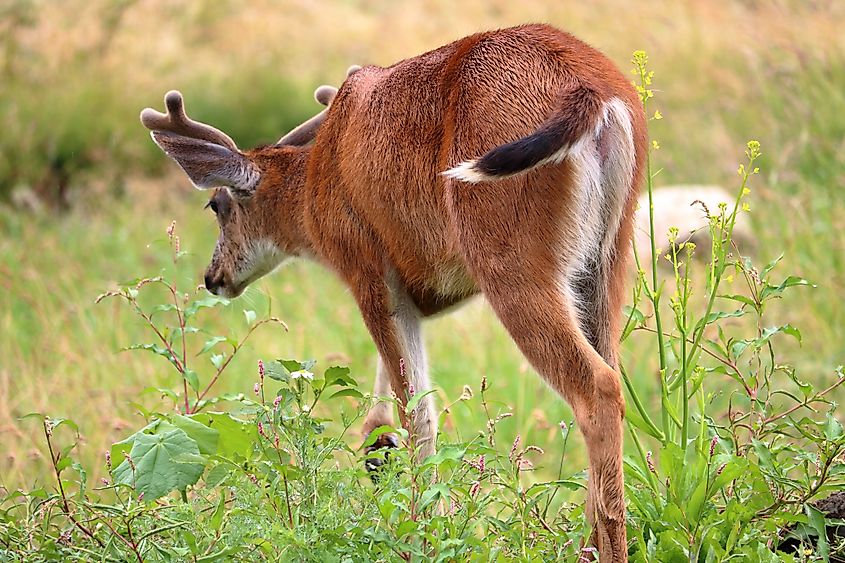
A Sitka black-tailed deer (Odocoileus hemionus sitkensis) - Musk ox: extirpated from Alaska by the 1920s and reintroduced from Greenland stock in the 1930s; now established on the Seward Peninsula, Nunivak Island, and the North Slope. Their underwool, qiviut, is warmer by weight than sheep's wool.
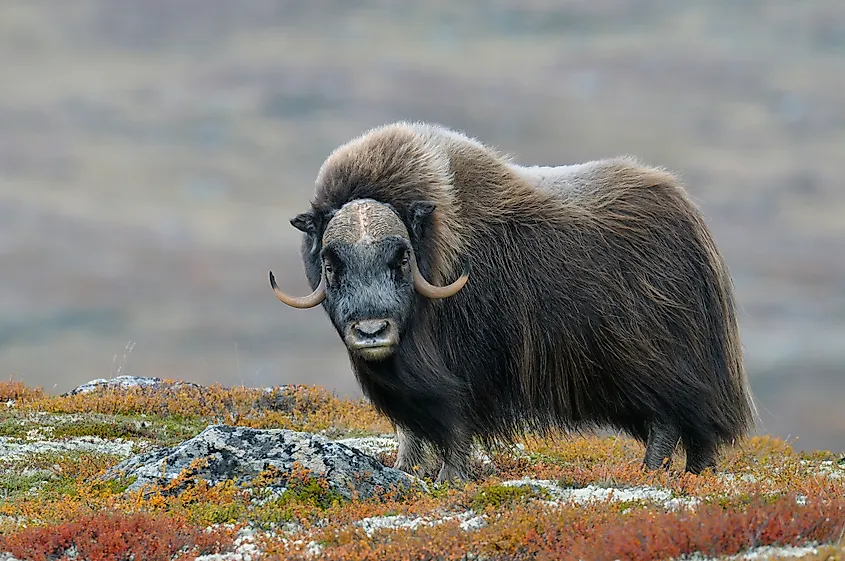
A muskox (Ovibos moschatus) - Bison and elk: both present in small introduced or reintroduced herds; wood bison were returned to the interior in 2015.
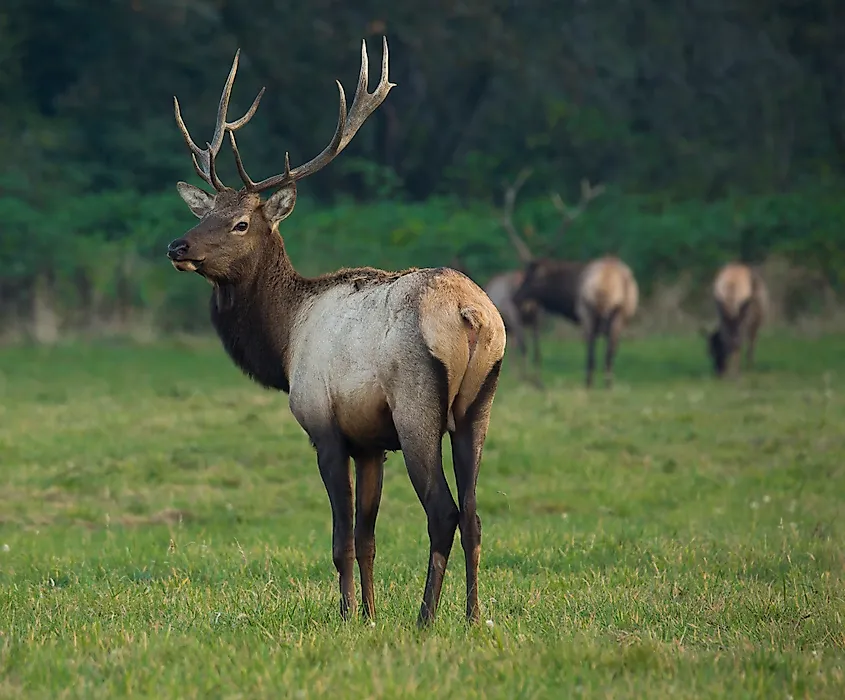
A Roosevelt elk (Cervus canadensis roosevelti)


Predators and small mammals
- Gray wolf: 7,000 to 11,000 statewide in packs across nearly all of Alaska; among the few US populations never extirpated.
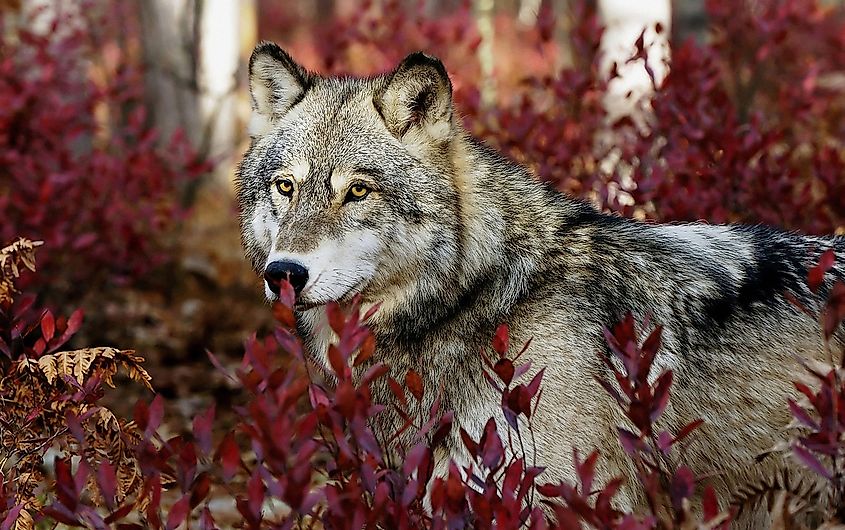
A gray wolf (Canis lupus) - Coyote, red fox, Arctic fox: Arctic foxes turn white in winter and follow polar bears to scavenge seal kills.
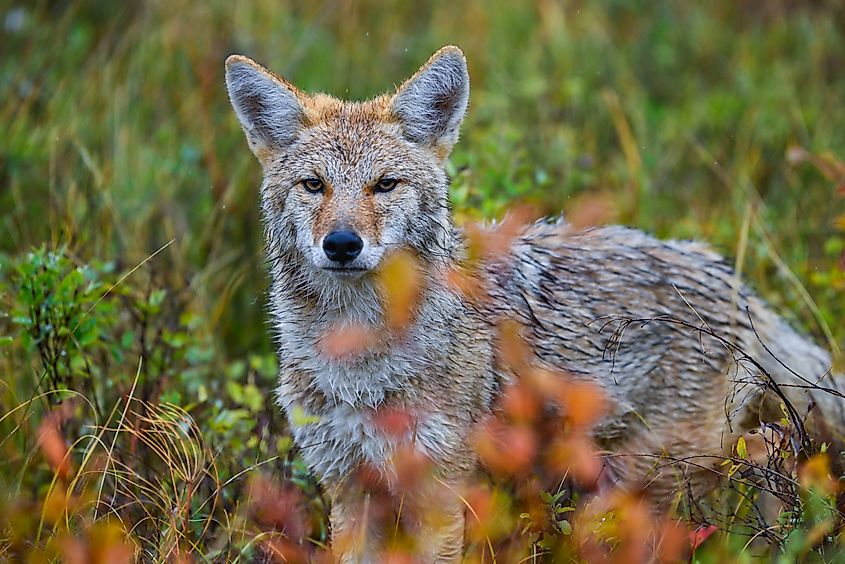
A coyote (Canis latrans) - Canada lynx: populations rise and crash on a roughly ten-year cycle following snowshoe hare, one of the cleanest predator-prey cycles in ecology.
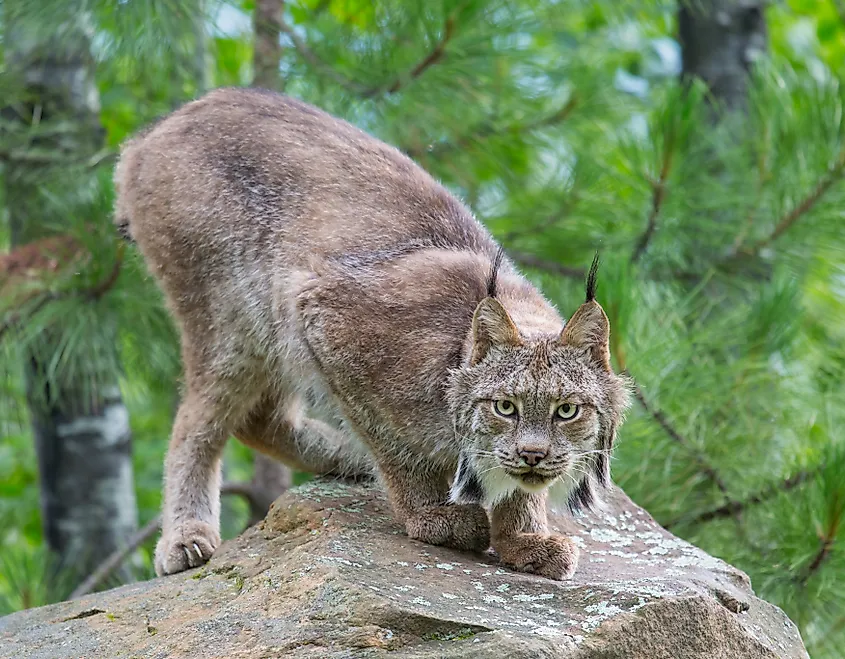
A Canada lynx (Lynx canadensis) - Wolverine: low-density, wide-ranging, and the classic indicator of intact northern wilderness.
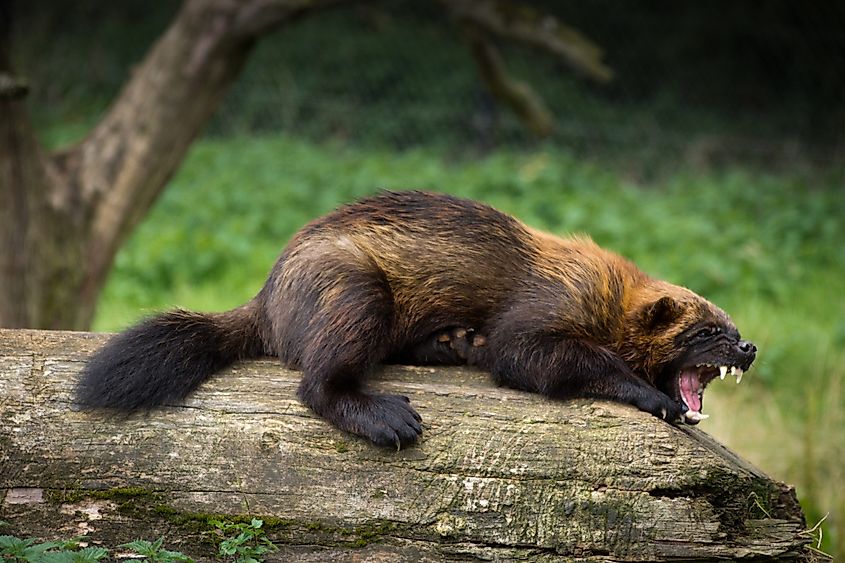
A wolverine (Gulo gulo) - River otter, marten, mink, ermine, least weasel: the mustelid family is unusually well represented.
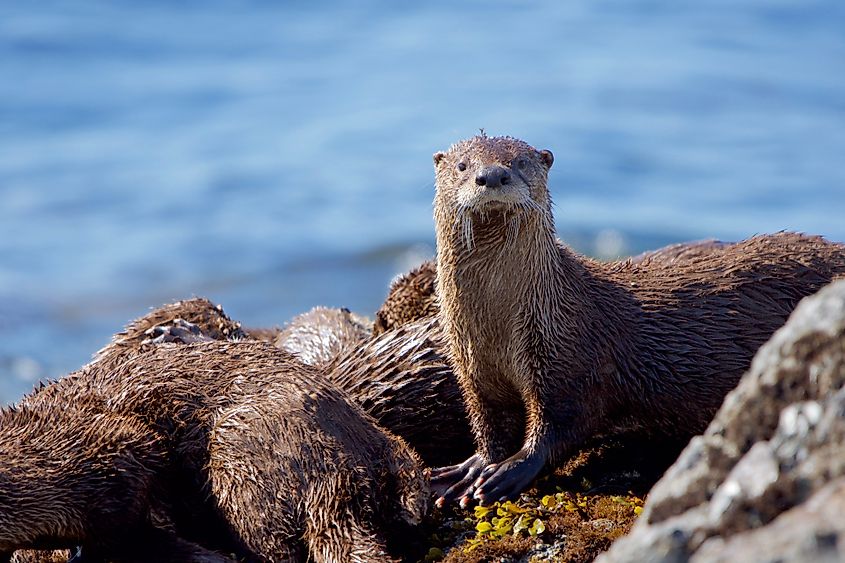
A river otter (Lontra canadensis) - Beaver, muskrat, porcupine, snowshoe hare, Arctic ground squirrel, hoary marmot, collared and brown lemmings, red-backed voles: the small-mammal base that everything else eats. Lemming boom-and-bust years drive Arctic fox, snowy owl, and jaeger breeding success.
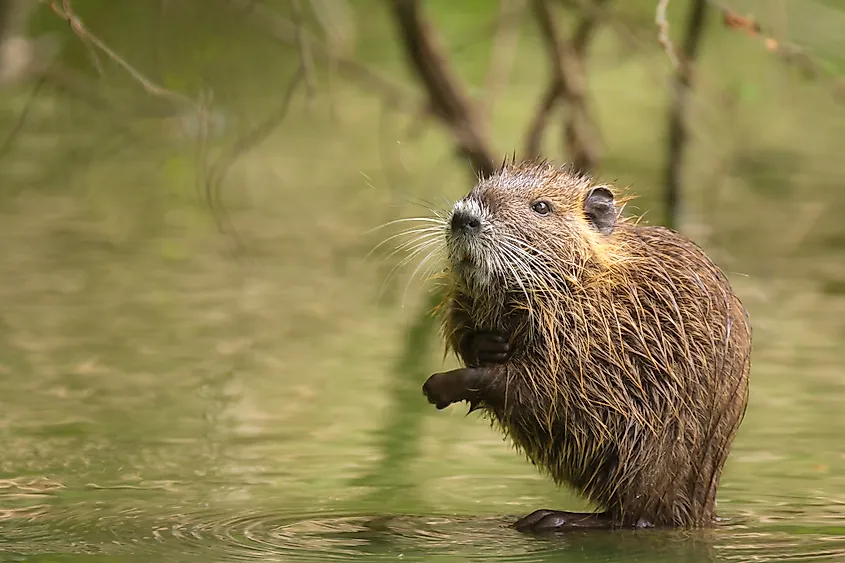
A muskrat (Ondatra zibethicus)


Section 06
Marine Mammals
Alaska's waters hold more marine mammal species than any other US state, and for several, including walrus, bowhead, and ribbon seal, it is the only state where they occur at all.
- Whales: humpback, bowhead, gray, fin, minke, blue (rare), North Pacific right whale (one of the most endangered whale populations on Earth, with perhaps a few dozen animals in the eastern Bering Sea), beluga, and narwhal as a rare stray.
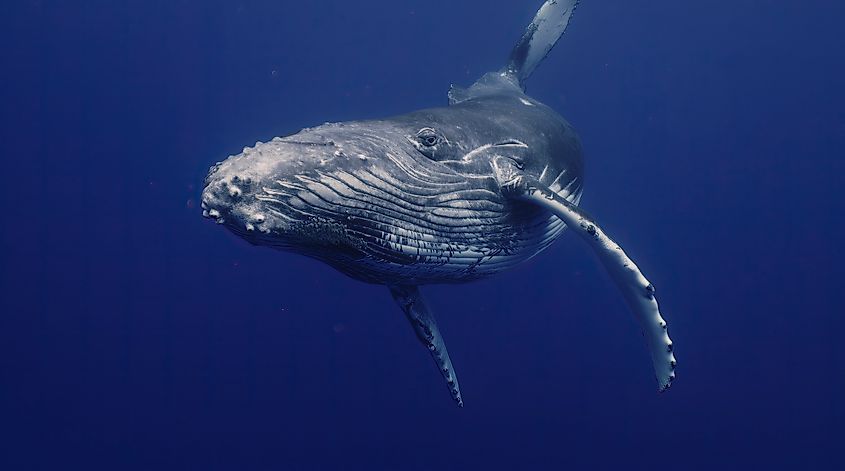
A humpback whale (Megaptera novaeangliae) - Orcas: two ecologically distinct forms, resident fish-eaters and transient mammal-hunters, that do not interbreed and behave like separate species.
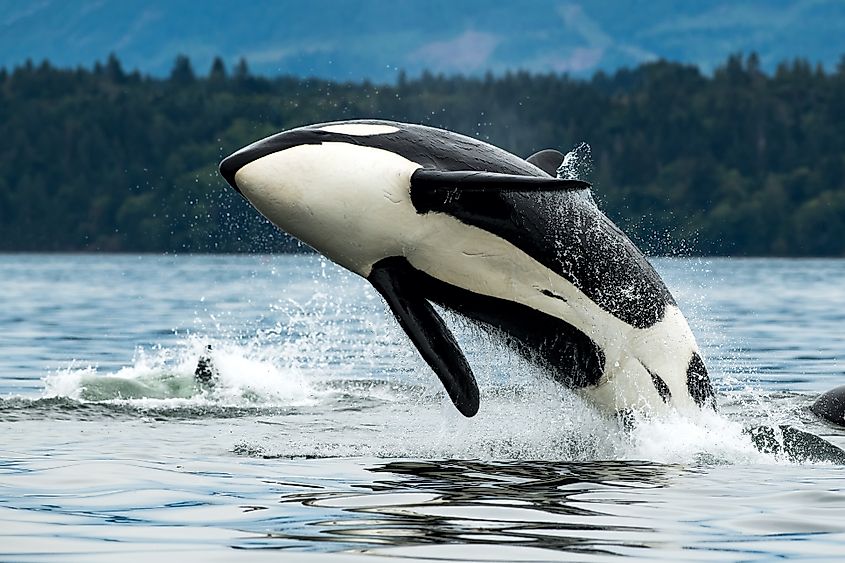
An orca (Orcinus orca) - Seals: harbor, spotted, ringed, bearded, and ribbon seals. Ringed seals build snow lairs on the ice and are the polar bear's primary food.
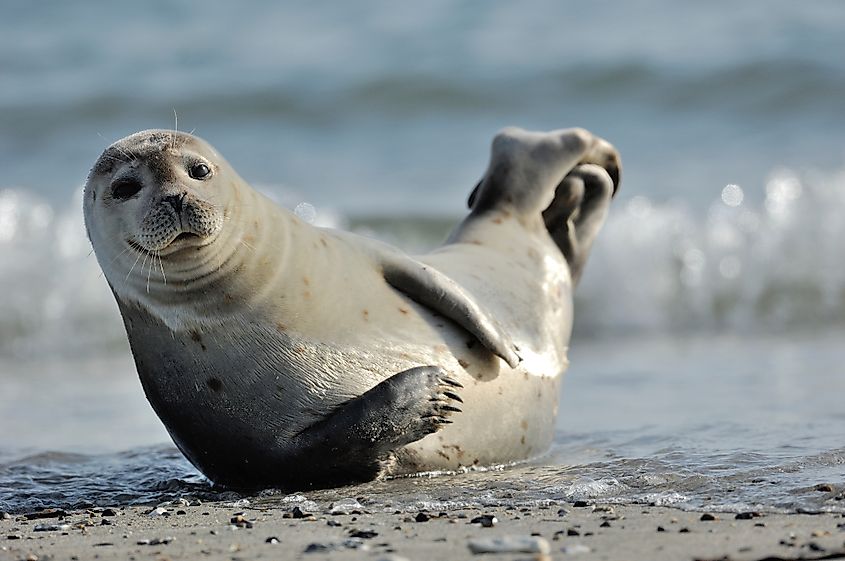
A harbor seal (Phoca vitulina) - Northern fur seal and Steller sea lion: the Pribilof Islands host most of the world's northern fur seals; the western Steller sea lion population crashed by around 80 percent in the late 20th century and is still listed as endangered.
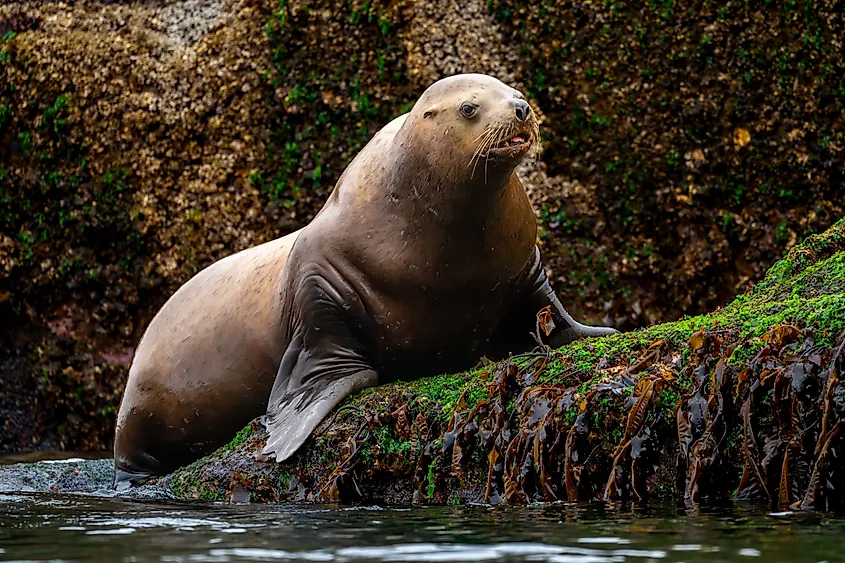
A Steller sea lion (Eumetopias jubatus) - Pacific walrus: feeds on clams on the shallow Bering and Chukchi seafloor, using sea ice as a mobile resting platform. As ice retreats past the shelf edge, walrus increasingly haul out on beaches in dangerous mass aggregations.
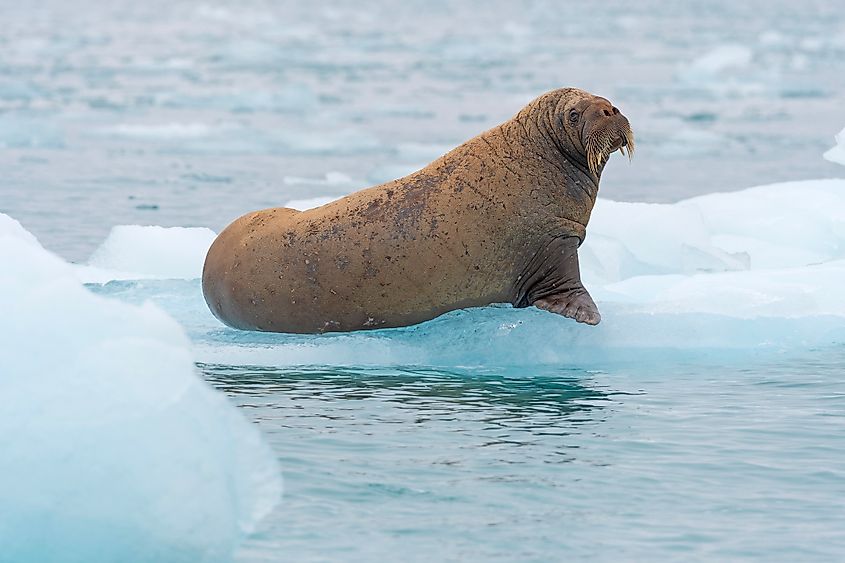
A Pacific walrus (Odobenus rosmarus divergens) - Sea otter: a keystone species. By eating sea urchins it protects kelp forests, and its removal collapses them. See the sea otter's ecological role.
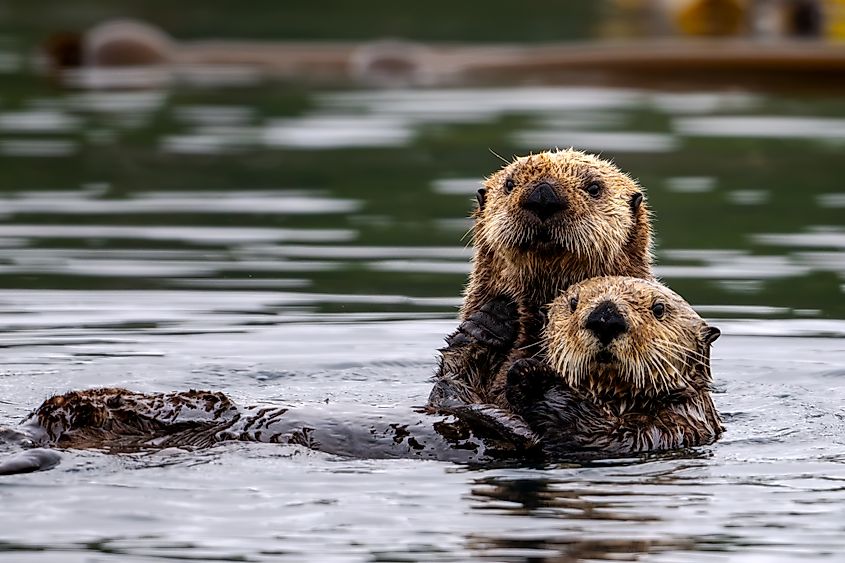
A pair of sea otters


Section 07
Birds Of Alaska
More than 530 species have been recorded, and Alaska functions as North America's summer nursery: a large share of the continent's shorebirds and waterfowl are hatched here and then leave.
Residents and raptors

- Bald eagle. Alaska holds roughly 30,000, more than all other states combined. The Chilkat River near Haines draws thousands to a late-season salmon run.
- Golden eagle, northern goshawk, gyrfalcon, peregrine falcon, rough-legged hawk
- Snowy owl, great horned owl, northern hawk owl, boreal owl, great gray owl
- Willow, rock, and white-tailed ptarmigan, all three North American species
- Common raven, gray jay, black-capped and boreal chickadees, redpolls
Seabirds

Alaska's cliffs and islands hold tens of millions of nesting seabirds: horned and tufted puffins, common and thick-billed murres, black-legged and red-legged kittiwakes, auklets, murrelets, cormorants, and northern fulmars. St. George and St. Paul in the Pribilofs, and the Aleutians generally, are globally significant colonies.
Migrants

The bar-tailed godwit makes the longest non-stop flight of any bird, leaving western Alaska and reaching New Zealand in eight or nine days without landing. Arctic terns fly pole to pole. Sandhill cranes, tundra swans, snow and emperor geese, dunlin, western sandpipers, and dozens of warbler and sparrow species arrive to breed and are gone within three months. Alaska is also where Asian strays turn up. The western Aleutians and St. Lawrence Island regularly produce North American first records.
Section 08
Fish And The Salmon Economy
Alaska has around 40 freshwater fish species, a small number that matters enormously. Five Pacific salmon species return here in runs that have not been dammed, diverted, or extirpated the way most of the Lower 48's were.
- King (Chinook): the state fish, largest of the five, and in decline in many systems for reasons still debated.
- Sockeye (red): the Bristol Bay run is the largest sockeye run on Earth, regularly exceeding 50 million fish.
- Pink, coho (silver), and chum: pinks are the most numerous, chum the most widely distributed.
- Other fish: Dolly Varden, Arctic char, Arctic grayling, lake trout, northern pike, sheefish (inconnu), burbot, and Pacific halibut offshore, which can exceed 400 pounds.
Salmon are semelparous, meaning they spawn once and die, which turns each run into a mass nutrient delivery from ocean to inland forest, feeding bears, eagles, gulls, otters, and eventually the trees themselves. For contrast with dammed systems elsewhere, see the rivers where salmon returned after the dams came down.
Section 09
Reptiles And Amphibians: The Shortest List In America
Alaska has no native terrestrial reptiles: no snakes, no lizards, no tortoises. Cold-blooded animals cannot maintain body temperature through an Alaskan winter without specialised adaptations, and almost none have them this far north.
The amphibian list runs to about six species, and only one is widespread: the wood frog Lithobates sylvaticus, which survives winter by letting up to 60 percent of the water in its body freeze solid, flooding its cells with glucose as a cryoprotectant. It stops breathing, its heart stops, and in spring it thaws and hops away. Also present: boreal toad, Columbia spotted frog, northwestern and long-toed salamanders, and rough-skinned newt in the southeast.
Marine reptiles do occur. Leatherback and green sea turtles occasionally wander north into Alaskan waters, which technically makes them the state's only reptiles.
Section 10
Dangerous Animals In Alaska
Alaska does not have venomous snakes, scorpions, or dangerous spiders. The primary risks in the region are associated with large mammals, which are generally manageable through maintaining distance and adhering to proper food storage practices.
- Moose: statistically, the animal most likely to injure you. Cows with calves in spring and bulls in the autumn rut are aggressive, and a moose kicks in all directions. Moose-vehicle collisions kill people most years. Give them 50 yards, and put a tree between you and them if charged.
- Brown bear: the serious one, though attacks remain rare. Sudden close encounters and surprised females with cubs cause most incidents. Make noise on blind trails, carry bear spray, and store food properly.
- Black bear: less likely to attack defensively but more likely to raid camps and become food-conditioned.
- Polar bear: the only North American bear that will actively hunt a human as prey. In polar bear country, travel with local guidance and never on foot alone.
- Cold water: worth naming, because it kills more visitors than any animal. Glacial and Gulf water causes incapacitation within minutes.
Bear encounter basics: do not run. For a defensive brown bear, stand your ground, speak calmly, and use spray at close range; if contact is made, play dead. For a black bear, fight back. For any bear that follows you or enters a tent, treat it as predatory and fight. These responses differ by species and situation, which is why local advice matters more than a single rule.
Section 11
Endangered And Protected Species
Alaska has relatively few listed species compared with states like Alabama or Hawaii, but its listings are unusual in kind: they are driven less by habitat destruction than by sea ice loss, past commercial harvest, and marine ecosystem shifts.
| Species | Where | Status |
|---|---|---|
| Cook Inlet beluga whale | Cook Inlet only | ENDANGERED |
| North Pacific right whale | Eastern Bering Sea | ENDANGERED |
| Polar bear | Chukchi & Beaufort coasts | THREATENED |
| Steller sea lion (western stock) | Gulf of Alaska, Aleutians | ENDANGERED |
| Ringed & bearded seal | Arctic sea ice | THREATENED |
| Northern sea otter (SW stock) | Aleutians, Alaska Peninsula | THREATENED |
| Steller's eider | Y-K Delta, North Slope | THREATENED |
| Spectacled eider | Coastal western Alaska | THREATENED |
| Short-tailed albatross | Offshore waters | ENDANGERED |
| Wood bison | Interior (reintroduced) | EXPERIMENTAL POP. |
Two recoveries are worth noting. The Aleutian cackling goose was taken off the endangered list after Arctic foxes, introduced for fur farming, were removed from nesting islands. Sea otters, hunted to a few hundred animals across their entire range by 1911, now number in the tens of thousands in Alaska, though the southwest stock has since declined again, apparently because orcas shifted to eating them after other prey declined.
Section 12
Where To See Wildlife In Alaska
- Katmai National Park (Brooks Falls): the definitive brown bear and salmon spectacle, July and September.
- Denali National Park: the single best place for grizzlies, wolves, caribou, moose, and Dall sheep in one landscape; see Denali's grizzlies.
- Kenai Fjords & Resurrection Bay: day-boat access to humpbacks, orcas, sea otters, puffins, and Steller sea lions.
- Chilkat Bald Eagle Preserve (Haines): thousands of eagles in late autumn.
- Pribilof Islands: northern fur seals and world-class seabird cliffs.
- Kodiak Island: the largest brown bears anywhere.
- Kaktovik: autumn polar bear viewing on the Beaufort coast.
- Nome & the Seward Peninsula: musk ox, tundra birds, and road-accessible Arctic wildlife.
Timing: May and June for migratory birds, calving, and long light; July for salmon runs and coastal bears; late August and September for the second bear push, rut behaviour, and autumn tundra colour; winter for a very different and much harder set of species. Most remote viewing requires a bush flight, and weather cancels flights routinely, so build slack into any itinerary.
Section 13
Common Questions
- What is the state animal of Alaska?
- The moose is the official state land mammal, adopted in 1998. Alaska separately designates a state marine mammal, the bowhead whale, plus a state bird (willow ptarmigan), state fish (king salmon), and state dog (Alaskan malamute).
- Are there snakes in Alaska?
- No. Alaska has no native terrestrial snakes, lizards, or turtles. Winter is too long and too cold for reptiles without specialised freeze tolerance, which almost none possess.
- How many bears are in Alaska?
- Roughly 30,000 brown/grizzly bears, about 100,000 black bears, and an estimated few thousand polar bears across the two stocks that use Alaskan waters. It is the only state with all three.
- What is the biggest animal in Alaska?
- On land, the moose and the Kodiak brown bear. Overall, the bowhead and fin whales offshore. Blue whales, which occasionally enter Alaskan waters, are the largest animals that have ever lived.
- Do polar bears and grizzly bears meet in Alaska?
- Increasingly, yes. As sea ice retreats and polar bears spend more time onshore, their range overlaps with grizzlies on the North Slope, and confirmed hybrids have been documented in the Canadian Arctic.
- What is the most dangerous animal in Alaska?
- Moose cause the most injuries, largely through vehicle collisions and defensive charges. Brown bears cause the most severe attacks. Polar bears are the only one that treats humans as prey.
- Why does Alaska have so few species but so much wildlife?
- Cold limits diversity, but Alaska's scale, intact habitat, and extraordinarily productive cold seas support very large populations of the species that can live there.
This page was last updated on October 8, 2026